






The Soul of Assamese Cuisine
Assamese cuisine is a gentle art, a departure from the heavy spice blends found elsewhere in India. Its philosophy centres on minimalism and freshness, allowing the natural taste of ingredients to shine. The cooking style is a unique confluence, blending
the hill traditions of fermenting and drying with the plains' abundance of fresh vegetables, greens, river fish, and meat. The pungent aroma of mustard oil is a common thread, but the defining characteristics are a reliance on exotic herbs, fruits, and vegetables that create flavours ranging from earthy and alkaline to refreshingly sour.
Khar and Tenga: The Bookends of a Meal
A traditional Assamese meal is an experience structured by two signature flavour profiles: khar and tenga. The meal begins with khar, a unique alkaline preparation that gives the cuisine its distinct identity. This key ingredient is made by filtering water through the ashes of sun-dried banana peels. The resulting liquid is used to cook dishes with raw papaya, pulses, or fish, believed to cleanse the palate and aid digestion. In stark contrast, the meal concludes with tenga, a tangy, sour curry, often featuring fish. The sourness, derived from ingredients like tomatoes, elephant apple (ou tenga), or lemon, provides a refreshing finish and is thought to aid digestion after a hearty meal.
Must-Try Main Courses
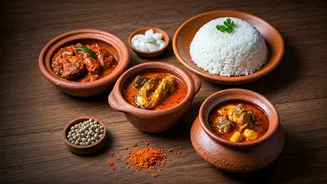
Beyond the foundational dishes, a world of flavour awaits. Masor Tenga, the tangy fish curry, is perhaps Assam's most famous culinary export. This light yet flavourful curry is a staple in most households. For meat lovers, Duck Meat Curry (or Kumurat diya Hanhor Mangxo) is a delicacy often reserved for special occasions, cooked with ash gourd for a unique taste. Pork with Bamboo Shoots is another highlight, showcasing the region's love for fermented ingredients like khorisa (fermented bamboo shoots) which impart a pungent, savoury kick. And no culinary tour is complete without trying Aloo Pitika, a simple yet profoundly comforting dish of mashed potatoes mixed with raw mustard oil, onion, and green chillies.
Snacks, Sweets, and Street Food
The journey continues into the world of snacks and sweets, especially during the Bihu festival. Pitha are traditional rice cakes that come in numerous forms—steamed, fried, or roasted. Til Pitha, a thin roll made from glutinous rice and filled with sesame seeds and jaggery, is an iconic treat. For a quick bite, the streets of Guwahati offer delights like Jhal Muri (a spicy puffed rice snack) and momos, served with a fiery local chilli dip. Don't miss out on Doi Chira, a breakfast dish made of flattened rice, yoghurt, and jaggery, which offers a sweet and energising start to the day.
How to Experience the Food Trail
So, how does a curious traveller navigate this landscape? In cities like Guwahati, restaurants like Paradise and Khorikaa offer authentic thalis that provide a fantastic overview of the cuisine. For street food, explore the areas around Fancy Bazar or Dighalipukhuri. But for a truly immersive experience, consider a homestay in a rural area. Here, you can witness the preparation of dishes like sunga pitha (rice cakes cooked in bamboo tubes) and Poita Bhat (fermented rice), and truly understand the connection between the people, the land, and their food. Many tour operators are now incorporating culinary experiences, from visiting local markets to cooking classes, making it easier than ever to follow your taste buds through Assam.