





The Era of Disposable Rockets
Imagine buying a brand new airplane for a single flight from Mumbai to Delhi, and then scrapping the entire plane upon arrival. That sounds absurd, but it’s precisely how we have conducted space exploration for over sixty years. Rockets costing hundreds
of millions, or even billions, of dollars were built for one fiery, eight-minute trip to orbit before their expensive components were discarded in the ocean. This approach made launch costs the single biggest constraint on our ambition in space. NASA's Space Launch System (SLS), for example, costs an estimated $2 billion or more per launch, and the hardware is not recovered. This immense expense has meant that missions are few and far between, and every gram of payload is scrutinized, forcing the use of exotic, lightweight materials that further drive up costs.
The Reusability Revolution
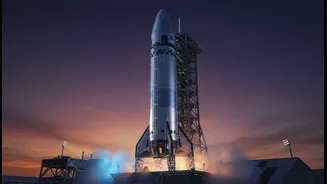
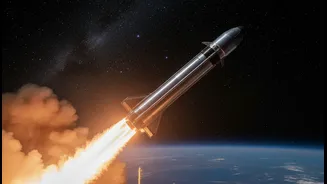
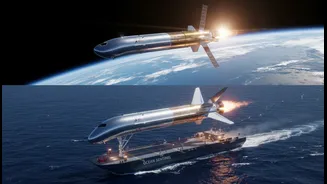
SpaceX first challenged this paradigm with its Falcon 9 rocket, which proved that the most expensive part of the rocket—the first stage booster—could be landed and reused. This partial reusability was a game-changer, dramatically lowering the cost to access space and enabling the creation of massive satellite constellations. But Starship is designed to achieve the holy grail: a 100% reusable launch system. Both the Super Heavy booster and the Starship upper stage are designed to return to Earth for rapid reuse. This seemingly simple shift—from a disposable product to a reusable transport vehicle—is as fundamental as the shift from single-use carriages to a modern airline. It doesn't just make the old way cheaper; it creates an entirely new economic reality.
How the Math Changes Everything
The numbers behind Starship's success are staggering. A traditional Falcon 9 launch costs around $67 million to send about 22 tonnes to Low Earth Orbit (LEO). A single launch of NASA's SLS costs over $2 billion for about 95 tonnes. Starship aims to carry 100 to 150 tonnes to orbit for a long-term operational cost as low as $10 million per launch. This would drop the cost-per-kilogram from thousands of dollars to potentially under $100. A recent study projects that launch costs could fall by over 90% by 2040, primarily driven by this new capability. This cost compression is more rapid than the one seen during the 19th-century steamship freight revolution. It completely alters the budgetary equation for space agencies and private companies.
Unlocking Interplanetary Ambitions
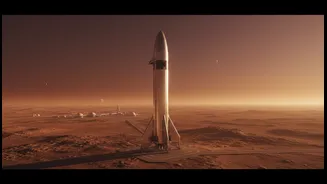
So, what does this mean for interplanetary flight budgets? It means the budget can be used for the mission itself, not just the ride. When launch is cheap, you can afford to send heavier, more robust, and more capable science payloads. You don't have to spend a decade designing a complex, foldable telescope if you can just launch a bigger, simpler one in Starship's massive payload bay. For a mission to Mars, which requires in-orbit refueling, the low cost of each launch makes ambitious projects feasible. Instead of one flagship mission per decade, agencies like NASA can plan multiple missions for the same budget. SpaceX itself has advertised future cargo flights to the Martian surface at a price point that is over 20 times cheaper than the historical cost. This makes the prospect of building permanent bases on the Moon and Mars shift from a distant dream to a logistical problem to be solved.
A New Economic Frontier
The success of Starship's testing doesn't just alter existing budgets; it creates new ones. The dramatically lower cost to orbit opens up entirely new commercial industries that were previously science fiction. These include orbital manufacturing, space-based data centers, and even large-scale space tourism. The revenue from these new ventures can, in turn, help fund further exploration. As NASA and other government agencies face potential budget constraints, the cost-effective, high-cadence launch capability of Starship becomes indispensable. It allows public ambitions in space to continue and expand, even in a tight fiscal environment, by leveraging a commercially developed and operated system.