






What Exactly Is PJ.2.1?
PJ.2.1 is a new lineage of SARS-CoV-2, the virus that causes COVID-19. It was first identified in Ontario, Canada, in May 2026 and has since been detected in the United States, Europe, Australia, and parts of Asia. Scientists are calling it a 'saltation
variant', which means it appeared with a large number of genetic changes all at once, rather than evolving slowly over time. This variant is a descendant of the JN.1 family, which was a dominant lineage in the past. Its rapid spread across continents has put it on the watchlist for health organisations like the WHO, who are monitoring it closely.
Why the Focus on the Spike Protein?
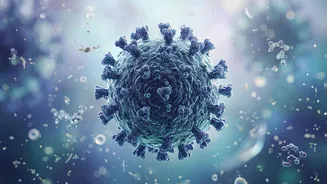
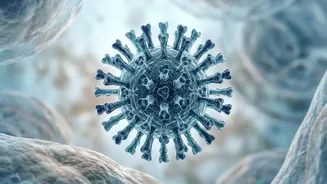
The spike protein is what the coronavirus uses to latch onto and enter human cells. Mutations in this part of the virus are significant because they can affect how easily it spreads, how severe the resulting illness is, and how well our immune systems can fight it off. PJ.2.1 has more than 25 mutations in its spike protein, which is an unusually high number. Preliminary lab studies suggest these changes may help the virus bind more tightly to the ACE2 receptor on human cells, which acts as the virus's primary doorway. This enhanced binding ability could be one reason for its rapid spread, but researchers stress that lab findings don't always translate directly to real-world transmission.
Is It More Dangerous or Contagious?
This is the crucial question researchers are working to answer. At present, there is no evidence to suggest that PJ.2.1 causes more severe disease, a higher rate of hospitalisation, or more deaths than other currently circulating variants. While some anecdotal reports mention symptoms like a more severe sore throat or prolonged fatigue, these have not been clinically established as unique to PJ.2.1. In fact, the World Health Organization has stated that its symptoms are largely indistinguishable from the common cold or flu, making testing necessary for a definitive diagnosis. The variant does appear to be spreading quickly, accounting for a growing percentage of sequenced cases in places like Ontario.
How Do Vaccines and Immunity Hold Up?
The good news from early research is that PJ.2.1 does not seem to be a master of disguise when it comes to evading our immune defences. A study published in the Journal of Infection found that the variant showed relatively limited resistance to antibodies produced by updated COVID-19 vaccines. One lab test found that antibodies were only about 1.8 times less effective against PJ.2.1 compared to a reference variant, a much smaller drop in effectiveness than seen with some other variants. This suggests that current vaccines should still provide a good degree of protection against severe illness, although this needs to be confirmed with real-world data.
What Do Experts Advise?
The consensus among health experts is to remain vigilant but not to panic. The emergence of PJ.2.1 is a reminder that the virus is still evolving, and continued surveillance is essential. For the general public in India, doctors advise following standard precautions, especially in crowded indoor spaces. This includes wearing masks if you are vulnerable or in a high-risk setting, practicing good hand hygiene, and testing for COVID-19 if you develop symptoms like fever, cough, and sore throat. While PJ.2.1 has not been officially designated a 'variant of concern' by the WHO, its characteristics warrant close monitoring by the global scientific community.