





Demystifying 'Conversational Cardio'
At its core, Zone 2 training is exercising at a low to moderate intensity. It's often called “conversational cardio” because of the most reliable way to know you're in the zone: the talk test. If you can hold a full conversation without gasping for air,
you're likely in the right spot. If you can belt out a song, you're probably taking it too easy (that's Zone 1), and if you can only manage short, breathy sentences, you've pushed into a higher-intensity zone. For those who prefer data, Zone 2 corresponds to roughly 60% to 70% of your maximum heart rate. The simplest, though not most precise, way to estimate your max heart rate is to subtract your age from 220. So, for a 40-year-old, their estimated max heart rate is 180, and their Zone 2 range would be between 108 and 126 beats per minute.
The Science of Slowing Down
The magic of Zone 2 lies in what it does at a cellular level. This intensity level primarily trains your slow-twitch muscle fibers and encourages your body to become more efficient at using fat for fuel. More importantly, it stimulates the growth and improves the function of your mitochondria, the tiny powerhouses within your cells that produce energy. More efficient mitochondria mean your body can produce more energy aerobically, clear metabolic byproducts like lactate more effectively, and sustain effort for longer. This builds a huge aerobic base, which is the foundation upon which all higher-intensity fitness is built. Unlike high-intensity interval training (HIIT), which requires significant recovery time, Zone 2 workouts are less stressful on the body, reducing the risk of overtraining and allowing for more consistent training.
Why Rowing Is the Ideal Partner
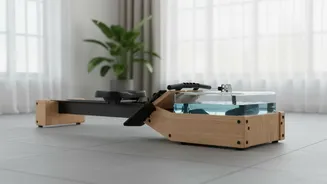
While you can do Zone 2 training with many activities like brisk walking or cycling, rowing is a uniquely effective option. First and foremost, rowing is a low-impact, full-body workout. It engages up to 85% of your body's muscles—from your legs and glutes to your core, back, and arms—in a smooth, fluid motion. This is crucial for the “pain-free” part of the equation. Unlike running, which can be hard on the joints, rowing protects your knees and hips from jarring impacts, making it a sustainable choice for people of all ages and fitness levels, including those managing chronic pain or recovering from injury. The rhythmic, repetitive nature of rowing also makes it easy to settle into a steady state and keep your heart rate locked into the Zone 2 range for an extended period.
Building a Foundation for Life
The combination of Zone 2's physiological benefits and rowing's low-impact mechanics creates a powerful formula for long-term health. By dedicating a significant portion of your weekly training volume to this modality—many experts suggest around 80%—you build a deep and wide aerobic base. This foundation not only improves your endurance for longer, slower efforts but also enhances your ability to recover during and after higher-intensity workouts. A strong aerobic engine means your heart doesn't have to work as hard at rest or during daily activities, which is a key marker of cardiovascular health. This isn't about chasing quick fixes; it's a strategy for building a resilient, capable body that can stay active and injury-free for decades.
How to Get Started
Starting a Zone 2 rowing routine is straightforward. First, determine your target heart rate range, either through a simple age-based formula or the more accurate Karvonen method, which factors in your resting heart rate. The goal is consistency. Aim for two to three sessions per week, starting with 30-45 minutes per workout. Focus on maintaining good form and a steady rhythm rather than speed or distance. A rowing coach suggests keeping the stroke rate relatively low, perhaps under 22 strokes per minute, to help keep your heart rate from climbing too high. Use a heart rate monitor to stay within your zone, and remember the talk test. The goal is to finish your workout feeling energised, not exhausted, ready to come back and do it again.