

Turning Dust into Breathable Air
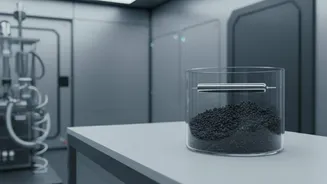
At first glance, the Moon appears to be a barren, airless world. But its soil, a fine grey dust called regolith, holds a hidden treasure: oxygen. Lunar regolith is about 45% oxygen by mass, but it's chemically locked inside oxide minerals. The challenge
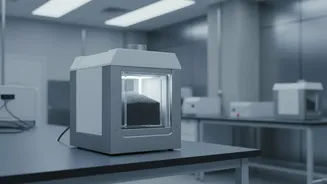
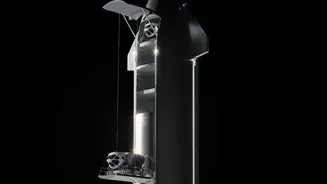
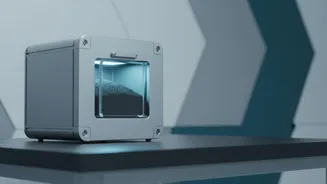
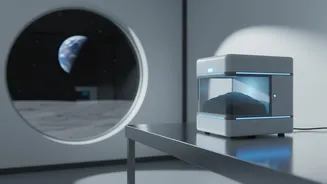
is breaking those strong chemical bonds. NASA's Carbothermal Reduction Demonstration, or CaRD, is a project designed to do just that. The process involves heating the lunar soil to very high temperatures inside a specialized reactor. In recent tests, scientists used a powerful laser or a solar concentrator to melt a regolith simulant. This intense heat, combined with the carbothermal reaction, causes the oxygen-bearing minerals to release their oxygen, which is first captured as carbon monoxide. Using a specialized instrument, scientists can then confirm the presence of this gas, proving the process works. The carbon monoxide can then be converted into breathable oxygen. This technology is a cornerstone of a concept known as In-Situ Resource Utilization (ISRU), which is all about using local materials to sustain missions far from Earth.
Why Making Oxygen on the Moon Matters
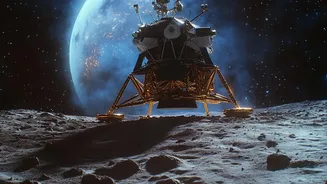
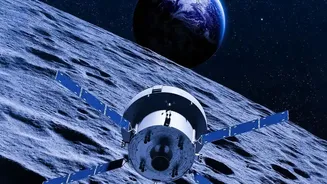
The single biggest obstacle to long-term space exploration is the sheer cost and difficulty of launching materials from Earth. Every kilogram sent into space is incredibly expensive. Oxygen is not just for breathing; it is also a critical component of rocket propellant. For a sustainable lunar base to function, and to serve as a stepping stone for missions to Mars, we cannot rely solely on supplies ferried from our home planet. Producing oxygen on the Moon would drastically reduce the mass that needs to be launched from Earth, saving enormous costs and logistical complexity. This would enable longer missions, more extensive exploration, and the establishment of a permanent human presence. The Artemis program, NASA's plan to return humans to the Moon, hinges on this capability. The goal isn't just to visit, but to stay, creating a lunar outpost that could one day resemble a small city. Manufacturing breathable air and propellant from the very ground astronauts walk on is what transforms this vision from science fiction into a tangible engineering goal.
A Major Step Forward in a Vacuum
Recent tests for the CaRD project have marked significant progress. In one key demonstration at NASA's Johnson Space Center, scientists successfully extracted oxygen from a lunar soil simulant inside a vacuum chamber for the first time. This is crucial because it proves the technology can work in the airless environment of the Moon. The team used a reactor developed by industry partner Sierra Space, showing the successful collaboration between NASA and private companies. A mass spectrometer confirmed the production of carbon monoxide, the tell-tale sign that oxygen was being liberated from the simulant. In other integrated tests, the team has also successfully used a solar concentrator to provide the necessary heat, demonstrating that the Sun's energy could power the process on the Moon. These successful demonstrations have moved the technology to a higher level of readiness, clearing the way for a potential future demonstration on the lunar surface.
Building the Foundation for a Lunar Future
This oxygen-extraction technology is a critical piece of a much larger puzzle. NASA's Artemis program aims to build a sustained presence on the Moon, starting with a base camp at the lunar South Pole. This long-term plan is divided into phases, starting with robotic scouts and eventually leading to a permanent outpost where astronauts live and work for extended periods. Success depends on a suite of ISRU technologies, from mining water ice to building structures with 3D-printed regolith. The ability to generate oxygen is perhaps the most fundamental of these, as it supports both life and transportation. The technology developed for CaRD could also be adapted for Mars, where the atmosphere is mostly carbon dioxide. By proving these systems on the Moon, NASA is laying the groundwork not only for a lunar economy but also for the eventual human exploration of the red planet. Each successful test on Earth brings us one step closer to making humanity a multi-planetary species.