






The Smoky Secret of Nagaland: Axone Pork
When we talk about North-Eastern food, many people stop at momos. But venture into Nagaland, and you'll discover a world of flavour built on a powerful, pungent, and deeply cherished ingredient: axone, or fermented soybeans. The 'secret' here isn't just
the recipe, but the ingredient itself. Making pork curry with axone (pronounced 'akhuni') is a tradition that fills Naga kitchens with a distinct, smoky, and umami-rich aroma that is unforgettable. The soybeans are boiled, fermented for days, and then either sun-dried or pasted. This paste is then slow-cooked with tender chunks of pork, fiery Naga king chillies (Bhut Jolokia), and local herbs. It’s not a dish for the faint of heart; its flavour is bold and assertive. This is soul food, a taste of the Naga hills that tells a story of preservation, community, and a flavour profile unlike anything else in the country.
The Accidental Treasure of Odisha: Chenna Poda
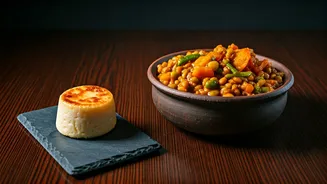
Walk into any sweet shop in Odisha, and you will find Chenna Poda. While it's no secret within the state, its origin story and unique preparation make it a treasured recipe for the rest of India to discover. Legend says it was invented by accident in the 1940s when a confectioner, Sudarshan Sahu, left leftover cottage cheese (chenna) mixed with sugar and cardamom in a cooling hearth overnight. The next day, he discovered a baked, caramelised, and utterly delicious cake. That's the secret: it’s not fried or boiled like most Indian sweets. Chenna Poda is slow-baked for hours, often wrapped in Sal leaves, until the outside is a deep, burnt brown and the inside is soft, spongy, and cheesecake-like. The smoky flavour from the caramelised sugar and charred leaves gives it a rustic complexity that is both simple and divine. It’s often called India's answer to cheesecake, but honestly, it’s in a league of its own.
The Kumaoni Comfort Bowl: Bhatt ki Churkani
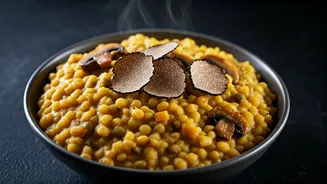
High in the hills of Uttarakhand, the cuisine is hearty, nutritious, and deeply connected to the land. One of its best-kept secrets is Bhatt ki Churkani, a soulful curry made from a local treasure: black soybeans (bhatt). This isn't a fancy dish, and that's its strength. The recipe is a testament to the wisdom of mountain cooking. The black soybeans are first fried in a little ghee or mustard oil until they start to pop, releasing a nutty aroma. They are then simmered in a thick gravy made from rice flour or wheat flour (aata), and seasoned with simple spices like turmeric, coriander, and red chilli. The dish is cooked in an iron pot (kadhai), which not only imparts a dark, rich colour but also adds essential iron to the diet. Served with hot steamed rice, Bhatt ki Churkani is the ultimate comfort food—a warm, nourishing hug in a bowl that tastes of the pure mountain air.
The Lost Bite of Mumbai: Pathare Prabhu Prawns
Mumbai's food scene is vast, but tucked away is the cuisine of one of its oldest communities, the Pathare Prabhus. Numbering just a few thousand, their culinary traditions are a precious and closely guarded secret. One of their signature dishes showcases their love for seafood: prawns cooked in 'Parbhi Sambhar Masala'. This isn't the sambar of the south. It's a unique, fragrant spice blend featuring over a dozen ingredients like stone flower, red chillies, and coconut, which gives their curries a distinctive flavour. Their prawn curry is light yet complex, often using coconut milk and tamarind for a perfect balance of creamy, sweet, and tangy notes. Finding it in a restaurant is nearly impossible; this is a recipe that lives in home kitchens, a delicious symbol of a community preserving its identity in a bustling metropolis.
The Spicy Spheres of Chettinad: Mutton Kola Urundai
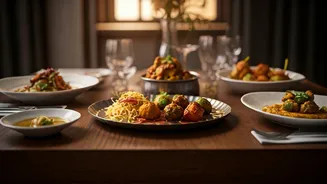
Chettinad cuisine is famous for its fiery chicken dishes, but the real secret weapon in a Chettiar kitchen is the Mutton Kola Urundai. These are not your average meatballs. They are delicate, melt-in-your-mouth spheres of minced mutton, packed with an astonishing array of spices. The 'secret' is the technique and the blend. The mutton is minced to a fine paste, traditionally by pounding it on a stone, and then mixed with shallots, ginger, garlic, coconut, and a complex masala that includes fennel, cinnamon, and star anise. These balls are then deep-fried to a perfect crisp on the outside while remaining incredibly tender and juicy on the inside. Making them is a labour of love, a skill passed down from mother to daughter. Each bite is an explosion of flavour, proving that the true depth of Chettinad cooking goes far beyond its most famous dishes.