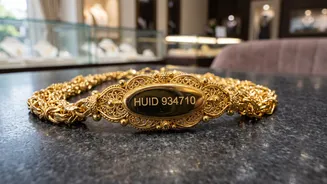






For generations, buying gold in India has been an act of trust. But now, a small six-character code is shifting the power into your hands, ensuring the purity of your jewellery is not just promised, but proven.
What is the HUID Number?
HUID stands for Hallmark Unique Identification.
It is a six-digit alphanumeric code, like 'AB1234', that is laser-engraved onto every single piece of hallmarked gold jewellery. Think of it as a unique fingerprint for your ornament. Since being made mandatory in phases from June 2021 by the Bureau of Indian Standards (BIS), this system ensures that no two pieces of jewellery can have the same HUID. This unique identity is the foundation of a new era of transparency, linking your physical jewellery to a digital record. The government's goal was to move beyond a system where hallmarks could be faked and create one where every item is individually traceable.
The Three Mandatory Signs of Purity
Gone are the days of confusing, multi-part marks. Today, any new hallmarked gold jewellery sold in India must carry just three clear signs. The first is the classic triangular BIS logo, which confirms the item has been certified by the national standards body. The second indicates the purity and caratage, such as '22K916' (meaning 91.6% pure gold, or 22 carat) or '18K750' (75% pure gold, or 18 carat). The third and most critical component is the six-character HUID number. Together, these three marks provide a comprehensive guarantee of purity and authenticity.
How to Verify Your Gold in Minutes
The true power of HUID lies in its easy verification, which anyone can do with a smartphone. The Bureau of Indian Standards has developed a free mobile application called the 'BIS CARE' app, available for both Android and iOS devices. To check your jewellery, simply download the app, open it, and select the 'Verify HUID' option. You will need to carefully enter the six-character code engraved on your jewellery. Within seconds, the app should display crucial details: the purity level, the type of article (e.g., ring, bangle), the name of the jeweller who registered it, and the Assaying and Hallmarking Centre (AHC) that tested it.
What to Look For and Red Flags
When you verify the HUID, the information on the app must perfectly match the piece in your hand. If the app shows '22K916' purity, the jewellery should also be stamped with '22K916'. A major red flag is if the HUID search returns no results at all, which means the code is not in the official BIS database. Another warning sign is if the jeweller's name displayed in the app is different from the shop you are buying from. Any discrepancy—be it in the purity, article type, or jeweller details—is a reason to pause the purchase and demand clarification. This instant check empowers you to identify potential fraud at the counter, before any money changes hands.
A New Standard for Consumer Protection
The mandatory HUID system is a significant step in protecting India's gold buyers, who represent the world's second-largest market for the precious metal. For decades, under-karating—selling lower-purity gold at a higher price—was a prevalent issue, with consumers having little recourse but to trust the seller. Hallmarking provides traceability and accountability, ensuring that if you pay for 22-carat gold, you receive exactly that. The phased implementation has expanded to cover hundreds of districts across the country, making it illegal for registered jewellers in these areas to sell non-hallmarked gold. This reform not only safeguards your investment but also strengthens the entire jewellery industry by weeding out fraudulent practices.