




A Mission of Unprecedented Complexity
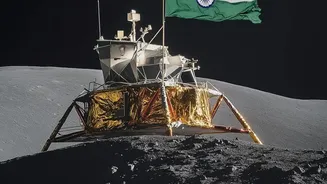
Chandrayaan-4 represents a monumental leap in technological capability for the Indian Space Research Organisation (ISRO). While Chandrayaan-3 successfully demonstrated a soft landing, the new mission is a full round-trip. The primary objective is to land on the Moon,
collect surface and sub-surface samples, launch back off the Moon, and return the cargo safely to Earth. This end-to-end sample return mission will make India only the fourth country to achieve such a feat, following the United States, the former Soviet Union, and China. The mission is so complex that ISRO Chairman S. Somanath has described it as India's most challenging lunar project to date.
The Five-Module 'Relay Race'
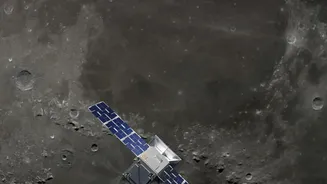
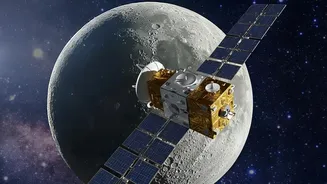
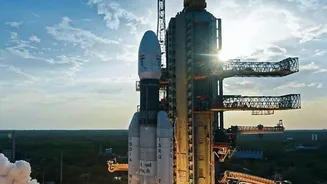
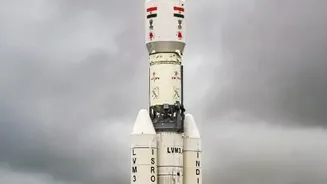
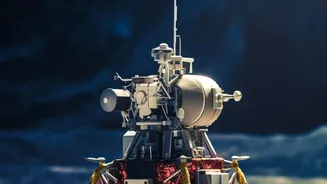
At the heart of the mission is an intricate, five-part spacecraft architecture. Because the combined weight of roughly 9,200 kg is too heavy for a single rocket, the mission will be launched in two parts using two separate LVM3 rockets. The five modules are the Propulsion Module, Descender Module (lander), Ascender Module, Transfer Module, and a Re-entry Module. The plan involves launching the modules in two stacks, which will then meet and perform a crucial docking manoeuvre in Earth's orbit to form one integrated spacecraft before heading to the Moon. This orbital assembly is a new and critical capability ISRO has been developing, with missions like SPADEX serving as essential practice runs for the complex docking procedure.
Collecting the Lunar Treasure
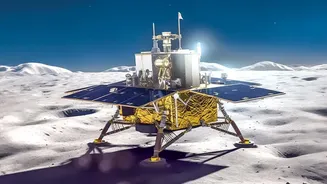
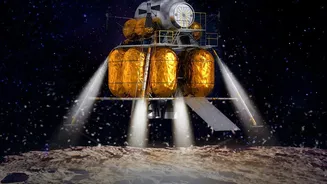
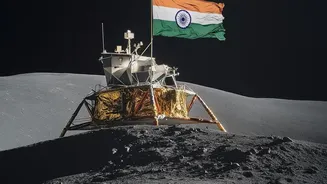
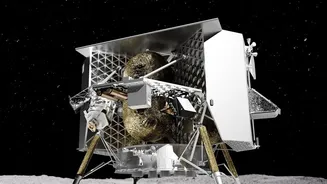
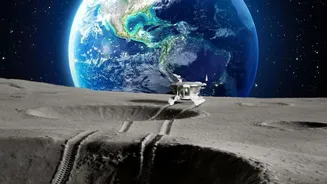
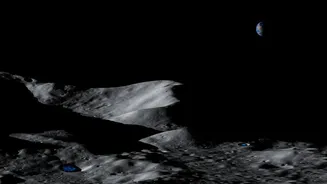
Once the integrated craft reaches lunar orbit, the Descender and Ascender modules will separate and perform a powered landing near the lunar south pole, a region believed to be rich in water ice. After a safe touchdown, a robotic arm will scoop up to 3 kg of lunar soil (regolith). A drilling mechanism will also collect subsurface samples, which could contain pristine ice. These samples will be transferred into separate, sealed containers within the Ascender Module to protect them from contamination during the arduous journey back to Earth. The entire collection process will be carefully monitored via onboard video cameras.
The Long Journey Home
With the samples secured, the mission enters its most nail-biting phase. The Ascender Module will act as a mini-rocket, launching itself off the Descender from the Moon's surface to reach lunar orbit. There, it will perform another delicate docking manoeuvre with the waiting Transfer and Re-entry modules. The precious sample containers will be transferred to the Re-entry Module. The Transfer Module will then fire its engines to begin the journey back, and as it approaches Earth, it will release the Re-entry Module. This capsule must survive a fiery, high-speed re-entry through Earth's atmosphere—a challenge ISRO officials note is in many ways harder than the lunar landing itself—to deliver its invaluable contents to scientists back home.