


A Day in Just 90 Minutes
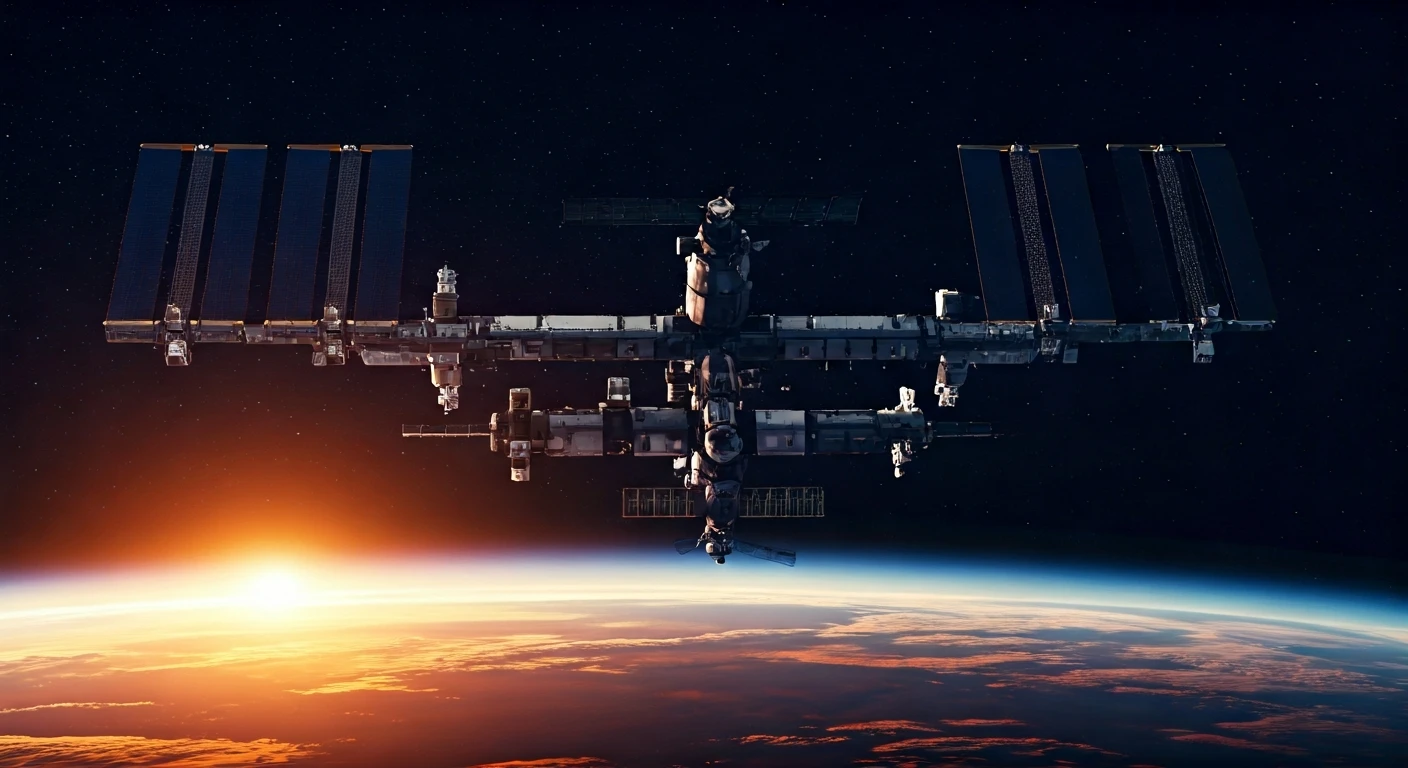
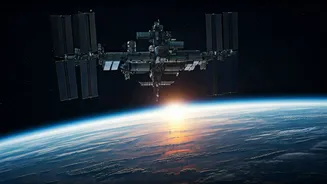
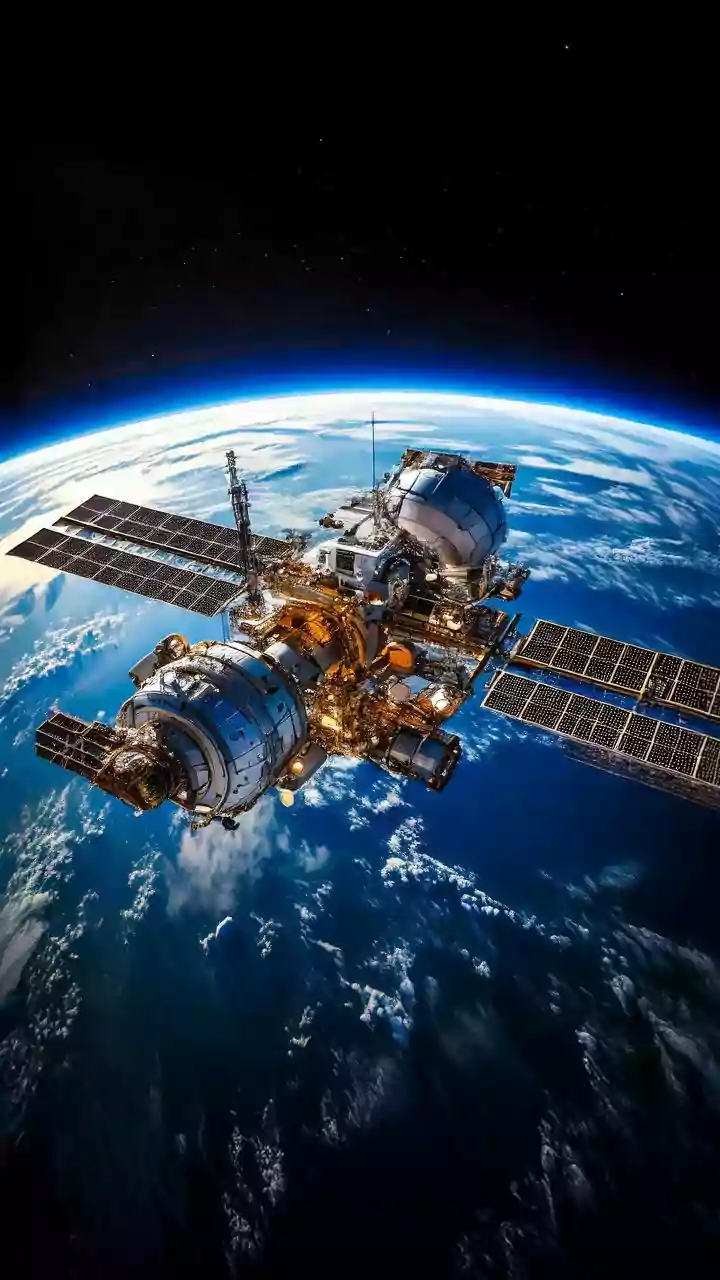
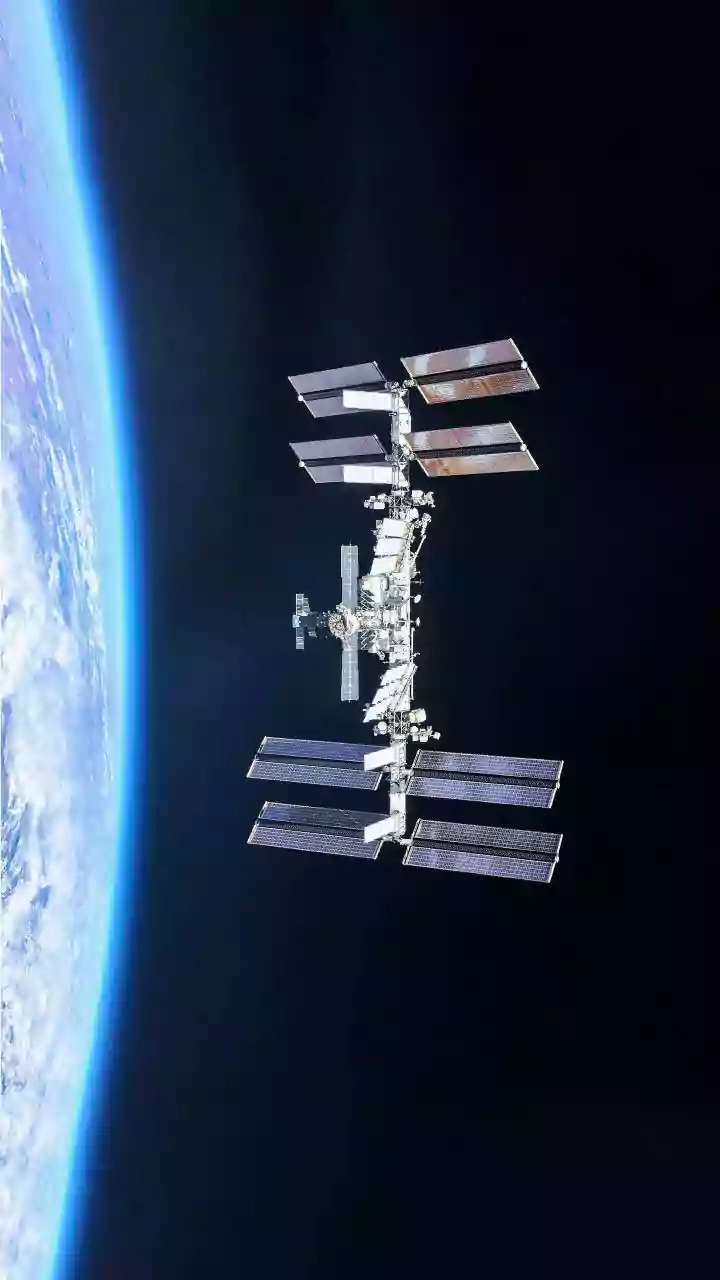
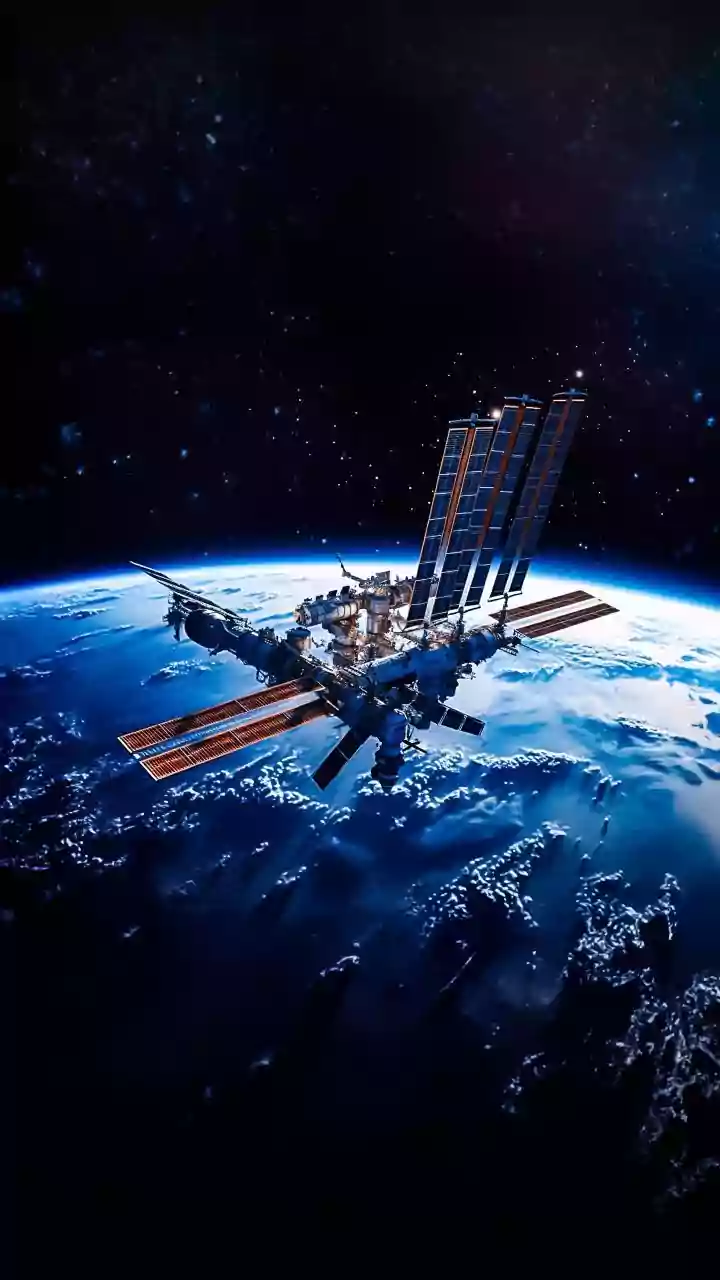
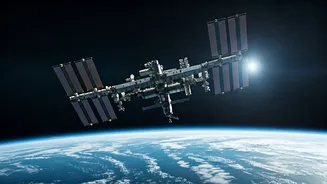
The reason for this stunning phenomenon is pure physics. The International Space Station (ISS) orbits Earth at an incredible speed of about 28,000 kilometres per hour. At this velocity, it completes a full lap around our planet roughly every 90 minutes.
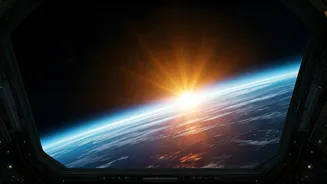
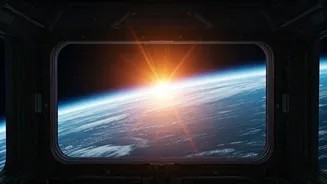
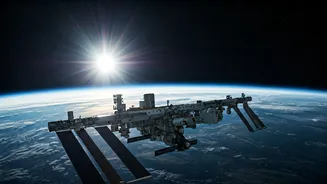
As the station travels, it continuously passes from the sunlit side of Earth into its shadow and back out again. Each time it crosses the terminator—the line dividing day and night on the planet's surface—the crew on board witnesses a sunrise or a sunset. Over a 24-hour period, this cycle repeats approximately 16 times, giving astronauts 16 spectacular dawns and dusks.
The Science of Speed and Orbit
Staying in orbit is a delicate balancing act. The ISS is in a state of continuous free-fall, but its immense horizontal speed prevents it from falling back to Earth. Gravity pulls it down, while its forward momentum propels it forward. The combination of these forces results in a stable orbit about 400 kilometres above the surface. This altitude is high enough to be above most of the atmosphere but low enough that the orbital period is short. This 90-minute journey means that for about 45 minutes the station is bathed in sunlight, and for the next 45 minutes, it is plunged into darkness as it passes through Earth's shadow. This rapid succession is a constant reminder of the unique physical laws governing their environment.
A Rainbow of Light in Seconds
For those who have seen it, an orbital sunrise is an event of breathtaking speed and beauty. Unlike the leisurely sunrises on Earth, the entire event from first glow to full daylight can take less than a minute. Astronauts describe seeing a thin, vibrant band of blue and orange appear on the horizon, which then explodes into a brilliant white light as the sun leaps above Earth's edge. The sun itself appears as a blazing white star, as there is no atmosphere to scatter its light and give it the familiar yellow hue we see on the ground. Astronaut Sunita Williams called the view "beautiful" and "surreal," a sentiment echoed by many who have had the rare privilege of witnessing it.
Living on Greenwich Mean Time
With the sun rising and setting every 45 minutes, traditional timekeeping becomes meaningless. To maintain a sense of normalcy and coordinate with ground crews in Houston and Moscow, the ISS operates on Coordinated Universal Time (UTC), which is equivalent to Greenwich Mean Time. Astronauts are scheduled for about eight and a half hours of sleep per day. To simulate night, the station's windows are shuttered, and the crew members retreat to small, private sleep stations. They often wear eye masks and earplugs to block out any stray light and the constant hum of the station’s machinery. These measures are crucial for creating an artificial night in an environment where darkness is fleeting.
The Body's Confused Internal Clock
This rapid day-night cycle poses a significant challenge to the human body's internal clock, or circadian rhythm. Exposure to light is the primary cue our bodies use to regulate sleep, and having 16 sunrises a day can cause serious disruption. Studies have shown that astronauts often suffer from sleep deprivation, with many averaging only about six hours of sleep per night despite being scheduled for more. This can lead to fatigue and impair cognitive performance, which is risky during critical operations. To combat this, NASA and other space agencies are researching and implementing countermeasures, such as special lamps that mimic the color and intensity changes of a 24-hour day on Earth, helping to recalibrate the astronauts' circadian rhythms.