


The End of an Era for the ISS
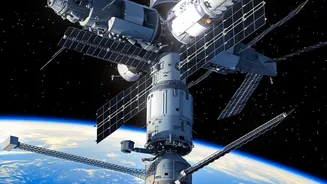
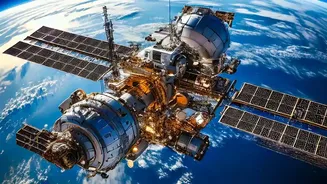
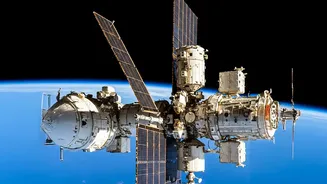
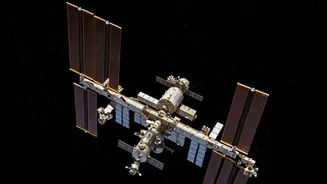
For over two decades, the International Space Station (ISS) has been humanity's lone outpost in the cosmos, hosting nearly 300 astronauts and thousands of scientific experiments. But the station, first launched in 1998, is showing its age. Rising maintenance
costs and structural fatigue mean its operational life is finite. NASA and its international partners have scheduled its retirement for the end of this decade, culminating in a controlled deorbit over a remote part of the Pacific Ocean. Instead of building a government-funded ISS 2.0, NASA is making a significant strategic pivot: it will become just one customer among many in a new commercial marketplace in low-Earth orbit (LEO). This move is designed to save taxpayer money, allowing the agency to focus on deep space missions like Artemis, while fostering a self-sustaining economy in LEO.
The Commercial Contenders Vying for Orbit
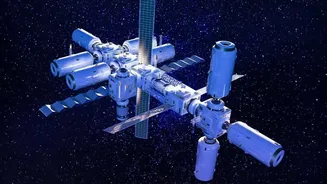
Several private companies, backed by NASA's Commercial LEO Destinations (CLD) program, are now in a race to build the first commercial space stations. Axiom Space, which already runs private astronaut missions to the ISS, is taking a unique bridge-building approach. It plans to attach its first module to the ISS around 2027, test its systems, and eventually detach to form a free-flying station. Another key player is Vast, which aims to launch its smaller, single-module Haven-1 station as early as 2027. Two larger, more ambitious projects are also underway. Starlab, a transatlantic joint venture between Voyager Space and Airbus, is developing a station with a large habitat and laboratory module, set for a 2029 launch. Meanwhile, Blue Origin and Sierra Space are developing Orbital Reef, envisioned as a "mixed-use business park" in space with capacity for up to 10 people.
A New Economy Above the Clouds
These new orbital habitats are not just for NASA astronauts. Their business models depend on a diverse range of customers. The primary goal is to create a robust market for in-space research, development, and manufacturing. Companies could leverage the unique microgravity environment to create superior fiber optics, print human organs, or develop new pharmaceuticals. Beyond industrial uses, space tourism is a major potential revenue stream. While early seats will likely be occupied by government-sponsored astronauts and researchers, companies are designing their stations with future private citizens in mind. National space agencies from countries without their own human spaceflight programs are also seen as key customers, eager to send their astronauts to conduct research in orbit without the massive expense of building their own infrastructure.
The Race Against the Clock
The single biggest challenge is time. A seamless transition requires at least one commercial station to be fully operational before the ISS is deorbited to avoid a gap in American human presence in LEO. Current timelines are ambitious, with the first modules from Axiom and Vast targeting launches around 2027, while Starlab and Orbital Reef aim for later in the decade. However, space development is notoriously difficult, and schedules often slip. There have also been debates about the business case. In early 2026, NASA floated the idea of a government-owned core module for companies to plug into, citing concerns about commercial viability, before industry pushback led the agency to reaffirm its support for free-flying private stations. Ensuring these multi-billion dollar projects can become profitable businesses, rather than relying indefinitely on NASA contracts, will be the ultimate test of this new commercial era.