
The Cosmic Fingerprint Kit
At the heart of this discovery is a technique called spectroscopy. Imagine starlight as a pure, white light. When an exoplanet passes in front of its star from our point of view, that starlight filters through the planet's atmosphere. The gases in that atmosphere absorb
tiny, specific portions of the light. A spectrograph is an instrument that takes this filtered starlight and splits it into a rainbow-like spectrum. But instead of a perfect rainbow, this spectrum has dark lines missing—an absorption pattern. Every chemical, from hydrogen to water vapour, has a unique absorption pattern, like a chemical fingerprint. By analysing which parts of the light are missing, astronomers can identify the molecules present in that alien atmosphere.
What Makes it 'High-Resolution'?
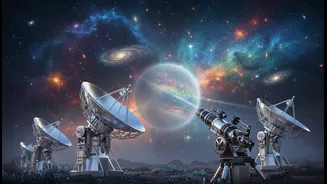
While a basic spectrograph can show that something is there, a high-resolution spectrograph provides undeniable proof and much more detail. Think of it as the difference between a blurry photo and a crystal-clear 4K image. These advanced instruments use sophisticated components like echelle gratings, which spread the light out over a wider area, allowing for a much finer analysis. This precision is crucial. It helps astronomers distinguish the faint signal of water from a distant planet's atmosphere from the noise of its star or even the water vapour in Earth's own atmosphere, which can interfere with observations from ground-based telescopes. This high resolution means scientists can be much more certain about their findings.
Detecting Water on Gas Giants
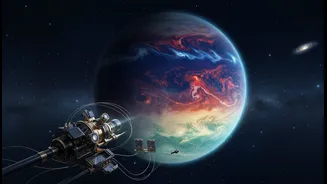
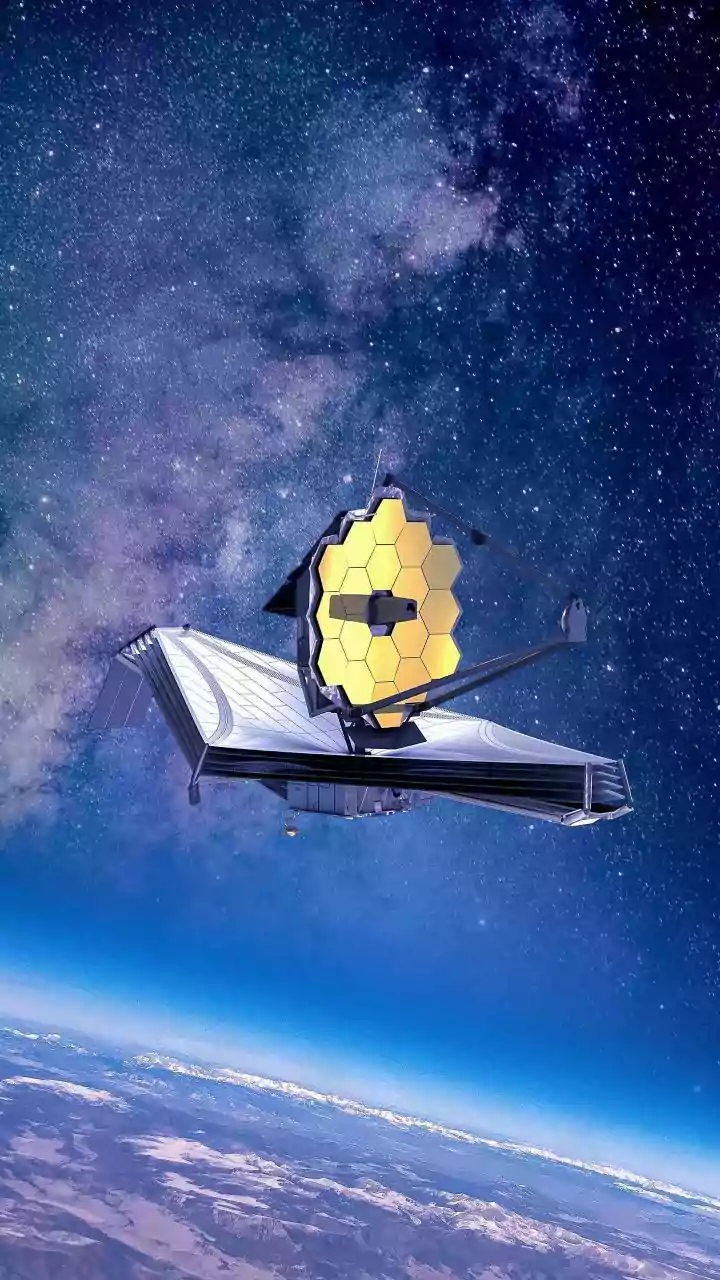
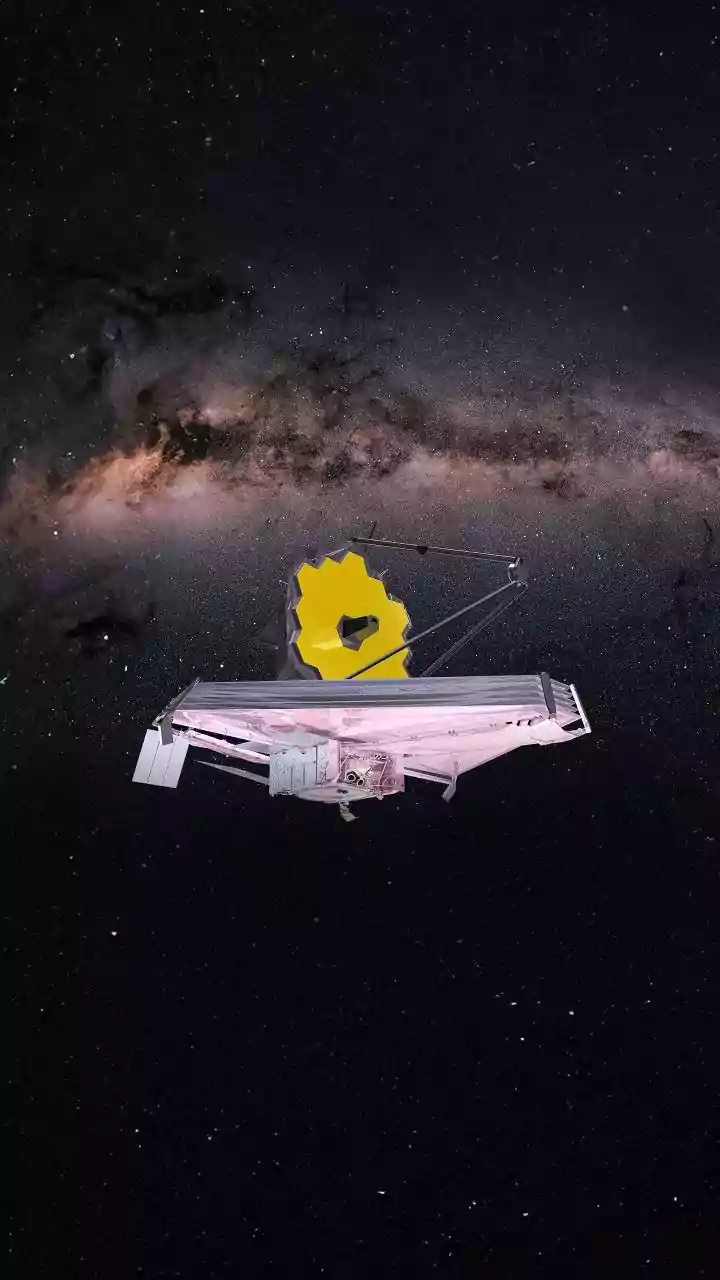
Gas giants, often called 'hot Jupiters', are large planets that orbit very close to their stars. Their massive size and puffy atmospheres make them ideal initial targets for this type of analysis. As the planet transits its star, its large atmosphere blocks a significant amount of light, creating a stronger signal for spectrographs to analyse. Powerful tools, including instruments on the James Webb Space Telescope (JWST) and large ground-based observatories, have successfully used high-resolution spectroscopy to confirm water vapour in the atmospheres of several gas giants, such as the well-studied HD 189733b and WASP-107b. For WASP-107b, the JWST not only found water vapour but also clouds made of silicate sand, showcasing the incredible detail these instruments can reveal.
Why This Discovery Matters
Finding water on a scorching gas giant doesn't mean we've found a habitable world. These planets are far too hot and lack a solid surface for life as we know it. However, confirming the presence of water is a monumental step. It proves that a key ingredient for life is common throughout the galaxy. Furthermore, perfecting these detection techniques on large gas giants prepares astronomers for the next, more challenging step: analysing the atmospheres of smaller, rocky, and potentially Earth-like planets. Each detection on a gas giant refines the technology and models that will one day be used to search for biosignatures—signs of life—on worlds that might be more like our own.