







The Ruling That Changes Things
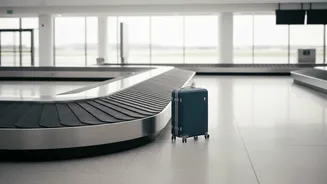
In a decision that serves as a significant reminder to airlines, a District Consumer Commission recently ordered an airline to pay a passenger a total of ₹53,923 for a three-day delay in delivering his baggage. The case, which came to a head in July 2026,
was not just about the delay itself, but the airline's failure to act on the passenger's complaints. The commission found the airline guilty of a “deficiency in service” for not providing the mandatory compensation outlined in the Ministry of Civil Aviation's Passenger Charter, despite the passenger filing a formal report and following up via email and the government's INGRAM portal. This ruling powerfully demonstrates that consumer courts are upholding passenger rights and that a well-documented complaint is the key to securing compensation.
Why A Written Record is Your Best Weapon
A verbal complaint at a busy help desk is fleeting, but a written record is a powerful piece of evidence. The first and most crucial document is the Property Irregularity Report (PIR). This report, which you must file with the airline's ground staff before leaving the airport, is the official start of your complaint process. Without a PIR, an airline can—and often will—dispute that the problem ever occurred at their end. Following the PIR, all subsequent communication should be in writing, preferably via email. This creates an indisputable timeline of your efforts to resolve the issue. As the recent Palakkad consumer court case showed, the passenger's documentary evidence, including emails and the INGRAM portal complaint, was crucial in proving the airline's failure to act.
What Every Written Complaint Must Contain
To build a strong case, your written complaint needs to be clear, concise, and factual. Always start by providing your core travel details: your full name, Passenger Name Record (PNR), flight number, and the date of travel. Next, detail the timeline of events. State exactly when and where you checked in your baggage and when you realised it was missing. Mention the PIR number you received at the airport. If you incurred expenses due to the delay—such as purchasing essential clothing or toiletries—list each item and include scanned copies of the receipts. Finally, state exactly what you are requesting, whether it's reimbursement for your expenses, compensation as per DGCA norms, or both.
Know Your Rights: The Compensation Framework
Under the regulations set by the Directorate General of Civil Aviation (DGCA), airlines have a clear liability for baggage issues. For domestic flights, an airline's liability for lost, delayed, or damaged baggage is limited to ₹20,000 per passenger. If a bag is officially declared lost (which typically happens after 21 days of tracing), the compensation is often calculated at a rate of up to ₹3,000 per kilogram. For international flights governed by the Montreal Convention, the liability is significantly higher, capped at 1,288 Special Drawing Rights (SDRs), which translates to approximately ₹1.5 lakh. It is important to remember that airlines are obligated to compensate for reasonable essential purchases made during a baggage delay.
The Escalation Ladder: When The Airline Ignores You
If your initial written complaint to the airline's customer service goes unanswered or you receive an unsatisfactory response, do not give up. The DGCA mandates a clear escalation path. The next step is to forward your complaint to the airline's designated Nodal Officer, and if that fails, to the Appellate Authority. You can find their contact details on the airline’s website under sections like "Grievance Redressal" or "Passenger Charter". If the airline remains unresponsive, you can file a grievance on the government's AirSewa portal, which ensures your complaint is officially logged with the Ministry of Civil Aviation. As a final resort, you can approach a District Consumer Commission, as the passenger in the recent ruling successfully did.