

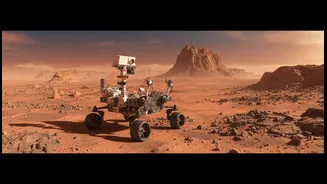
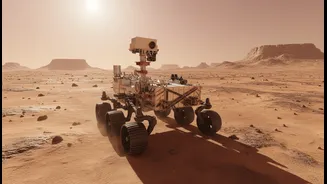
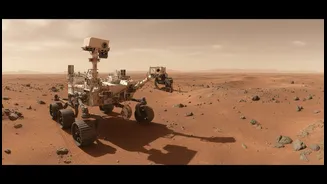


An Endurance Run on Another World
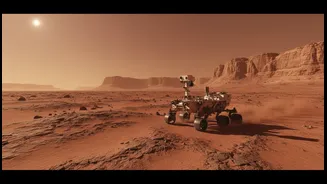
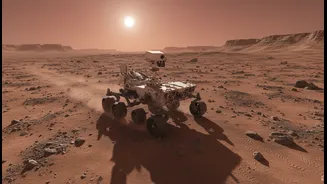
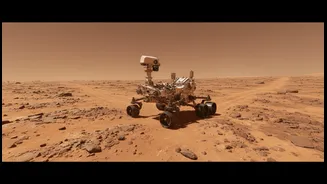
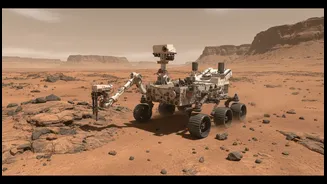
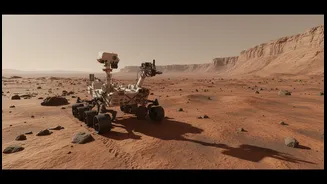
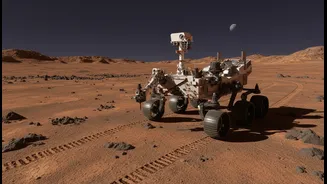
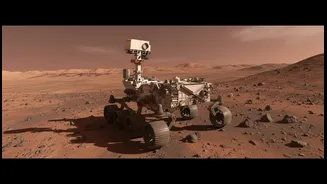
On June 14, 2026, the Perseverance rover’s odometer clicked past 42.195 kilometres (26.2 miles)—the official length of a marathon. It achieved this feat in just over five years, less than half the time it took the previous record-holder, the Opportunity
rover. This isn't just about speed; it's about endurance. The rover has survived and thrived in one of the most hostile environments imaginable, navigating treacherous terrain millions of kilometres from the nearest repair shop. Each metre travelled is a victory for the team at NASA’s Jet Propulsion Laboratory (JPL), who learned crucial lessons from the significant wheel damage experienced by the earlier Curiosity rover. Perseverance's longevity is a testament to designing for resilience and intelligently managing the unavoidable wear and tear that comes with exploring another planet.
The Martian Obstacle Course
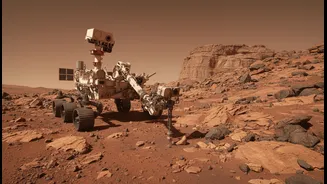
The primary challenge for Perseverance is the very ground it drives on. Jezero Crater, its landing site, is a geological wonderland chosen for its potential to hold signs of ancient life. But for a one-tonne robot, it's a minefield. The surface is littered with sharp, wind-carved rocks called ventifacts that can puncture the rover’s thin aluminium wheels. The experience with Curiosity showed just how quickly these rocks can shred wheel skins, leading to a more robust design for Perseverance, with thicker aluminium and a different tread pattern. Even with these improvements, every drive is a calculated risk. Rover planners on Earth must meticulously chart paths, using high-resolution orbital images to balance reaching scientifically interesting targets with avoiding wheel-destroying hazards.
Smarter, Not Harder: The AutoNav Solution
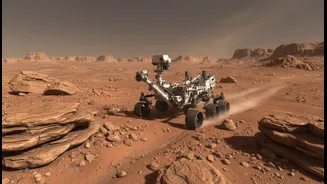
Perseverance's secret weapon in this marathon is its brain. The rover is equipped with a significantly upgraded autonomous navigation system called AutoNav. Unlike older rovers that needed constant, step-by-step instructions from Earth, Perseverance can think for itself. Its dedicated co-processor allows it to analyse the terrain in real-time, identify hazards like large rocks or sand traps, and plot its own safe path forward, all while driving. This “thinking while driving” capability allows Perseverance to cover more ground in a day than previous rovers could in a week, and it's the primary reason it completed its marathon so quickly. AutoNav is so effective that the rover's driving distance is no longer primarily limited by the terrain, but by how well it knows its precise location on the planet.
Giving a Rover GPS on Mars
To unleash the full potential of AutoNav, engineers recently deployed another groundbreaking technology: Mars Global Localization (MGL). Since there’s no GPS on Mars, rovers traditionally relied on human operators comparing rover images to orbital maps to pinpoint their exact location—a slow process that limits autonomous drives. MGL automates this, allowing Perseverance to stop, take a panoramic image, and within minutes, match it to its onboard orbital map to figure out its location with incredible accuracy. This effectively gives the rover its own GPS. By knowing precisely where it is, it can be commanded to drive for much longer distances autonomously, further maximising its scientific return and minimising risk by relying on its own intelligent assessment of the path ahead.
A Masterclass for Earthbound Engineers
The journey of Perseverance is more than an incredible space exploration story; it's a living case study for engineers and robotics students. It demonstrates a powerful philosophy of risk management. First, learn from past failures by redesigning hardware like the wheels. Second, develop sophisticated software like AutoNav and MGL that empowers the system to protect itself and make intelligent, real-time decisions. And third, maintain a crucial human-in-the-loop system, where brilliant engineers on Earth set the strategic goals while letting the robot handle the tactical execution. This blend of robust hardware, intelligent autonomy, and human oversight offers a powerful blueprint for creating resilient robotic systems designed to operate in any challenging environment, from the deep sea to the surface of Mars.