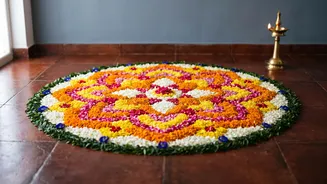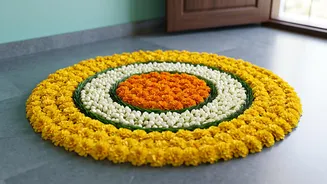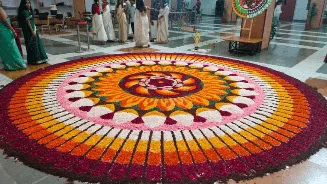




Embrace Local and Seasonal Blooms
The most significant cost driver during Onam is the demand for popular, often-transported flowers like chrysanthemums and specific rose varieties. Instead, lean into the true spirit of the harvest festival by using locally available, seasonal flowers.
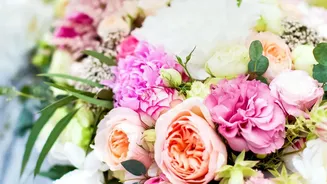
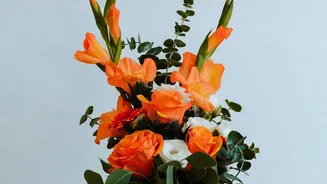
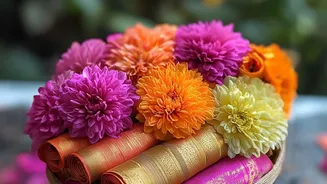
Marigolds (jamanthi), globe amaranth (vadamalli), jasmine, and hibiscus (chemparathy) are not only traditional but also more affordable as they don't incur hefty transportation costs. These flowers are often sold at local markets and by vendors at a lower price point than exotic blooms, and using them supports local farmers and economies.
Forage in Your Own Backyard
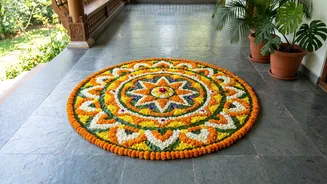
Traditionally, pookalams were made with flowers and leaves gathered from one's own garden and neighbourhood. Before you head to the market, take a walk around your home. You might be surprised by what you find. Flowers like thumba (Lucas Aspera) and chethi (Ixora), central to classic pookalams, might be growing nearby. This approach is not only free but also deeply connects your celebration to the local landscape, just as the tradition intended. It adds a personal, authentic touch that money can't buy.
Think Beyond Just Petals
A vibrant pookalam doesn't have to be 100% flower petals. Get creative with fillers and textures. Brightly coloured leaves, both fresh and dried, can add beautiful shades of green, yellow, and brown, creating volume and contrast. In traditional designs, rice flour was often used for white outlines and details. You can also use other natural, biodegradable materials like coloured rice, lentils, or pulses to fill in sections of your design. These materials add unique textures and are extremely budget-friendly alternatives to expensive petals.
Plan Your Design for Efficiency
An elaborate, sprawling pookalam can consume a staggering amount of flowers, with some competition pieces costing thousands of rupees. For home celebrations, beauty can be found in simplicity. A smaller, well-planned design can be just as impactful. Before you start, sketch out your pattern. A clear design helps you estimate the quantity of flowers needed, preventing over-buying. Simple geometric shapes, concentric circles, or a single large motif often require fewer flowers than complex, multi-faceted patterns but look just as elegant.
Master the Art of Illusion
There are several tricks to make your pookalam appear fuller than it is. First, start by separating petals only when you are ready to use them to maintain freshness. When arranging, don't just lay the petals flat. By layering them and allowing them to stand up slightly, you can create a sense of depth and volume with fewer petals. Using a base of less expensive, voluminous flowers like marigolds for the outer rings allows you to save your pricier, more delicate flowers for the central, focal points of the design. This strategic placement ensures maximum visual impact without needing to fill the entire design with costly blooms.
Pool Resources with Community
Onam is a festival of community. Extend this spirit to your pookalam preparations. Coordinate with neighbours or friends to buy flowers in bulk from a wholesale market. Traders often provide better rates for larger purchases, and you can split the cost and the flowers amongst yourselves. This is also a wonderful way to share different varieties of flowers that someone might have growing in their garden, adding more colour and diversity to everyone's pookalam while fostering a sense of community and shared celebration.