

Europa: An Ocean World Mystery
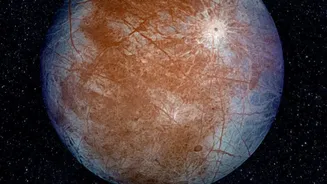
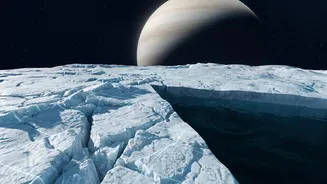
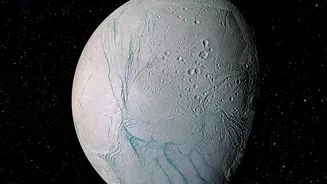
For decades, Europa has captivated scientists. It's one of the most promising places in our solar system to search for life beyond Earth. Evidence strongly suggests that beneath its kilometres-thick icy crust lies a global ocean of liquid water, potentially
containing more than twice the water of all of Earth's oceans combined. This possibility stems from observations of its disrupted magnetic field, which implies the presence of a conductive fluid like salty water, and a remarkably smooth, young surface that suggests ongoing geological renewal from below. The immense gravity of Jupiter pulls and flexes the moon, creating tidal energy that likely keeps this hidden ocean liquid, and could possibly power hydrothermal vents on the seafloor—similar to those that support vibrant ecosystems on Earth.
The Detective: NASA's Europa Clipper
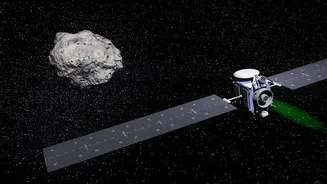
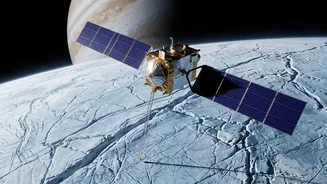
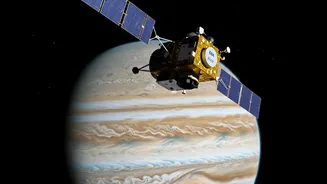
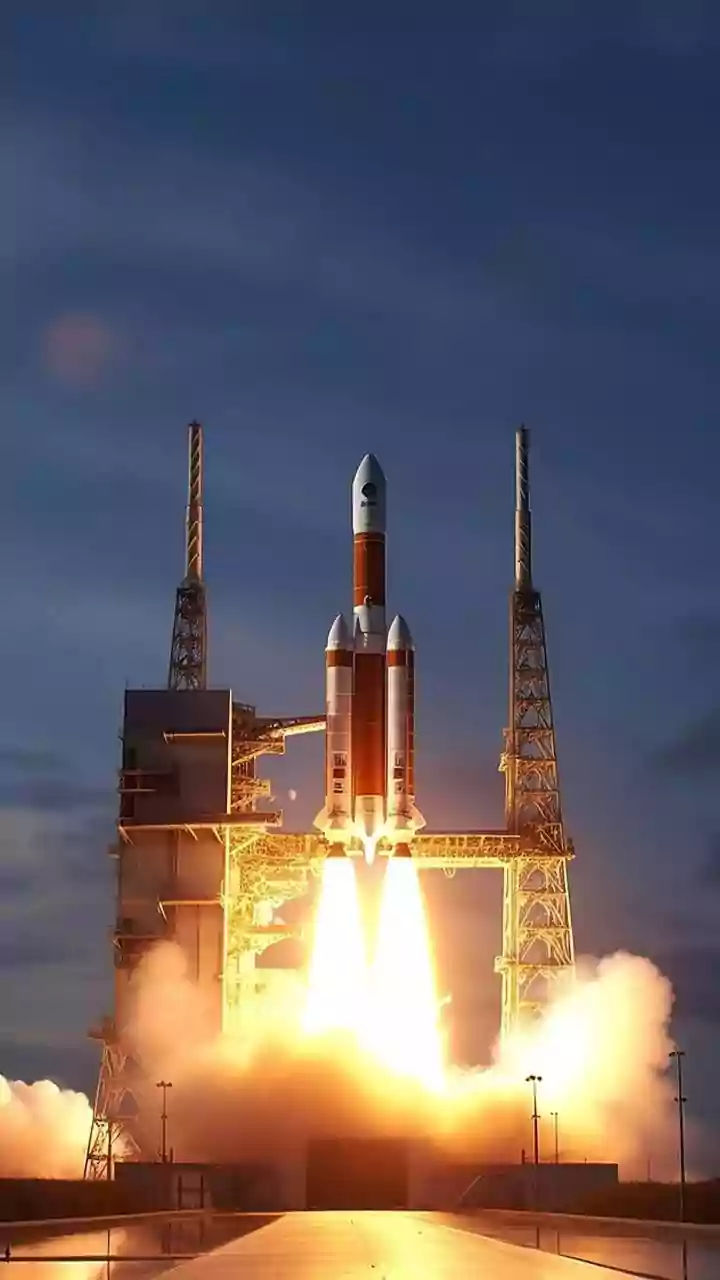
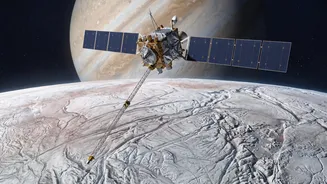
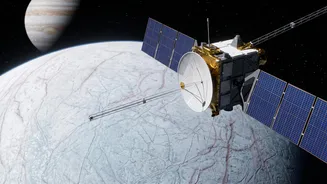
To investigate Europa's potential for life, NASA launched the Europa Clipper spacecraft in October 2024. Rather than orbiting the radiation-heavy environment of Europa directly, the spacecraft will orbit Jupiter and perform dozens of close flybys of the moon, some as low as 25 kilometres above the surface. After a five-and-a-half-year journey, it's set to arrive at the Jupiter system in April 2030. The mission has three primary goals: to determine the thickness of the ice shell, to study the composition of the moon, and to analyze its geology. While it isn't designed to find life itself, its main objective is to figure out if Europa has the right conditions to support it.
The Key Instrument: REASON
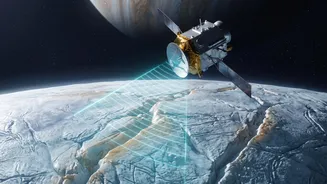
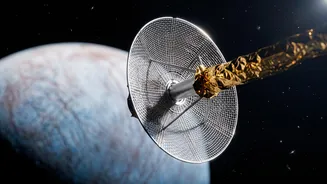
Of the nine science instruments aboard the Clipper, only one can look directly through the ice: the Radar for Europa Assessment and Sounding: Ocean to Near-surface, or REASON. This sophisticated ice-penetrating radar was developed by researchers who honed the technology studying Antarctica's massive ice sheets on Earth. REASON is designed to be the mission’s eyes, providing the first direct look at what lies beneath Europa’s mysterious frozen surface. Its job is to search for the boundary between the ice and the ocean, measure the ice's thickness, and hunt for pockets of water trapped within the shell.
How Ice-Penetrating Radar Works
Think of REASON as a highly advanced stud finder for an entire world. The instrument works by sending out radio waves from its antenna. It uses two different frequencies: a high-frequency (HF) signal to probe deep into the ice—up to 30 kilometres—and a very-high-frequency (VHF) signal for a more detailed look at the shallow subsurface. These radio waves travel through the ice until they hit something different, like liquid water or layers of different materials. The waves then bounce back to the spacecraft. By measuring the time it takes for the echo to return, scientists can calculate the depth of the feature. By measuring the strength of the returning signal, they can learn about the properties of the material that reflected it, distinguishing solid ice from liquid water.
Mapping the Hidden World
Over nearly 50 flybys, REASON will build a 3D map of Europa's ice shell. This will help scientists test the theory that the moon's surface and the ocean below are exchanging material, a process essential for creating a habitable environment. The radar will search for subsurface lakes, similar to those found under Antarctic ice, which could be passages for chemicals to travel from the surface to the ocean. In addition to looking for the ocean, the radar will also characterize the surface roughness, which is critical for identifying safe locations for a potential future lander mission. By combining REASON's data with measurements from other instruments that study Europa's magnetic field and gravity, the team will get a complete picture of the ice shell's thickness and the ocean's depth and saltiness.