






1. Your Car Needs a Pre-Monsoon Check-up
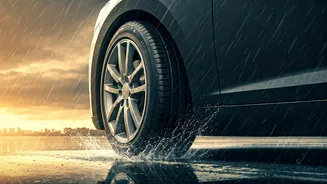
Safe driving in the rain begins before you even turn the key. Your vehicle must be prepared for the challenge. First, inspect your tyres. The legal minimum tread depth is 1.6mm, but for wet roads, more is always better. Good tread helps channel water
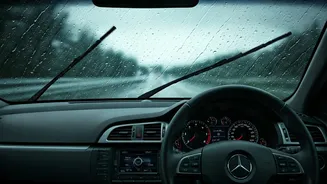
away and prevents skidding. Ensure your tyres are inflated to the manufacturer's recommended pressure. Next, check your wiper blades. If they are cracked, hard, or leave streaks, replace them immediately. A clear view of the road is non-negotiable. Finally, test all your lights — headlights, taillights, and indicators. In low-visibility conditions, being seen by others is just as important as seeing the road ahead. A quick visit to a mechanic for a brake check is also a wise investment.
2. Beware the Treachery of the First Rain
The most dangerous time to be on the road is often during the first half-hour of a downpour after a long dry spell. Over weeks and months, engine oil, grease, and dirt accumulate on the road surface. When the first rain falls, it mixes with this grime to create an exceptionally slick, almost invisible film. This makes the road surface far more slippery than it will be after an hour of heavy rain has washed the contaminants away. During this initial period, your car's tyres have significantly less grip, meaning your braking distance increases dramatically. Treat the first rain with extreme respect, reduce your speed more than you think is necessary, and avoid any sudden manoeuvres.
3. Master the Art of Driving Smoothly
Rain demands a change in your driving style. Aggressive acceleration, hard braking, and sharp turns are recipes for disaster on a wet surface. Every input should be gentle and deliberate. Most importantly, increase your following distance. The standard 'three-second rule' should be doubled to at least six seconds. This gives you more time and space to react if the vehicle in front of you brakes suddenly. When you need to slow down, anticipate your stops and ease onto the brake pedal gently. Slamming the brakes can cause the wheels to lock up and lead to a skid from which it's very difficult to recover.
4. Understand and Avoid Hydroplaning
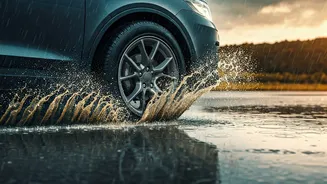
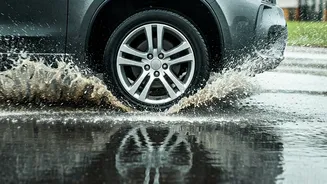
Hydroplaning is a frightening experience where your tyres lose contact with the road surface and skim across a layer of water. It can happen at speeds as low as 50-60 km/h if the water is deep enough. You'll feel the steering become light and unresponsive. The worst thing you can do is panic and slam the brakes or wrench the steering wheel. Instead, take your foot off the accelerator smoothly. Do not brake. Keep the steering wheel straight or make only very gentle corrections to keep the car pointed in the right direction. As the car slows down, the tyres will regain contact with the road, and you'll feel control return. The best defence is prevention: slow down on very wet roads and avoid driving through large patches of standing water.
5. See and Be Seen Correctly
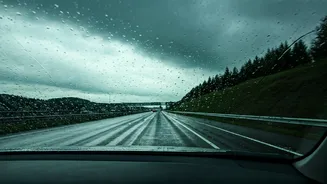
In rainy conditions, visibility drops for everyone. Turn on your low-beam headlights, even during the day. This is not just to help you see better, but to make your vehicle more visible to other drivers and pedestrians. Do not use your high beams, as they will reflect off the raindrops and create glare, worsening your own vision and blinding oncoming traffic. It's also critical to avoid using your hazard lights (blinkers) while moving. In many countries, this is illegal because it causes confusion. Other drivers won't know if you are braking, turning, or stopped. Your hazard lights are for when your vehicle is stationary and posing a hazard.
6. Navigate Hidden Road Hazards
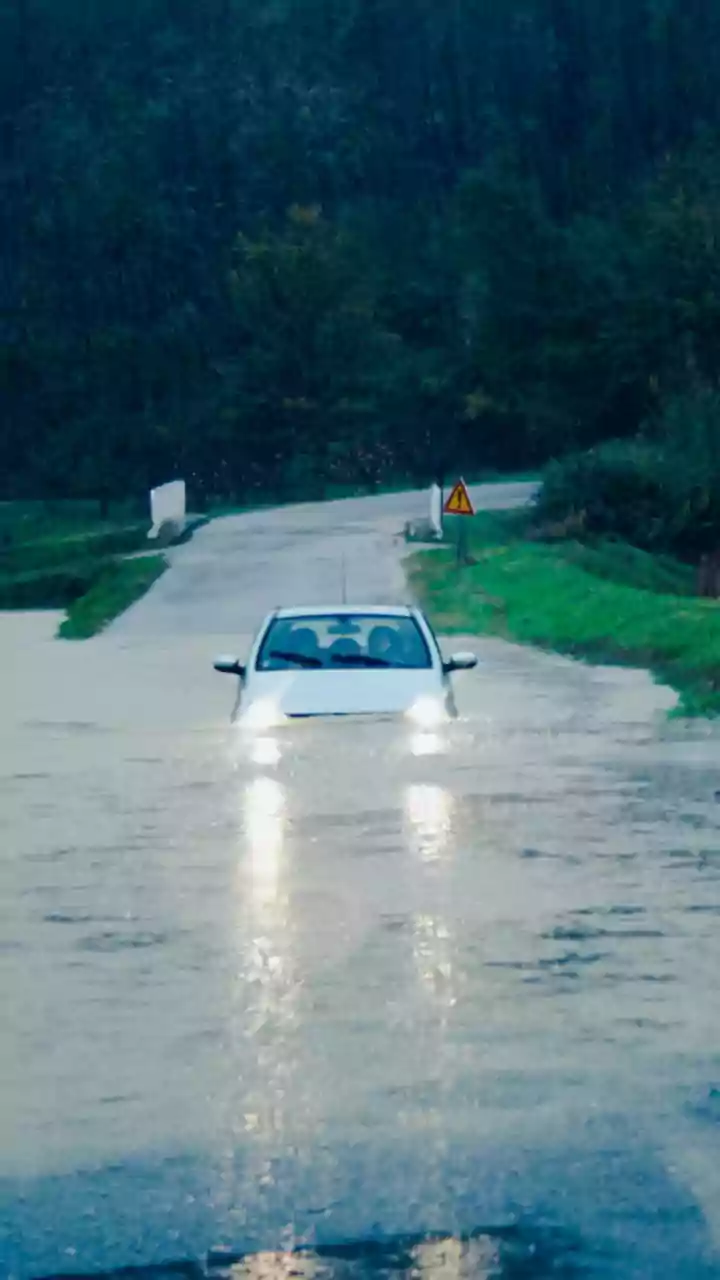
Indian roads present unique challenges during the monsoon. Waterlogging can turn a familiar street into a deep pool, concealing giant potholes, debris, or even open manholes. If you're unsure about the depth of a flooded patch of road, it's always safer to find an alternate route. Driving through deep water can cause your engine to stall, damage sensitive electronic components, or even lead to a loss of control. Be particularly cautious in underpasses, which are prone to flooding. Pay close attention to the behaviour of other vehicles ahead of you; if they are swerving or slowing down unexpectedly, they may be navigating a hidden obstacle.