



When banking apps, airlines, and email services all stumble in the same week, it’s easy to assume the worst. A recent wave of outages across major US firms did just that, sparking widespread rumors of a coordinated and malicious cyberattack.
A Cascade of Disruptions
Over the course
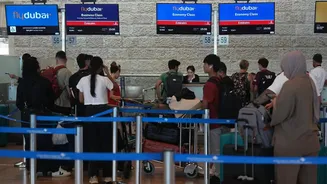
of a week in mid-November, a string of technical failures hit some of the biggest names in American business and government. The disruptions began with Microsoft's 365 services, where platforms like Outlook and Teams faced global outages. Soon after, the Federal Aviation Administration (FAA) ordered a nationwide ground stop for several hours, leading to thousands of flight delays due to a system malfunction. The chaos continued as customers of major banks, including JPMorgan Chase, Bank of America, and Wells Fargo, reported issues with transactions and online access. United Airlines also experienced a 90-minute system outage that delayed departing flights. The string of events was capped by service problems at Apple and a temporary disruption of an internal network at the National Security Agency (NSA).
Anxious Whispers of a Cyberattack
The rapid succession and high-profile nature of the outages fueled immediate speculation on social media and among the public that a sophisticated, large-scale cyberattack was underway. The sheer number of seemingly simultaneous failures across different critical sectors—from finance and travel to government communications—created a narrative of a coordinated assault. This theory gained traction because the pattern mirrored what many experts fear a state-sponsored cyber offensive would look like. Adding to the concern were recent, authentic warnings from the FBI about new AI-powered hacking tools, leading some to connect the dots, even without concrete evidence.
Washington's Official Response
Top US officials moved to quell the growing panic. In testimony before the House Homeland Security Committee and in public statements, leaders from the intelligence and security communities were unequivocal. 'There is no indication whatsoever that there is any cyber malicious activity related to any of those incidents,' stated FBI Deputy Director Christopher Raia. Director of National Intelligence Jay Clayton was equally direct, telling lawmakers, 'What we have seen over the last 10 days is not an orchestrated attack by a foreign malign actor'. Both officials, along with Homeland Security Secretary Markwayne Mullin, assured the public that the events were not connected and were being treated as separate technical issues.
The Real Culprits: Glitches and Upgrades
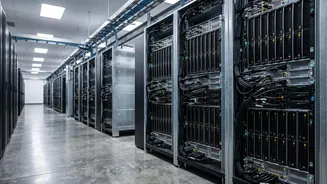
Instead of a shadowy cyber adversary, the causes identified by the companies were far more mundane. JPMorgan Chase attributed its banking delays to a 'software bug in on-premise hardware systems'. Microsoft pointed to a combination of a months-old bug and server capacity issues. The FAA's nationwide ground stop was traced back to a faulty router installed during a network upgrade. United Airlines cited a 'technology-related issue', and Apple explained its service problems were the result of an 'internal update'. Even the NSA's network disruption was explained as a 'temporary degradation during scheduled routine maintenance'. In each case, the companies explicitly stated they found no evidence of a cyberattack.
A Wake-Up Call for Digital Infrastructure
While the absence of a cyberattack is reassuring, the week of outages serves as a stark reminder of the fragility of our interconnected digital world. Experts note that our global dependence on a handful of major technology providers means that a single technical glitch, a botched software update, or a hardware failure can have cascading effects across the economy. Officials like acting CISA Director Nick Andersen noted that the incidents highlight the need to build more resilient systems. Some, like Senator Mark Warner, suggested that the pressure to constantly patch new vulnerabilities being discovered by AI may lead to more frequent, albeit temporary, disruptions as companies rush to secure their systems. The panic itself revealed how quickly public trust can erode, underscoring the need for clear and rapid communication from both companies and government agencies during any major service disruption.