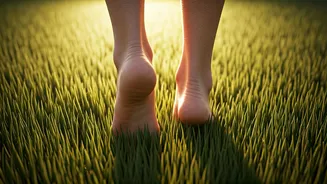









The Rise of Grounding
The practice of walking barefoot on natural surfaces, often called 'grounding' or 'earthing', has gained significant popularity. [24] The central idea is that direct skin contact with the Earth's surface allows our bodies to connect with its natural electrical
charge, potentially leading to a host of health benefits. [15, 25] Proponents claim everything from reduced inflammation and stress to better sleep and faster recovery after exercise. [12, 18] The post-workout window is seen as a particularly beneficial time for this practice, with some research suggesting grounding can decrease muscle soreness. [4, 17] But while the concept is simple and appealing, the claims about significant improvements in posture and muscle tone deserve a closer look.
Posture: A Foundation-Up Approach
The link between barefoot walking and posture is one of the more evidence-backed claims. When you walk barefoot, especially on an uneven surface like grass, you receive a flood of sensory information through the thousands of nerve endings in your feet. [3, 8] This feedback loop is called proprioception — your body's innate sense of its position in space. [6, 14] Constantly wearing cushioned, supportive shoes can dull this sense. [6, 13] Going barefoot forces the small, intrinsic muscles in your feet to work harder, strengthening them and improving your natural arch. [1, 10] A stronger, more stable base allows for better alignment of the ankles, knees, hips, and spine, which can lead to improved posture over time. [5, 7]
Muscle Tone or Muscle Activation?
The claim that barefoot walking improves overall muscle tone is a bit of an overstatement. You won't develop sculpted abs from a stroll on the lawn. However, it does significantly increase muscle *activation* and strength in the feet and lower legs. [23] Studies have shown that people who regularly walk barefoot or in minimalist shoes can see a notable increase in the size and strength of their foot muscles. [1, 22] Conventional shoes often restrict natural foot movement, which can lead to certain muscles becoming weak. [13] By letting your feet move and flex as they were designed to, you engage a wider range of muscles, from your toes to your calves. [23] This doesn't replace a proper strength training routine, but it contributes to a more functional and resilient lower body.
The Mental Cooldown
Beyond the physical mechanics, a key benefit of a post-workout walk on grass is the mental reset. Spending time in nature, even for just 10-15 minutes, can have a calming effect on the nervous system. [3] Some studies have indicated that grounding may help normalize cortisol levels, the body's primary stress hormone. [18] After an intense workout, your body is in a state of high alert. A gentle, mindful walk where you focus on the sensation of the cool, soft grass under your feet can help shift your nervous system from a 'fight or flight' state to a 'rest and digest' state, which is crucial for effective recovery. [2, 15] This can be just as important as physical recovery.
A Practical Guide to Safe Barefooting
While the benefits are appealing, safety is paramount. Walking barefoot outdoors exposes you to potential risks like cuts, scrapes, infections, and sharp objects. [1, 11] To start safely, choose a familiar, clean patch of grass that you know is free from pesticides, sharp debris, and animal waste. Start with short durations, perhaps just 10 to 15 minutes, and gradually increase the time as your feet adapt. [13] Listen to your body; if you feel any sharp pain, stop. After your walk, wash your feet thoroughly and check them for any cuts or scrapes. [1] For individuals with diabetes or peripheral neuropathy, which can cause reduced sensation in the feet, it is best to consult a doctor before trying barefoot walking due to the increased risk of unnoticed injury. [2, 13]