



Your Window to the Universe: Choosing Binoculars
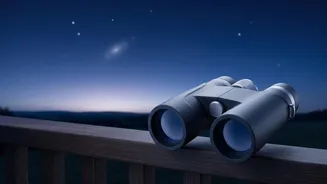
Before you can gaze upon distant celestial objects, you need the right tool. The good news is that you probably already have one. For stargazing, you don't need highly specialized or expensive equipment. A standard pair of binoculars, often used for birdwatching
or sporting events, will do the trick. The ideal specifications for a beginner are 7x50 or 10x50. The first number (7x or 10x) refers to the magnification, while the second number (50) is the diameter of the objective lenses in millimeters. A larger lens gathers more light, which is crucial for viewing faint objects in the night sky. Binoculars in this range offer a great balance of magnification and a wide field of view, making it easier to find your targets. Many people find that 7x50 binoculars are optimal to start with, as higher magnifications can be harder to hold steady without a tripod.
Setting the Scene for Success
Where you observe is just as important as what you observe with. For the best experience, find a location away from the glare of city lights. Light pollution washes out faint objects, making them difficult or impossible to see. Even a local park or a darker corner of your neighbourhood can make a significant difference. Once you're at your spot, give your eyes at least 15-20 minutes to fully adapt to the darkness. This will dramatically increase your ability to spot faint details. Avoid looking at your bright phone screen, as this will reset your night vision. If you need a light to consult a star chart, use a red flashlight, which is less disruptive to your dark-adapted eyes. Finally, get comfortable. Stargazing can involve looking up for long periods, so a reclining chair can save you from a sore neck.
Finding the King Planet: Jupiter
During the autumn of 2026, Jupiter will be a brilliant object in the predawn sky. It will appear in the eastern sky, shining with a steady, commanding light. Unlike stars, which twinkle, planets typically shine with a more constant glow. Jupiter is one of the brightest objects in the night sky, often outshone only by the Moon and Venus, making it relatively easy to identify. For its exact position on any given night, it’s highly recommended to use a smartphone app like SkyView or Stellarium. These apps use your phone's location to show you a real-time map of the sky, allowing you to simply point your phone upwards and identify the bright beacon that is Jupiter.
Spotting Jupiter's Galilean Moons
Once you have Jupiter in your sights, the real magic begins. To see its four largest moons—Io, Europa, Ganymede, and Callisto—you will need to hold your binoculars as steady as possible. The slightest shake can make them disappear. Try bracing your elbows on a stable surface like a car roof, a fence, or by mounting the binoculars on a tripod. Look for tiny pinpricks of light right next to the planet. They will often appear in a nearly straight line on either side of Jupiter. Don't be discouraged if you don't see all four; sometimes a moon might be hidden in front of or behind the planet during its orbit. What you are seeing is a miniature solar system, the same sight that led Galileo Galilei to revolutionize our understanding of the universe in 1610.
Hunting for a Distant Galaxy: Andromeda
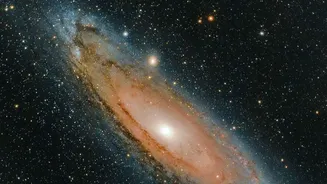
The autumn months, particularly October and November, are the best time to view the Andromeda Galaxy (also known as M31). This is our closest major galactic neighbor, and it will be high in the sky. To find it, first locate the W-shaped constellation of Cassiopeia. The three stars on the left side of the 'W' act as an arrow, pointing roughly in the direction of Andromeda. Another method is to start from the Great Square of Pegasus and star-hop along the chain of stars that form the constellation Andromeda. Slowly scan this area with your binoculars. Be patient, as you are looking for something very faint.
What You'll See: A Faint, Fuzzy Patch
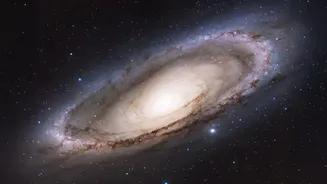
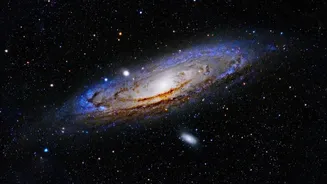
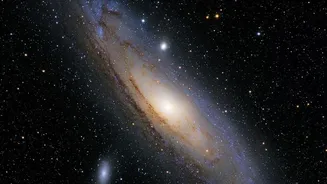
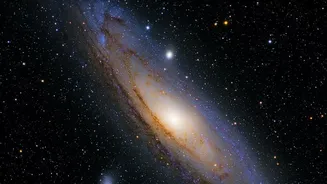
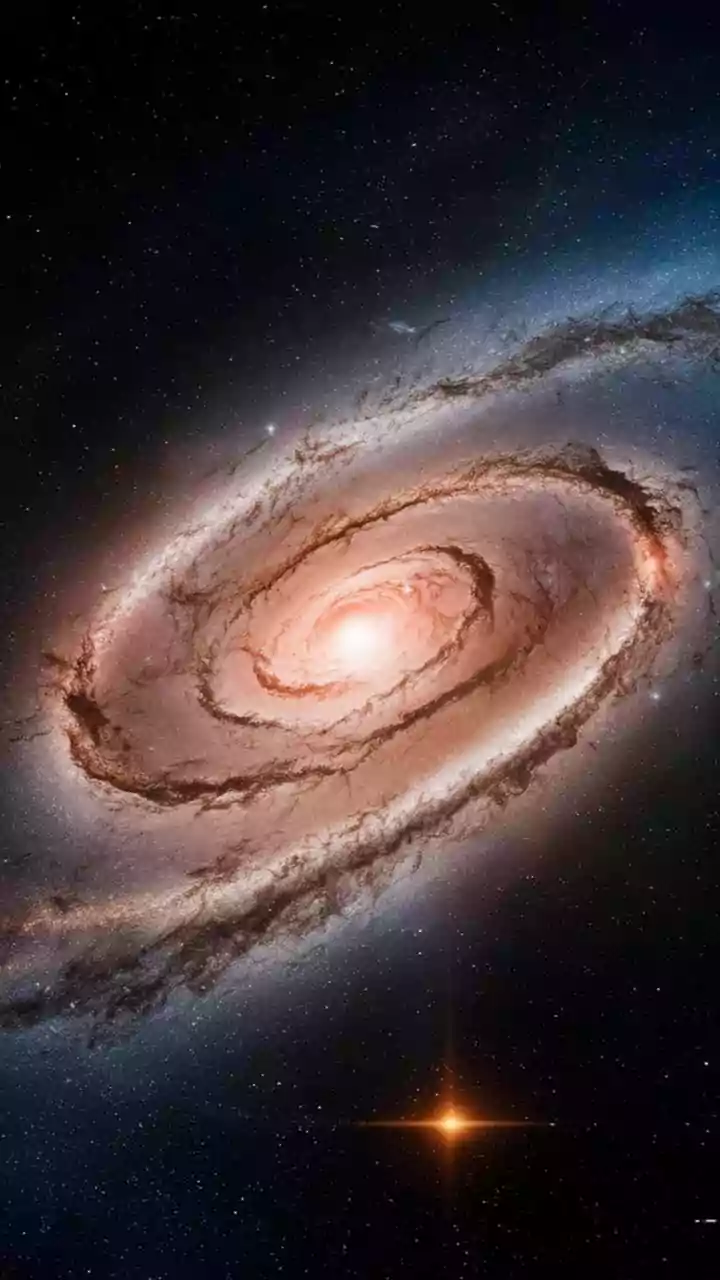
When you find it, the Andromeda Galaxy will not look like the spectacular spiral images you've seen from NASA. Through binoculars, from a reasonably dark site, it will appear as a small, faint, elongated smudge or a fuzzy oval of light. It may seem underwhelming at first, but take a moment to consider what you are looking at. The faint light hitting your eyes has been traveling through space for 2.5 million years. You are quite literally looking back in time, witnessing an entire galaxy of over a trillion stars with nothing more than a simple pair of binoculars. Using averted vision—looking slightly to the side of the object—can sometimes make the galaxy's faint glow appear more prominent.