






Why Your Degree Is No Longer Enough
For decades, a degree from a reputable institution was the primary ticket to a good job. In 2026, that has fundamentally changed. Indian employers have moved decisively from degree-based screening towards skills-first recruitment. The rapid pace of technological
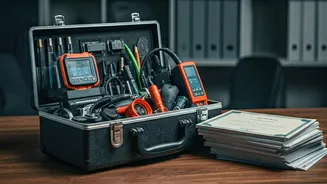
change, especially the integration of AI, means that what you learned in a four-year course can become outdated quickly. As a result, companies are prioritizing candidates who can demonstrate practical, real-world capabilities and adapt on the fly, regardless of their academic pedigree. This shift means that while your degree still provides credibility, it's your proven skills that establish your capability to do the job from day one.
Build a Digital Portfolio That Proves Your Worth
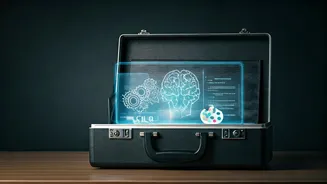
The single most powerful tool in your 2026 job-hunting arsenal is a digital portfolio. Once reserved for creative professionals, portfolios are now essential across fields like marketing, tech, data analysis, and even HR. A resume *tells* a recruiter you have skills; a portfolio *shows* them. It provides concrete evidence of how you think, solve problems, and deliver results. For example, instead of just listing 'Data Analysis' as a skill, your portfolio can feature a case study of a project where you analyzed a dataset to deliver a specific business insight. This shifts the conversation from what you claim you can do to what you have already done. Studies suggest a vast majority of companies may prioritize candidates with online portfolios, significantly boosting interview chances.
Master a Blend of Hard and Soft 'Power' Skills
Recruiters are looking for a specific combination of skills. On one hand, hard technical skills are in high demand. These include proficiency in AI and machine learning, data analytics, cybersecurity, cloud computing, and digital marketing. On the other hand, with AI automating many technical tasks, 'power skills' (formerly 'soft skills') have become even more critical. These are human-centric abilities that AI cannot replicate: emotional intelligence, critical thinking, communication, adaptability, and leadership. The ideal candidate in 2026 is someone who can combine technical fluency with strong interpersonal abilities, using AI as a tool to augment their human judgment, not replace it.
Leverage Micro-Credentials and Verifiable Certifications
In a skills-first economy, continuous learning is non-negotiable. One of the best ways to signal your expertise is through micro-credentials and industry-recognized certifications. These serve as verifiable proof that you have mastered a specific tool, methodology, or skill set. Whether it's a certification in Google Analytics, a professional certificate in Python, or a badge for completing an advanced course in project management, these credentials provide a quick, reliable signal to recruiters. They show initiative and a commitment to keeping your skills current, which is a highly valued trait in today's fast-evolving workplace.
Prepare to 'Show Your Work' in Interviews
The shift to evidence-based hiring extends to the interview process itself. Competency-based interviews that focus on real-world scenarios are now standard. Be prepared to go beyond simply answering questions. Use the STAR (Situation, Task, Action, Result) or SOAR (Situation, Obstacle, Action, Result) method to structure your answers around specific accomplishments. For instance, when asked about problem-solving, don't just say you're a good problem-solver. Describe a specific problem you faced, the actions you took to address it, and the measurable results you achieved. With the rise of AI-written resumes, hiring managers are looking for this kind of authentic, detailed storytelling to understand what you actually accomplished.