




The Creeping Crisis of Salinity
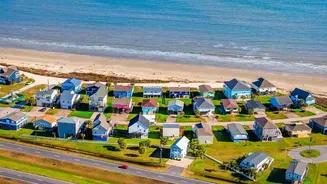
For farmers across the coastal plains of states like Odisha, Andhra Pradesh, and Tamil Nadu, the soil is their livelihood. But this foundation is under increasing attack. More frequent and intense cyclones, coupled with a gradual rise in sea levels, are
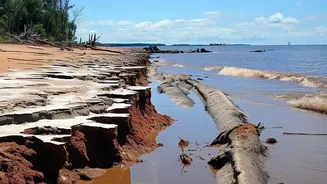
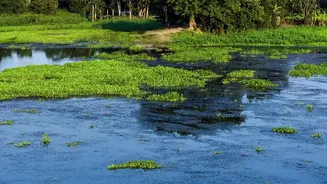
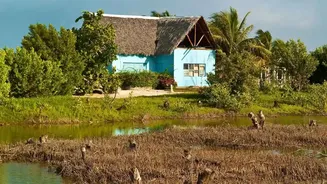
pushing seawater further inland than ever before. When this saltwater floods agricultural fields, it doesn't just recede and leave things as they were. It deposits salt, leading to a condition called soil salinization. This process makes the land increasingly unfit for traditional crops like paddy, which have low salt tolerance. Farmers who once relied on predictable harvests find their yields diminishing, their land becoming barren, and their economic security washing away with the tide. This isn't a distant, abstract problem; it's a direct threat to the food security and livelihoods of millions living on India's vulnerable eastern coastline.
Nature's Answer: The Mangrove Bio-Shield
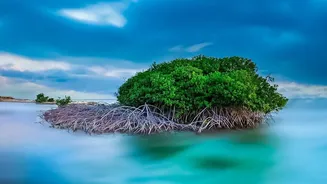
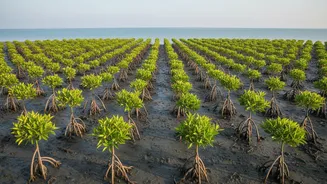
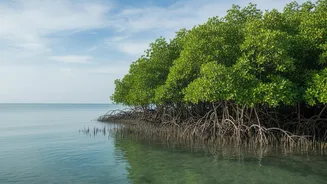
In the face of this challenge, the most effective solution is proving to be one that has existed for millennia: the mangrove forest. Mangroves are unique trees adapted to survive in brackish, intertidal zones. Their dense, tangled root systems are a marvel of natural engineering. These roots act as a natural barrier, significantly reducing the energy of waves and tidal surges, thereby preventing coastal erosion. More importantly for farmers, this complex root network slows the flow of water, causing sediment to be deposited and physically trapping saltwater, preventing it from inundating the lands behind them. Initiatives across the coast are now harnessing this power by strategically planting mangrove saplings to create a 'bio-shield'—a living, self-repairing wall that protects the land.
Community-Led Restoration in Action
The success of these bio-shields isn't just about planting trees; it's about empowering people. Organisations like the M.S. Swaminathan Research Foundation and various government bodies have been working with coastal communities to restore degraded mangrove areas. In Odisha, community-led projects under the Enhancing Climate Resilience of India’s Coastal Communities (ECRICC) program have transformed barren coastlines. Villagers, with a deep-seated knowledge of local tidal patterns and soil conditions, are involved in every step, from raising saplings in nurseries to planting and monitoring them. This participatory approach ensures a sense of ownership and long-term stewardship. In many cases, women's self-help groups are at the forefront, finding new livelihood opportunities through these green jobs.
Beyond Protection: A Ripple of Benefits
The impact of a healthy mangrove bio-shield extends far beyond shielding farmland. These restored ecosystems are creating a cascade of positive effects for local economies. Firstly, the protected land can once again be used for traditional agriculture, restoring farmers' primary source of income. Secondly, the mangroves themselves create new opportunities. They serve as crucial nursery grounds for fish, crabs, and prawns, leading to a significant increase in local fish catch and supporting fisheries. Recognizing this, some projects are now promoting integrated mangrove-fishery farming systems, providing a dual income stream for communities. This 'mangrove-plus' economy, which combines conservation with livelihood diversification like crab farming and ecotourism, builds robust economic resilience.
A Living, Breathing Legacy
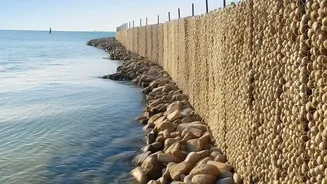
Unlike concrete sea walls, which are expensive, prone to breaking, and can sometimes worsen flooding, mangrove bio-shields are a living, adaptable solution. They grow stronger over time, sequester significant amounts of carbon to combat climate change, and enhance local biodiversity by providing habitats for birds and other wildlife. By turning degraded coastal lands into thriving mangrove forests, communities in states like Odisha, Andhra Pradesh, and Tamil Nadu are not just protecting their farms. They are investing in a sustainable future, building a natural defence that protects land, creates jobs, and preserves the delicate balance between humanity and the sea for generations to come.