

A Landmark Discovery
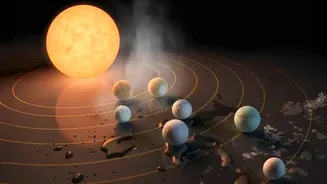
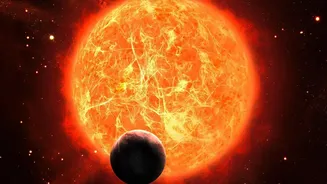
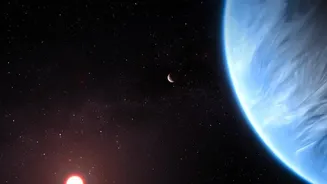
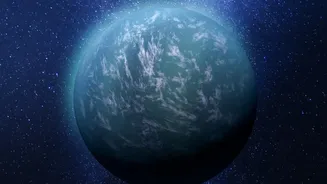
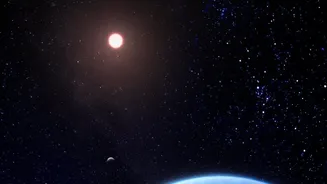
In a recent breakthrough, astronomers pointed the powerful JWST towards a 'Super-Earth' and confirmed the presence of water vapour in its atmosphere. The planet in question, GJ 9827 d, is located about 97 light-years away in the constellation Pisces.
While water has been found on giant gas planets before, detecting it on a smaller, potentially rocky world is a significant milestone. This observation adds to a growing list of worlds where the essential ingredients for life might exist, including other planets like GJ 1214 b and K2-18 b, which the JWST has also studied. The finding on GJ 9827 d is particularly noteworthy because, at only about twice the diameter of Earth, it is one of the smallest exoplanets where an atmospheric water signature has been detected.
What Are Super-Earths?
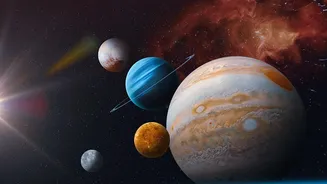
The term 'Super-Earth' might conjure images of a bigger, better version of our own planet, but the reality is more complex. This category refers to planets that are more massive than Earth but lighter than ice giants like Neptune. They are a common type of planet in our galaxy, yet curiously, none exist in our own solar system. This makes them a fascinating and mysterious subject for astronomers. Some Super-Earths are rocky like our planet, while others might be more like 'mini-Neptunes' with thick, gassy atmospheres. The discovery on GJ 9827 d leaves scientists with two exciting possibilities: it could either be a 'mini-Neptune' with a hydrogen-rich atmosphere that contains water, or it could be a true 'water world'—a rocky planet with a steamy, water-dominated atmosphere.
The Telescope’s Infrared Magic
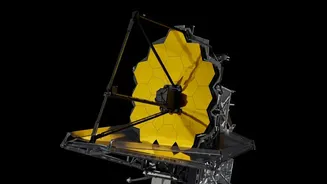
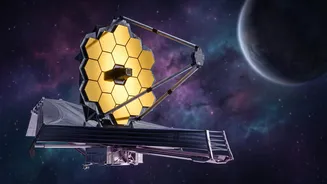
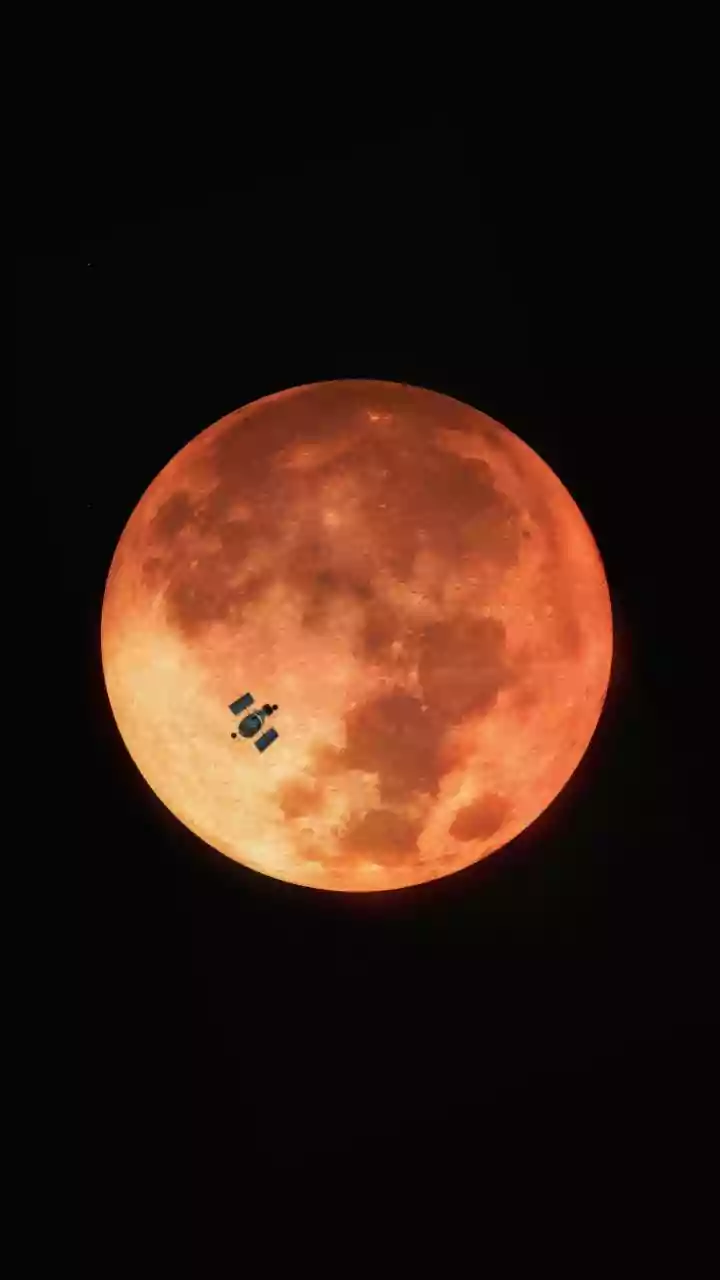
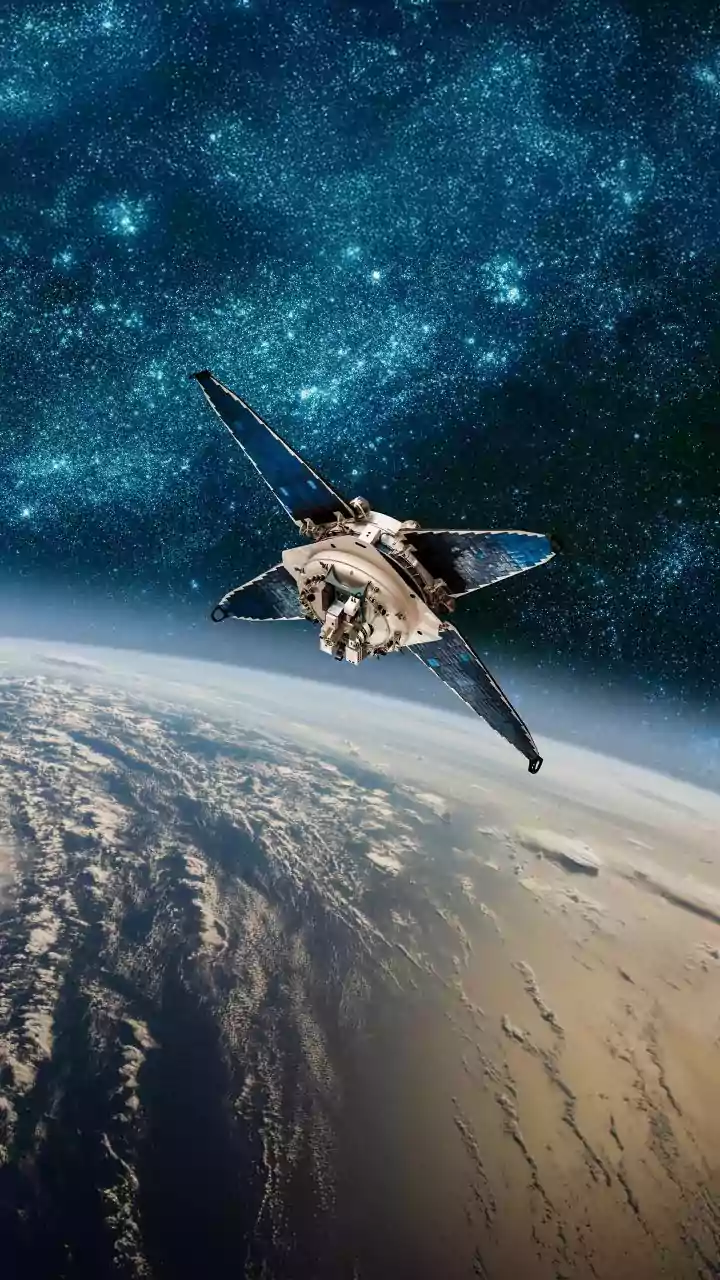
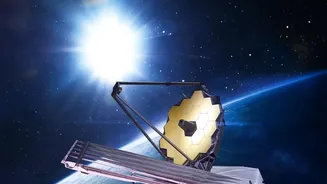
Detecting the chemical makeup of an atmosphere light-years away is a monumental technical challenge. The James Webb Space Telescope achieves this using a technique called transit spectroscopy. As an exoplanet passes in front of its host star, a tiny fraction of the starlight filters through the planet's atmosphere. Different gas molecules absorb specific wavelengths of light, leaving a unique chemical fingerprint on that light. The JWST's powerful Mid-Infrared Instrument (MIRI) is specially designed to capture this faint infrared light and analyse these signatures. It was this ability to peer through atmospheric haze that allowed it to successfully identify the subtle signs of water vapour around GJ 9827 d, a task that was difficult for previous telescopes.
A Clue in the Search for Life
Finding water is a critical step in the search for life as we know it. While the presence of water vapour doesn't automatically mean a planet is habitable, it is a fundamental prerequisite. However, it's important to manage expectations. GJ 9827 d is far from an Earth-like paradise; its surface temperature is estimated to be a scorching 430 degrees Celsius, similar to Venus. If its atmosphere is primarily steam, it would be an inhospitably hot world. The significance of this discovery isn't that we've found a habitable planet, but that we have confirmed that planets with water-rich atmospheres can and do exist around other stars. This provides a crucial proof-of-concept that pushes us closer to one day characterizing a truly Earth-like world.
What Comes Next?
This discovery is not an endpoint but an exciting new beginning. It opens the door for more detailed studies of planets like GJ 9827 d. With the JWST, scientists can now go beyond just detecting water. The next step is to search for other molecules like carbon dioxide and methane. By taking a complete inventory of a planet's atmospheric elements, researchers can build a more complete picture of its climate, composition, and formation history. This comparative analysis, contrasting the planet's makeup with that of its star, will help unravel the mysteries of how these worlds evolve. Each new observation refines our models and brings us a little closer to answering the ultimate question: are we alone in the universe?