




Welcome to the Hadal Zone
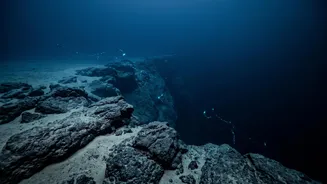
The deepest parts of the ocean, beginning at a depth of 6,000 meters, are known as the hadal zone, named after Hades, the Greek god of the underworld. This realm consists of deep trenches and troughs formed where the Earth's tectonic plates collide. The most
famous of these is the Mariana Trench, which plunges to nearly 11,000 meters. Conditions here are almost unimaginable. The pressure can exceed 1,000 times that at sea level, equivalent to the weight of a large truck balanced on your thumb. Temperatures hover just above freezing, and there is a complete absence of sunlight. For decades, these trenches were considered too hostile to support life. But as technology has advanced, scientists have discovered that this supposedly desolate world is, in fact, teeming with activity and unique biological communities.
Life Finds a Way in the Dark
Against all odds, life thrives in the hadal zone. Scientists have cataloged hundreds of species, many of which are found nowhere else on Earth. One of the most remarkable residents is the hadal snailfish, a small, translucent creature that holds the record for the deepest-living fish ever observed. These fish have evolved without scales or air bladders, and their cells contain special molecules that protect them from the immense pressure. Other inhabitants include giant shrimp-like creatures called amphipods and strange, single-celled organisms known as xenophyophores. Recent expeditions have even found extensive colonies of tubeworms and clams clustered around seafloor vents. Deprived of sunlight, these communities survive through a process called chemosynthesis, drawing energy from chemical compounds like methane seeping from the Earth's crust. This discovery suggests that vibrant ecosystems might be a widespread feature of the planet's deepest trenches.
The Technology to Touch the Bottom
Exploring the hadal zone presents immense engineering challenges. The intense pressure, corrosive saltwater, and remote locations demand highly specialized equipment. Early explorations were limited, but the 21st century has brought a new wave of technological innovation. Scientists now deploy a range of uncrewed vehicles, including autonomous underwater vehicles (AUVs) and remotely operated vehicles (ROVs). Some of these, like the Orpheus AUV developed by Woods Hole Oceanographic Institution and NASA, are designed to withstand extreme pressures while navigating the narrow, rocky terrain of the trenches. These robots act as the eyes, hands, and ears of scientists on the surface, equipped with cameras, manipulator arms for collecting samples, and sensors to measure water chemistry. Manned submersibles have also made groundbreaking journeys, allowing humans to witness the hadal zone firsthand and paving the way for more systematic surveys of this unexplored realm.
Why This Deep Frontier Matters
Studying the hadal zone is about more than just curiosity. These deep trenches play a surprisingly important role in larger planetary systems. They act as funnels for organic matter, accumulating carbon that falls from the upper ocean and potentially influencing the global carbon cycle and climate regulation. Understanding how life adapts to these extremes can provide insights into the absolute limits of biology, with potential applications in medicine and biotechnology. For instance, the unique physiological processes of hadal animals are being studied for clues that could help treat human diseases. Furthermore, this research helps us understand the full extent of human impact on the planet. Scientists have found microplastics and other pollutants even in the deepest-living creatures, a stark reminder that no part of our world is truly isolated from our activities.