






The End of Cringeworthy Stock Photos
We’ve all seen them: the unnaturally perfect smile in a boardroom, the generic group of diverse professionals pointing at a blank screen, or the lonely lightbulb representing a new idea. For years, stock photography was a necessary evil for anyone making
a presentation. Finding the right image was a time-consuming hunt through libraries of clichés, often ending in a compromise that was good enough, but never quite right. This process was not only inefficient but also creatively stifling. The result was a sea of presentations that looked and felt the same. AI image generation tools are changing this dynamic entirely. Instead of searching for an image that loosely fits your concept, you can now create one that perfectly matches it.
How AI Creates Your Visuals
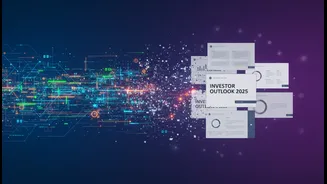
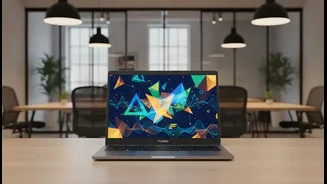
The technology works by interpreting a simple text prompt. You type what you want to see—for example, “a photorealistic image of a team collaborating on a futuristic project in an eco-friendly office”—and the AI generates a unique image in seconds. This isn't just about creating pictures from scratch; it's about art direction on demand. Major presentation platforms have been quick to integrate this technology. Microsoft PowerPoint now includes Copilot and Designer, which leverage DALL-E models to suggest layouts and generate custom images. Similarly, Canva’s Magic Studio offers a suite of AI tools, including an image generator called Magic Media, that are deeply integrated into its popular design workflow. Other players like Gamma and Beautiful.ai are also building entire presentation experiences around AI-powered generation.
The Upside: Speed, Originality, and Cost
The advantages for professionals are significant. First and foremost is speed. The time once spent endlessly scrolling through stock photo websites can now be spent refining the presentation's core message. This efficiency allows for faster turnaround times and the ability to take on more work. Second is originality. AI allows for the creation of visuals that are completely unique and tailored to the specific narrative of a presentation. This enhances storytelling and helps captivate the audience in a way that generic photos cannot. Finally, it can be incredibly cost-effective. While professional stock photo libraries and custom design work come with hefty price tags, many AI tools offer generous free tiers or affordable subscriptions, democratizing high-quality visual design for small businesses and individuals.
The Hurdles: Consistency, Quality Control, and Ethics
Despite the promise, the technology is not without its challenges. One of the biggest hurdles is maintaining brand consistency. AI can struggle to replicate a specific brand's style, color palette, and visual identity across multiple images, requiring careful prompting and refinement. Quality can also be an issue; AI is notorious for generating images with strange artifacts, like people with six fingers or nonsensical text. Human oversight is essential to catch these errors. Furthermore, there are significant ethical considerations. Questions around copyright, data privacy, and the potential for AI models to perpetuate biases found in their training data remain largely unresolved. Using these tools requires a new level of critical thinking and ethical awareness.
A New Role for Human Creativity
So, is this a true 'new era'? The evidence suggests yes, but not in the way many fear. AI is unlikely to eliminate the need for graphic designers; instead, it is reshaping their role. The focus is shifting away from manual execution and toward creative strategy, curation, and problem-solving. The most valuable skill is no longer simply creating an image, but knowing what image to ask for and how to integrate it effectively into a compelling narrative. The designer becomes a creative director, guiding the AI to produce the desired outcome, rather than a technician executing every step manually. This partnership allows designers to focus on higher-level thinking and produce more innovative work.