





First, What Is NavIC?
NavIC, which stands for Navigation with Indian Constellation, is India's homegrown answer to foreign-owned satellite navigation systems like the US Global Positioning System (GPS). Developed by the Indian Space Research Organisation (ISRO), it's designed
to provide accurate real-time positioning and timing services across the country and a region extending about 1,500 kilometres beyond its borders. The system serves two main purposes: a Standard Positioning Service (SPS) for all civilian users and an encrypted Restricted Service (RS) for strategic and military use. Having an independent system is crucial for national security, ensuring that India doesn't have to rely on foreign networks that could be denied or degraded during a crisis. Beyond defence, NavIC has wide-ranging applications in transportation, disaster management, vehicle tracking, and precise timing for financial and power grid operations.
The Need for a New Generation
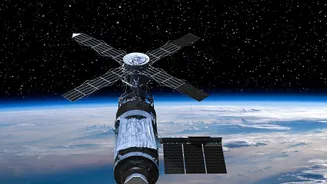
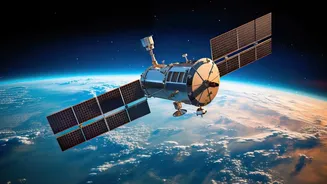
The original NavIC constellation, known as IRNSS, faced significant challenges. Several of the first-generation satellites suffered from failures of their imported rubidium atomic clocks—the ultra-precise timekeepers essential for calculating location. This crippled parts of the constellation, reducing the number of fully functional satellites below the minimum of four required for providing standalone positioning services. Additionally, some of the initial satellites are simply reaching the end of their planned 10 to 12-year operational lives. To ensure the system's continuity and enhance its capabilities, ISRO began developing a second generation of satellites, known as the NVS series, to replace the ageing ones and bolster the entire network.
Upgrades in the NVS Satellites
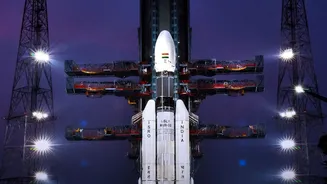
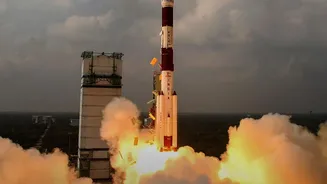
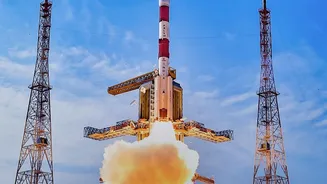
The NVS-series satellites are a major leap forward. The headline refers to NVS-03, the third satellite in this new series, which was successfully launched on October 30, 2026. These second-generation satellites carry significant upgrades. A key improvement is the inclusion of an indigenously developed rubidium atomic clock, reducing India's reliance on foreign components and learning from the failures of the past. Another game-changing feature is the addition of a new civilian L1 frequency band, alongside the existing L5 and S-band signals. The L1 band is the most common frequency used by consumer devices for GPS, meaning this addition makes it much easier for NavIC to be integrated into everyday gadgets like smartphones and smartwatches. This interoperability is a critical step toward wider public adoption.
What Better Coverage Means for You
With the successful launch of NVS_03, ISRO is on track to restore and strengthen NavIC's capabilities. A more robust constellation with new_generation satellites means greater accuracy and reliability for all users. For civilians, this could translate to more precise navigation in tricky urban canyons or remote areas where global system signals might be weak. The inclusion of the L1 band promises to bring NavIC support to a wider range of consumer electronics, moving it from a niche feature to a mainstream service. For strategic sectors, it guarantees uninterrupted and sovereign control over positioning data. It also enhances safety applications, such as alerting fishing vessels that are approaching maritime borders or providing disaster warnings in areas with poor communication infrastructure.
The Future of Indian Navigation
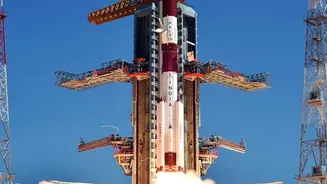
The NVS_03 mission is a crucial piece of a larger puzzle. ISRO plans to launch a total of five second_generation satellites (NVS_01 to NVS_05) to fully replenish and augment the NavIC system. While there have been setbacks, including the failure of the NVS_02 satellite to reach its final orbit, the overall plan is to build a more resilient and advanced constellation. Looking further ahead, ISRO has even bigger ambitions, with long_term plans to expand NavIC from a regional system to a global one, which would require a larger constellation of satellites in Medium Earth Orbit. This would put India in an elite club of nations with their own global navigation systems, marking a profound achievement in the country's journey toward complete self_reliance in space technology.