



Embrace the Local Harvest
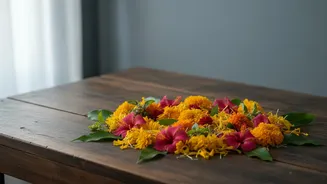
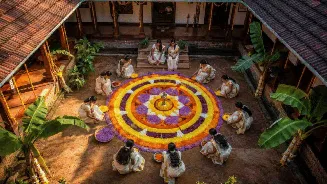
Onam is, at its core, a harvest festival celebrating the bond between people and nature. A sustainable pookkalam begins by honouring this spirit. Instead of seeking out exotic or imported flowers, focus on what is blooming locally. Traditionally, pookkalams
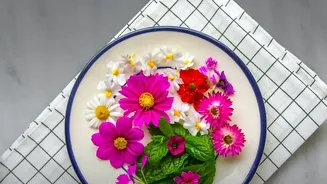
were made with flowers foraged from one's own garden and neighbourhood. Look for Thumbapoo (Leucas Aspera), the small white flower that traditionally marks the start of the pookkalam, as well as Thetti (Ixora), Chemparathy (Hibiscus), Jamanthi (Chrysanthemums), and Shankhupushpam (Butterfly Pea). Even readily available marigolds and jasmine are excellent choices. Choosing local and seasonal flowers not only ensures freshness but also supports local farmers and reduces the carbon footprint associated with transporting flowers from other states.
Smart Sourcing at the Market
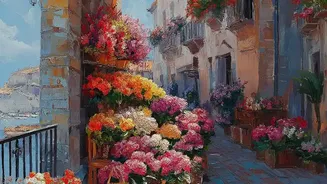
A trip to the flower market during Onam is a feast for the senses, but it's also where you can make key sustainable choices. When you buy your flowers, ask vendors to wrap them in newspaper or place them directly into your own cloth bag, avoiding plastic packaging. Many markets now feature flowers grown by local collectives, such as those supported by Kerala's Kudumbashree mission, which promotes local floriculture. Buying from these stalls ensures your money directly supports community-level initiatives. Don't be afraid to choose flowers that aren't perfectly uniform; a mix of sizes and shapes adds character to your design. Remember to also pick up other natural elements like fragrant tulsi, mango leaves, or other green foliage to add texture and contrast.
Design with Nature in Mind
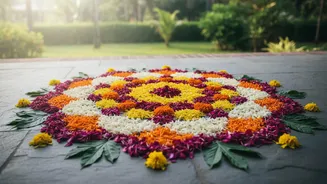
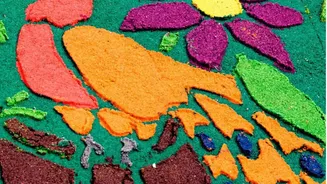
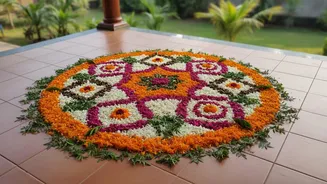
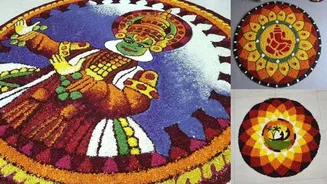
A sustainable pookkalam is not about limitation but creativity. You can create a stunning design while being mindful of resources. For your design's outline, use rice flour instead of chemical-based chalk powders. You can also expand your palette beyond petals. Colourful leaves, seed pods, and even dried petals from the previous day can be incorporated. Consider using natural powders made from dried and ground flowers or even grated coconut mixed with natural colours like turmeric for different textures. Instead of aiming for a massive, flower-heavy design that is common in competitions, embrace the beauty of smaller, more intricate patterns like mandalas or simple concentric circles. These compact designs are perfect for apartment balconies or smaller homes and have a powerful visual impact.
Avoiding Plastic and Synthetics
One of the easiest ways to make your pookkalam eco-friendly is to completely avoid plastics and other non-biodegradable materials. It has become common to see glitter, synthetic colours, and plastic decorative items mixed in with the flowers. These materials contaminate the organic waste, making it impossible to compost the flowers later. Instead, use natural elements for sparkle and focus. A traditional brass nilavilakku (lamp) or a few simple terracotta diyas placed at the center or around the pookkalam can create a beautiful, warm glow, especially in the evening. This not only looks more traditional and elegant but also aligns with the spirit of celebrating nature's bounty.
A Green Farewell: Closing the Loop
The life of your pookkalam doesn't end when the festival is over. The true test of sustainability lies in how you dispose of the materials. After the celebrations, the flowers, leaves, and other organic matter should not be mixed with general household waste. These materials are a valuable resource for your garden. They can be added to a home compost bin, where they will break down into nutrient-rich compost for your plants. If you don't have a compost system, you can simply bury the flowers in a corner of your garden or in a pot filled with soil. This act of returning the flowers to the earth completes the natural cycle, perfectly embodying the sustainable spirit of the harvest festival.