







Why FSSAI Is Cracking Down Now
India's health food market is booming, and with it, a wave of bold marketing claims. In recent months, the Food Safety and Standards Authority of India (FSSAI) has intensified its scrutiny of misleading labels, targeting claims like 'healthy', 'natural',
and, notably, 'protein-packed'. The regulator has issued notices to numerous companies for claims that may mislead consumers, highlighting a major push towards enforcing standards that have been on the books for years but are now being monitored more closely. This isn't about targeting a single product but about ensuring the words on the package are truthful and scientifically substantiated, a move that comes as data shows a high percentage of digital ads for food products run afoul of advertising norms.
What 'High-Protein' Officially Means
A 'high-protein' claim isn't just a marketing buzzword; it's a specific regulatory standard defined by the FSSAI. For a brand to legally use this claim, the product must meet strict thresholds. According to FSSAI's Advertising and Claims Regulations, the rules are clear. For solid foods, like a protein bar or fortified atta, the product must contain at least 12 grams of protein per 100 grams to be considered 'high in protein'. To be called a 'source of protein', it needs at least 6 grams. For liquids, such as a protein shake or a fortified milk drink, the bar is slightly different: it must have at least 6 grams of protein per 100 ml for a 'high in protein' claim and 3 grams to be a 'source of protein'. Any product that uses these terms without meeting these minimums is in violation of FSSAI regulations.
Your 3-Step Guide to Verifying Protein Claims
Feeling confused at the grocery store? Don't be. With a few quick checks, you can become an expert at spotting a genuinely high-protein product.
1. Check the 'Per 100g/100ml' Column: Don't be swayed by the 'per serving' number on the front. Serving sizes can be manipulated to make protein content seem higher. The most reliable way to compare products is by looking at the nutritional information table on the back and finding the value per 100g (for solids) or per 100ml (for liquids). This provides a standardised benchmark.
2. Do the 'High-Protein' Math: Now that you have the per 100g value, check if it meets the FSSAI standard. Is it a solid food with over 12g of protein? Or a liquid with over 6g? If yes, the claim is legitimate. If not, the 'high-protein' label on the front is just marketing fluff.
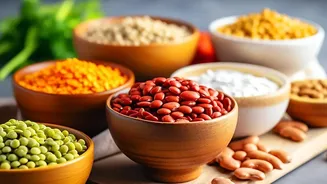
3. Read the Ingredients List: The ingredients are listed in descending order by weight. For a product claiming to be high in protein, you should see a quality protein source (like whey, casein, soy, pea, or lentils) listed among the first few ingredients, not at the very end. If sugar or refined flour comes before the protein source, you might be holding a junk food item in disguise.
Beware of the 'Health Halo'
Experts warn about the 'health halo' effect, where a single positive claim, like 'high-protein', makes a product seem healthier than it is. A high-protein biscuit is still a biscuit, and may be loaded with sugar and fat. The FSSAI's recent actions have also targeted claims like 'zero maida' and 'healthy' on snack foods, urging consumers to look beyond the headline claim. The goal is to get a complete picture of a product's nutritional profile, not just focus on one highlighted nutrient. Always check the full nutrition table for calories, added sugar, and fat content to make a truly informed decision.