






The Pocket-Sized Observatory
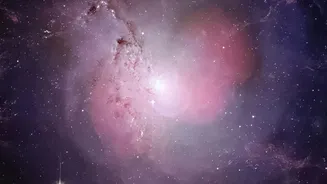
Just a few years ago, taking a picture of the night sky with a phone resulted in a dark, grainy mess. Today's flagship smartphones, however, come equipped with dedicated astrophotography modes that produce vibrant, detailed images of stars and even planets.
This leap forward isn't due to bigger lenses, but smarter software. Computational photography uses complex algorithms to overcome the physical limitations of small smartphone sensors. Instead of taking one long exposure like a traditional camera, which would be a blurry mess on a tiny sensor, the phone captures a series of short-exposure shots in quick succession. It then analyzes, aligns, and stacks these images, a process that dramatically reduces digital 'noise' and enhances faint details that would otherwise be invisible.
How Your Phone Overcomes the Dark
When you activate a feature like Google's Astrophotography mode, your phone is doing some serious heavy lifting. First, it requires absolute stillness, which is why a tripod is essential for the best results. Once stable, the phone begins taking multiple frames over a period of up to four minutes. For each frame, the software identifies the stars and celestial objects, digitally compensating for the Earth's rotation to keep them from streaking. It separates the sky from any foreground elements to process them independently. The primary algorithm then averages the frames, which effectively cancels out the random visual noise inherent in low-light shots, allowing the consistent light from stars and planets to shine through. Finally, an AI model, often trained on thousands of professional astronomical images, applies the finishing touches to color and contrast to produce the final, stunning shot.
The Leaders in a Starry Field
Google's Pixel line is widely regarded as a pioneer in this space. First introduced with the Pixel 4, its Astrophotography mode is integrated into Night Sight and activates automatically when the phone is stable. Recent updates even allow for manual activation, giving users more control. Samsung has also invested heavily in its 'Space Zoom' feature, which uses a combination of high-resolution sensors, powerful telephoto lenses, and AI-powered multi-frame processing to achieve impressive magnification. This feature, however, has faced some controversy, with critics arguing its AI can sometimes add details to lunar photos that aren't captured by the lens, essentially creating a composite rather than a purely photographic image. Other brands like Apple and Xiaomi continue to improve their low-light capabilities, but often rely on manual controls in 'Pro' modes rather than a fully automated, multi-minute astrophotography process.
Tips for Capturing the Cosmos
Getting a great planetary shot is more than just pointing your phone at the sky. First and foremost, you need a tripod; any movement will ruin the long exposure. Second, escape city lights. Light pollution is the enemy of astrophotography, so find the darkest location possible. Use an app to help locate planets and constellations. When shooting, use a timer or a remote shutter to avoid shaking the phone when you start the capture. On a Pixel, simply switch to Night Sight, mount the phone, and let the astrophotography icon appear. The entire process can take several minutes, so a portable power bank is a wise accessory, as long exposures are a major battery drain. Remember to be patient, as your first few attempts may not be perfect.
Managing Your Galactic Expectations
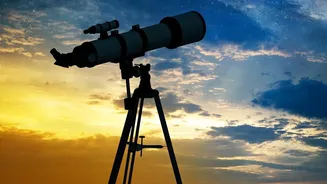
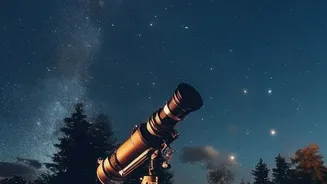
While the results from mobile computational astrophotography are remarkable for a handheld device, it's important to understand the limitations. A smartphone, no matter how advanced, will not replace a dedicated telescope. Attaching a phone to a telescope eyepiece with an adapter can yield even more impressive images of the Moon and planets, blending the power of optics with computational enhancement. The technology is democratizing a hobby that was once complex and expensive, making it accessible to anyone with a capable phone and a little patience. It's a gateway into the wonders of the night sky, allowing millions to capture their own piece of the cosmos.