


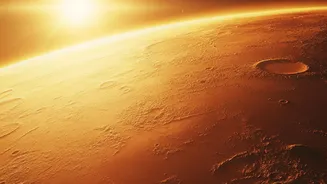
The Constant Solar Barrage
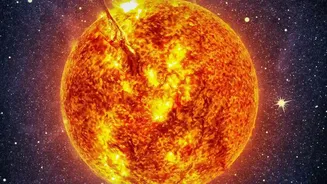
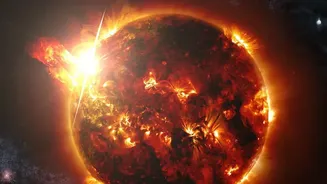
Our sun is not just a benign source of light and heat. It continuously ejects a stream of charged particles—mostly electrons and protons—known as the solar wind. This wind travels through space at incredible speeds, sometimes over a million miles per
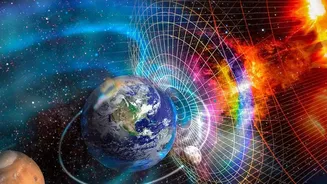
hour. During more violent solar events like solar flares or coronal mass ejections (CMEs), the sun releases massive, concentrated bursts of these particles and radiation into the solar system. If Earth were unprotected, this constant barrage would strip away our atmosphere and make life as we know it impossible.
Earth’s Invisible Shield: The Magnetosphere
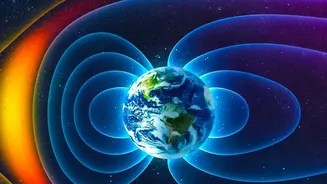
Fortunately, our planet has a powerful defense mechanism: its magnetic field. Generated by the movement of molten iron in Earth's liquid outer core, this field extends thousands of kilometres into space, creating a protective bubble called the magnetosphere. This region is where Earth's magnetic field, rather than the sun's, is the dominant force. The magnetosphere acts as a shield, deflecting the vast majority of the charged particles from the solar wind around our planet. Its shape is distorted by the solar wind's constant pressure, compressed on the sun-facing side and stretched out into a long 'magnetotail' on the night side.
Cosmic Traffic Jam and Trapped Particles
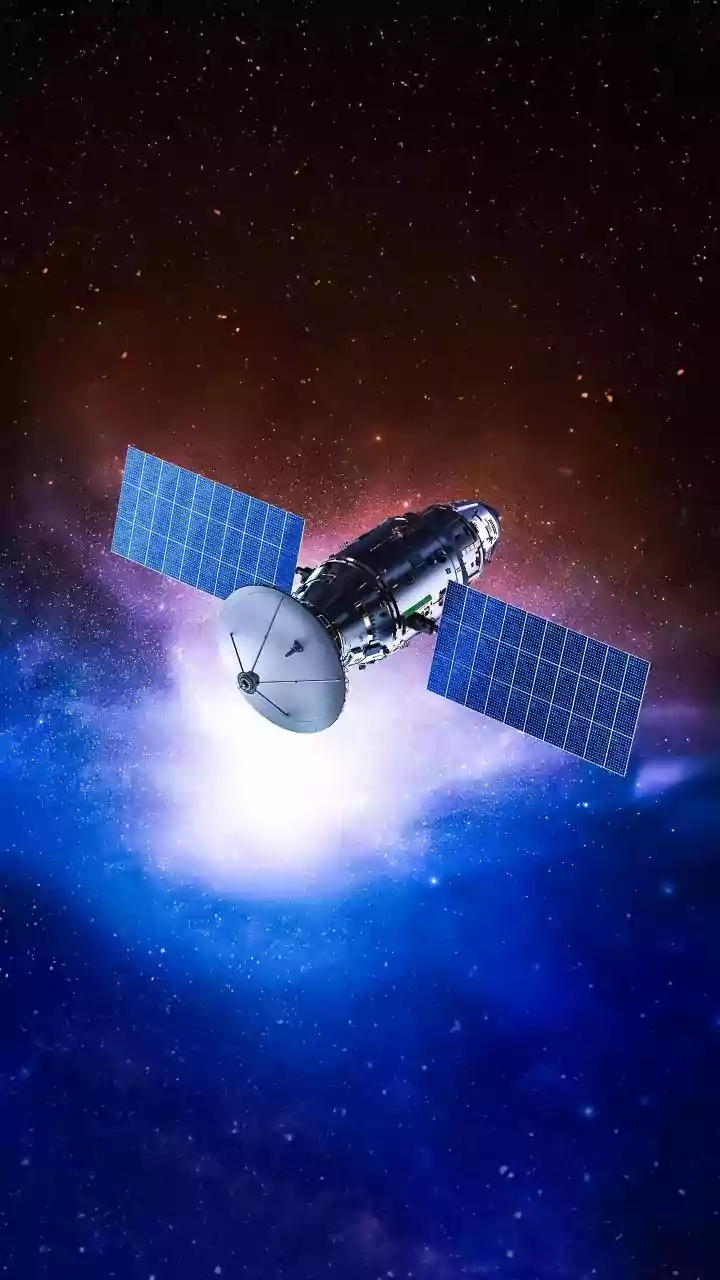
While most of the solar wind is deflected, the magnetosphere isn't impenetrable. Some particles become trapped by the magnetic field in two doughnut-shaped zones of intense radiation surrounding Earth. These are known as the Van Allen radiation belts, discovered in 1958. The inner belt consists mainly of high-energy protons, while the outer belt is composed of energetic electrons originating mostly from the solar wind. These belts can pose a significant danger to satellites and astronauts, whose sensitive electronics can be damaged by the high levels of radiation. Space missions must be carefully planned to limit exposure when passing through these regions.
The Greatest Light Show on Earth
The most beautiful consequence of this cosmic interaction is the aurora. Some charged particles are not trapped in the belts but are instead funnelled by the magnetic field lines towards the polar regions. As these particles descend into the upper atmosphere, they collide with gas atoms and molecules, primarily oxygen and nitrogen. These collisions excite the atoms, causing them to release energy in the form of light, creating the dazzling displays we know as the aurora borealis (Northern Lights) and aurora australis (Southern Lights). The different colours are determined by which gas is being hit and at what altitude; oxygen typically produces the common green and rarer red auroras, while nitrogen can result in blue and purple hues.
A Shield for Life and Technology
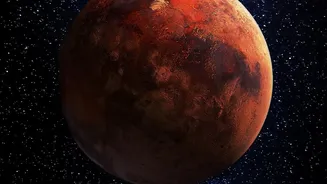
Without the magnetic field, Earth would be a very different place. The solar wind would gradually erode our atmosphere, much like it did on Mars after its own magnetic field faded. This would expose the surface to harmful cosmic and solar radiation, likely preventing complex life from ever evolving. But even with the shield, our modern technological society remains vulnerable. Intense solar storms can cause geomagnetic storms, which can disrupt GPS navigation, damage satellite electronics, cause radio blackouts, and even overload power grids on the ground, potentially leading to widespread outages. This is why scientists closely monitor 'space weather' to provide warnings and mitigate the potential impact of these powerful solar events.