






The insatiable global demand for data and AI is pushing our digital infrastructure to its limits. One radical solution is gaining momentum: moving data centres into space. But this futuristic concept comes with a serious, unintended consequence.
What Are Space-Based Data Centres?
Imagine
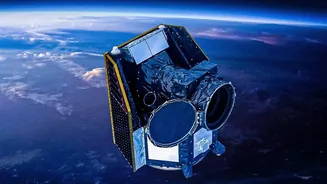
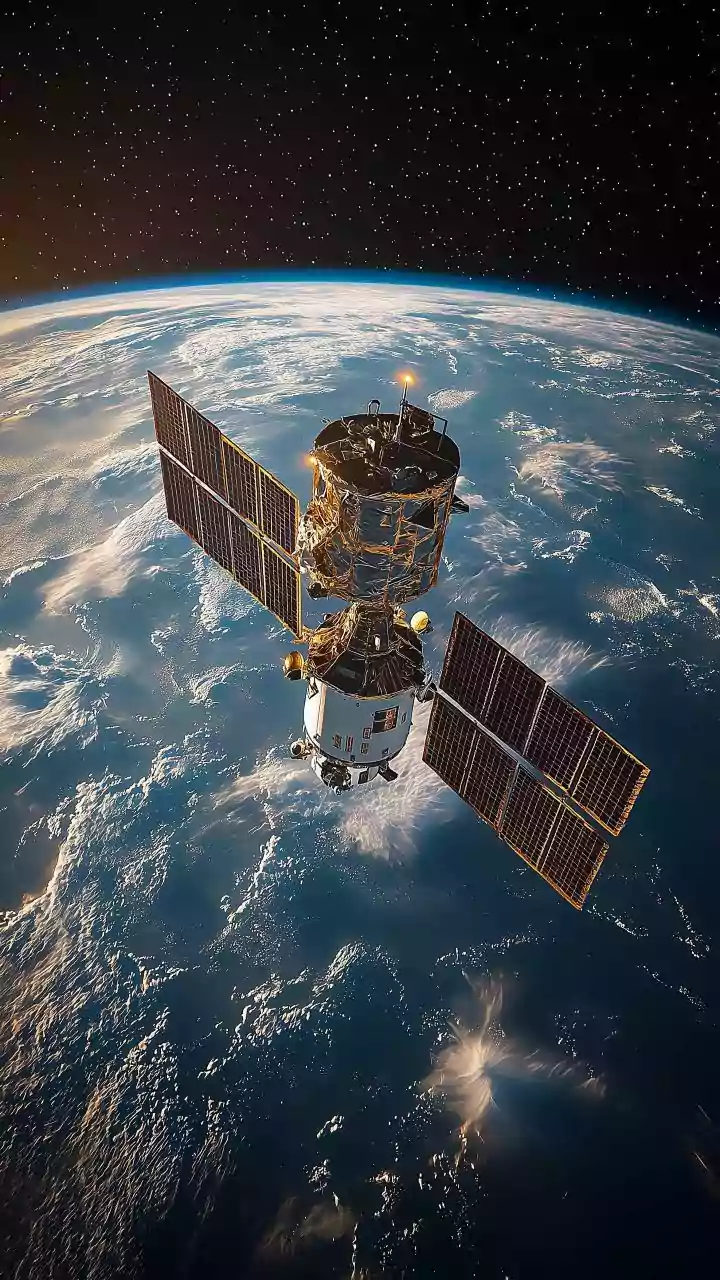
a network of satellites in low-Earth orbit, not for internet or GPS, but functioning as massive, floating data centres. This is the core idea behind the space-based data centre (SBDC) concept. Instead of building sprawling facilities on land that consume vast amounts of electricity and water for cooling, companies are exploring launching the servers themselves into orbit. These orbital platforms would be equipped with computer chips, storage, and all the necessary IT infrastructure to process complex calculations for everything from AI model training to sovereign data management, beaming the results back to Earth. Proponents argue that in a sun-synchronous orbit, these satellites would have access to continuous, intense solar power, eliminating the need for grid dependency and massive batteries. Furthermore, the near-absolute zero of space provides a perfect environment for passive radiative cooling, a major operational cost for terrestrial data centres.
The Rush to Orbit
The push for SBDCs is driven by the explosive growth of AI, which is placing unsustainable pressure on Earth's energy grids and water resources. Global data centre electricity consumption is projected to more than double by 2030. In this environment, space looks like an attractive frontier. Several companies, from startups like Orbital and Starcloud to major players like SpaceX and Google, are actively developing plans. Some analyses suggest that if launch costs continue to fall, orbital data centres could become economically competitive with their Earth-based counterparts by the mid-2030s. The first proofs of concept are already in orbit, with some companies having filed for approval to launch constellations numbering in the hundreds of thousands, or even a million, satellites. These aren't just for processing data generated in space; the ambition is to handle heavy AI workloads for customers on the ground.
An Already Crowded Sky
The prospect of adding millions of new satellites is alarming for the astronomical community, which is already struggling with the impact of existing 'mega-constellations' like SpaceX's Starlink. These satellites, while providing services like global internet, reflect sunlight and create bright streaks across long-exposure astronomical images. Unlike ground-based light pollution, which can be partially mitigated by building observatories in remote locations, satellite trails directly interfere with the data being collected. The streaks can saturate a telescope's sensitive detectors, rendering portions of an image scientifically useless. Even after post-processing, residual effects can compromise critical research, such as surveys of faint galaxies or the tracking of potentially hazardous asteroids. With tens of thousands of satellites already planned, some studies warn that a significant percentage of astronomical images are already at risk of contamination.
A Brighter, More Obscured Future
Space-based data centres could dramatically worsen this problem. By their nature, these would be large structures, featuring massive solar arrays and cooling radiators to handle the intense heat generated by computation. Large, reflective surfaces are precisely what cause the brightest and most disruptive satellite trails. The sheer number of proposed data centre satellites—potentially adding a million or more objects to low-Earth orbit—threatens to fundamentally alter the night sky. A recent study noted that with a population of 560,000 satellites, nearly all images from several future space telescopes could be marred by interference. The cumulative effect is not just more streaks, but an overall increase in 'skyglow'—a diffuse brightening of the night sky from the combined light of countless satellites, which could make it impossible to see the faintest stars and galaxies, even from the most pristine sites on Earth.
Searching for a Dimmer Path
The astronomical community and some satellite operators are actively working on mitigation strategies. One key recommendation is for operators to keep their constellations below an altitude of 600 kilometres, which allows the satellites to fall into Earth's shadow for more of the night. Other efforts focus on the design of the satellites themselves. SpaceX, for example, has experimented with 'DarkSat' anti-reflective coatings and 'VisorSat' sunshades to reduce the brightness of its Starlink satellites. More advanced solutions include developing ultra-black paints that absorb most incoming light or using special dielectric mirror films that redirect sunlight away from Earth. However, the consensus is that no combination of these measures can completely eliminate the problem. Critics also point out that the focus on light pollution ignores other environmental impacts, such as the atmospheric pollution from a massive increase in rocket launches and the risk of creating vast fields of space debris.