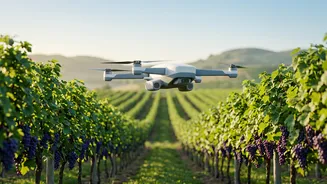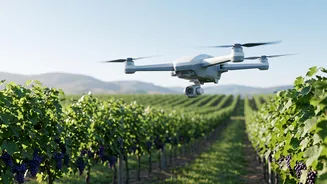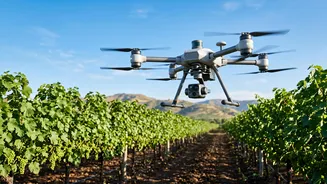





The Challenge: Weeding at High Speed
Farming has always been a battle against weeds, which compete with crops for water, nutrients, and sunlight. Traditional methods like manual labour are expensive and slow, while widespread herbicide use has environmental drawbacks. Autonomous weeding
robots offer a solution, using cameras and AI to identify and remove weeds with incredible precision. The task, however, is immensely challenging. These robots must move quickly through a field, instantly distinguish a valuable crop from a weed, and then act—either by spraying a micro-dose of herbicide or using a mechanical tool—all in a fraction of a second. Any delay could mean a damaged crop or a missed weed.
The Processing Dilemma: Cloud vs. Edge
For a robot to 'think,' it needs to process vast amounts of visual data from its cameras. The fundamental question is where this processing should happen. One option is cloud computing, where the robot sends images to a powerful remote server for analysis and waits for instructions. The alternative is edge computing, where a specialised AI chip right on the robot—an Edge AI chip—does all the thinking locally. While the cloud offers immense processing power, its use in a fast-moving agricultural robot presents serious problems.
Why Cloud Computing Falls Short in the Field
Relying on the cloud for real-time robotic weeding is often impractical. The biggest issue is latency—the delay between sending data and receiving a response. For a robot moving at speed, even a half-second delay is too long. Another major hurdle is connectivity. Rural and remote farms frequently have poor or non-existent internet access, making a cloud connection unreliable. Constantly uploading high-resolution video streams would also consume massive amounts of bandwidth and incur significant data costs. Essentially, the cloud is too slow and too far away for the split-second decisions required.
Superior Speed and Autonomy with Edge AI
This is where Edge AI chips demonstrate their superiority. By processing data directly on the robot, they eliminate latency almost entirely. The robot doesn't need to ask for permission from a distant server; it sees a weed and acts instantly. This local processing means the robot is fully autonomous and can function perfectly without any internet connection, a critical advantage in agricultural settings. Companies like NVIDIA have developed powerful yet compact modules, such as the Jetson series, specifically for these types of on-device AI tasks, enabling machines to think independently.
Efficiency, Security, and Durability
Beyond speed, Edge AI chips offer other key benefits. They are designed for low power consumption, which is crucial for battery-operated machines operating for long hours in a field. This on-device approach also enhances data security, as sensitive farm data—like crop health and field maps—never has to leave the farm. Furthermore, the hardware built around these chips is often 'ruggedized,' meaning it's designed to withstand the harsh conditions of agriculture, including dust, water, and vibration.
The Impact on Modern Farming
By enabling high-speed, autonomous weeding, Edge AI chips directly contribute to more sustainable and profitable farming. Robots equipped with this technology can reduce reliance on chemical herbicides by precisely targeting only the weeds. This improves efficiency, lowers operational costs, and supports healthier soil. The ability to operate day or night, in any weather, further boosts productivity. It represents a major step forward in precision agriculture, where decisions are made on a plant-by-plant basis, leading to higher crop yields and more environmentally friendly practices.