


India’s Ambitious Voyage to Venus
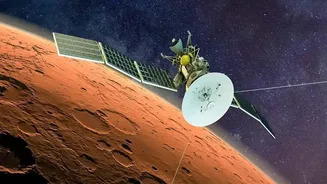
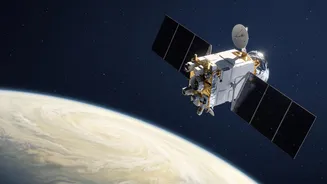
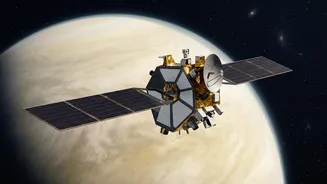
Following the resounding successes of its lunar (Chandrayaan) and Martian (Mangalyaan) missions, the Indian Space Research Organisation (ISRO) is setting its sights on the second planet from the sun. The Venus Orbiter Mission, unofficially named Shukrayaan,
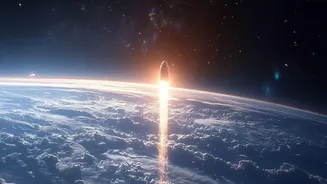
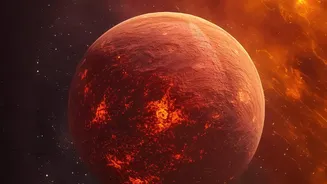
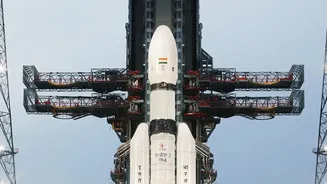
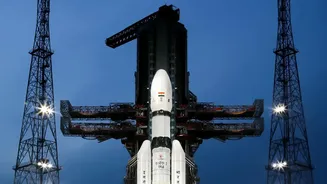
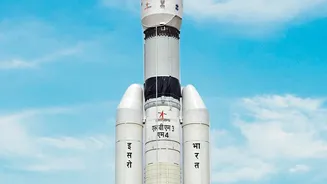
was formally approved by the Indian government in September 2024. Scheduled for a March 2028 launch aboard the powerful LVM-3 rocket, the mission represents India's next great leap in planetary exploration. For four years, the orbiter will circle Venus, carrying a suite of advanced instruments designed to solve the riddles of our sister planet's extreme environment. The core objective is to understand the processes that transformed Venus, a planet once thought to be habitable, into the inferno it is today.
The Challenge: A Hellish Atmosphere
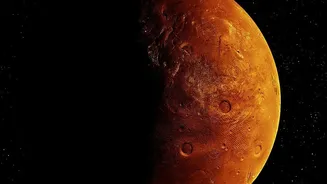
Exploring Venus is exceptionally difficult. Its atmosphere is over 90 times denser than Earth's and is composed of more than 96% carbon dioxide, creating a runaway greenhouse effect that pushes surface temperatures to a staggering 460°C. This dense atmosphere is shrouded in opaque clouds of sulfuric acid, making it impossible to see the surface with conventional cameras. These corrosive clouds and crushing pressures mean that landers have only ever survived for a couple of hours at most. Shukrayaan, as an orbiter, is engineered to overcome the challenge of visibility. It doesn't need to land to uncover the secrets hidden below; instead, it will use specialised instruments that can analyse what lies beneath the thick, toxic veil.
The Chemical Detective: VIRAL
The key to capturing chemical data from orbit lies in spectroscopy—the science of analysing light. To do this, Shukrayaan will carry a crucial instrument co-developed by Russia and France called VIRAL, which stands for Venus Infrared Atmospheric Gases Linker. VIRAL is a spectrometer designed to observe the infrared light that filters through the Venusian atmosphere. Different chemical compounds absorb and radiate light at unique frequencies, creating a distinct “fingerprint.” By analysing these light signatures, VIRAL can identify gases like carbon dioxide, carbon monoxide, sulfur dioxide, and water vapour. It can even measure their concentrations at different altitudes, giving scientists a vertical profile of the atmosphere’s composition and temperature from 65 to 140 km in altitude. This data is vital for understanding the chemical processes that drive Venus’s extreme climate.
A Suite of Supporting Instruments
While VIRAL focuses on atmospheric gases, it works as part of a larger team of about 19 Indian and international instruments. The Venus S-Band Synthetic Aperture Radar (VSAR) will be a star player, using radar waves to pierce the clouds and map the planet’s surface with four times the resolution of NASA’s previous Magellan mission. This will help identify geological features like volcanoes, which are a major source of atmospheric gases. Other instruments will study how the solar wind strips away particles from Venus's upper atmosphere, helping to explain why the planet lost its water. Another payload, the Venus Surface Emissivity and Atmospheric Mapper (VSEAM), will study thermal emissions to map volcanic hotspots and cloud structure. Together, these instruments will provide a comprehensive picture of how Venus's geology and atmosphere are interconnected.
Why These Chemicals Matter
By meticulously cataloging the chemical makeup of Venus's atmosphere, Shukrayaan aims to answer some of the biggest questions in planetary science. The data could reveal why Venus’s climate diverged so dramatically from Earth’s, providing a stark cautionary tale about unchecked greenhouse effects. Scientists also want to investigate claims of phosphine gas in the clouds, a chemical that, on Earth, is associated with biological processes. While the initial findings are disputed, VIRAL is capable of searching for it. Ultimately, studying the atmospheric chemistry will provide crucial clues about Venus’s past, including whether it ever had oceans, and what forces led to its current hostile state. This knowledge is not just about Venus; it helps us understand the conditions that make a planet habitable and provides context for studying Earth-sized exoplanets around other stars.