



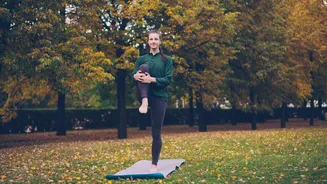
The Foundation: Classic Tree Pose (Vrksasana)
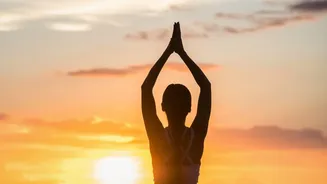
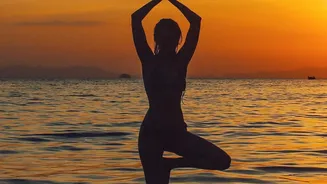
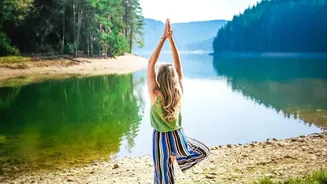
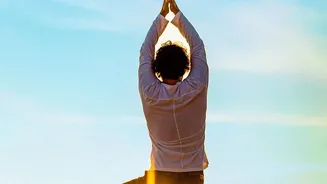
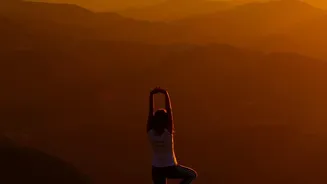
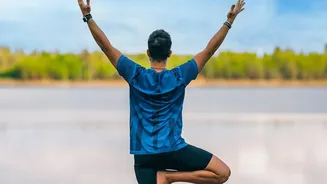
Before exploring variations, master the original. Start in Mountain Pose (Tadasana), standing tall. Shift your weight onto one foot, grounding it firmly. Place the sole of your other foot on your inner ankle, calf, or thigh—always avoiding the knee joint.
Press the foot and standing leg into each other to create stability. Engage your core to keep your pelvis level and spine long. Hands can be at your heart in a prayer position or extended overhead like branches. This foundational pose strengthens the legs, improves posture, and builds focus. The tiny adjustments your standing foot and ankle make are crucial for improving proprioception and balance.
Challenge Your Base: Tree on Tiptoes
To specifically target ankle stability, try lifting the heel of your standing foot to come onto your tiptoes. This variation dramatically reduces your base of support, forcing the small stabilising muscles in your foot and ankle to work much harder to prevent wobbling. It demands intense focus and a highly engaged core to maintain upright alignment. This is an excellent way to build strength in the calves and feet, which is vital for overall balance. Hold for just a few breaths at first, focusing on controlled, mindful movements rather than height.
Shift Your Center: Swaying or Leaning Tree
Once you feel steady in the classic pose, introduce movement to challenge your core. From Tree Pose with arms overhead, begin to gently sway your arms and torso from side to side, like a tree in the wind. This dynamic movement constantly shifts your center of gravity, forcing your core, especially the obliques, to engage to keep you from toppling over. For a static challenge, try a side bend: hold Tree Pose and lean your torso toward your bent-knee side, resting a forearm on the thigh if accessible. This variation creates an intense stretch along the side body while demanding significant core strength to maintain balance.
Change Your Arms: Eagle or Twisted Variations
Altering your arm position can have a surprising impact on your stability. Instead of the traditional overhead reach, try wrapping your arms into Eagle Arms (Garudasana). This variation not only stretches the shoulders but also pulls your balance forward, requiring more core control to stay centred. Another powerful option is Twisted Tree. With hands at your heart or extended wide, gently twist your upper body toward your bent leg while keeping your hips square to the front. This move deeply engages the oblique muscles and challenges your spinal mobility, forcing your core to work hard to stabilise the pose.
Remove Your Sight: Eyes-Closed Tree
Perhaps the most humbling variation is simply closing your eyes. We rely heavily on a fixed gazing point (drishti) to maintain balance in yoga. By closing your eyes, you remove this external input and force your body to rely entirely on its internal sense of balance (proprioception). Your feet, ankles, and core muscles must make constant, minute adjustments to keep you upright. This variation dramatically enhances your body awareness and mental focus. Try it near a wall for support at first, as it can be intensely challenging even for seasoned practitioners. Research has even shown a link between the ability to balance on one leg with eyes closed and longevity.