


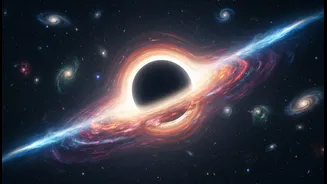


A Galaxy's Surprise Awakening
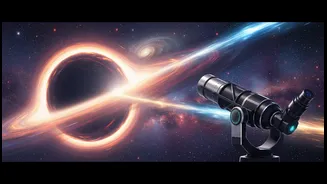
In late 2019, a previously unremarkable galaxy named SDSS1335+0728, located about 300 million light-years away, began to shine brighter than ever before. The event was first flagged by the Zwicky Transient Facility in California, which scans the sky for sudden
changes. At first, astronomers considered typical explanations like a supernova explosion or a star being torn apart by a black hole—a process known as a tidal disruption event. However, those events are relatively short-lived, lasting for a few hundred days at most. But this galaxy just kept getting brighter, and over four years later, its luminosity continues to increase, a behaviour that is unprecedented.
What It Means for a Black Hole to 'Wake Up'
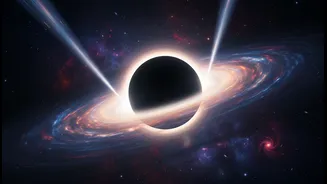
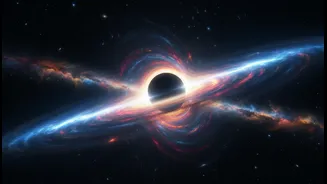
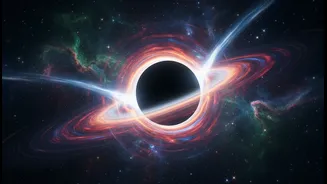
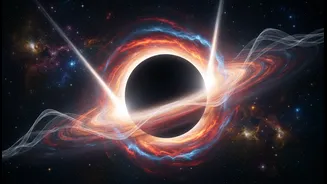
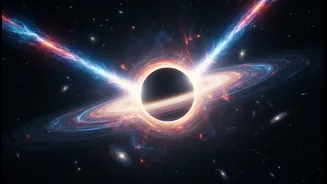
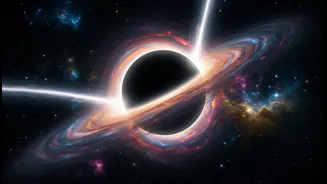
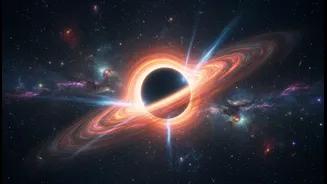
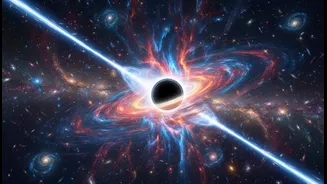
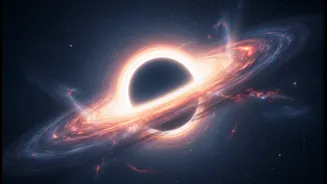
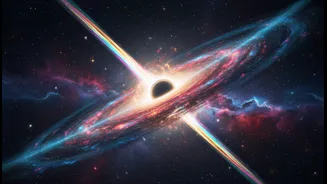
At the heart of most large galaxies, including our own Milky Way, lies a supermassive black hole—a monster with a mass hundreds of thousands to billions of times that of our Sun. Most of these giants are 'sleeping' or dormant, meaning they are not actively pulling in large amounts of matter and are therefore invisible. When a black hole begins to feast on surrounding gas and dust, this material forms a swirling, superheated disc around it, releasing immense amounts of energy across the spectrum, from ultraviolet to X-rays. This bright, compact region is called an Active Galactic Nucleus (AGN). What astronomers believe they are seeing with SDSS1335+0728 is the birth of an AGN in real-time, a process never witnessed before from start to finish.
Challenging Our Cosmic Timescales
The primary significance of this discovery is that it shatters the long-held idea that galaxies evolve only on timescales of millions or billions of years. We tend to see the universe in snapshots, assuming the grand structures within it are static and unchanging over a human lifetime. The awakening of SDSS1335+0728’s black hole demonstrates that galaxies are dynamic systems capable of dramatic transformation on a scale of mere months and years. This event provides a live-action look at a fundamental process of galaxy evolution, allowing scientists to test their models of how black holes are 'fed' and how their activity shapes their host galaxies.
A Glimpse into Our Own Galaxy's Past?
This distant event has profound implications for understanding our own cosmic home, the Milky Way. Our galaxy's supermassive black hole, Sagittarius A*, is currently quiet. However, there is evidence to suggest it may have been active in the past. This new observation raises fascinating questions: Could our own black hole awaken one day? While still a remote possibility, studying the activation of a black hole elsewhere gives us an invaluable template for what such an event might look like. Scientists will continue to monitor SDSS1335+0728, hoping to determine what triggered its awakening—whether it was the natural inflow of gas or a more unusual event. The ongoing observations will be crucial to confirming that this is indeed the birth of an AGN and not a very strange, long-lasting tidal disruption.