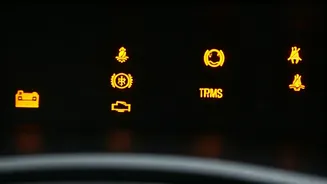

Engine Check Light
The engine check light, often shaped like an engine, is a general warning signal. It alerts drivers to a potential problem within the engine system, which
may be caused by a variety of issues, from loose gas caps to severe engine damage. If the light illuminates, it's advised to have your vehicle inspected by a mechanic. Sometimes, a simple fix like tightening the gas cap will resolve the issue. If the light flashes, it often indicates a serious problem, such as a misfire, and driving should be avoided until the car is examined. Ignoring this warning can lead to more costly repairs down the line, possibly affecting the engine's performance or causing damage to the catalytic converter.
Oil Pressure Warning
The oil pressure warning light, resembling an oil can, is a critical indicator. It signifies low oil pressure within the engine. When this light appears, it indicates a lack of oil supply, which is necessary for the engine's lubrication. Reduced lubrication can cause significant engine wear and tear, and may result in extensive damage and failure if unaddressed. Drivers should immediately stop their car and check the oil level if the oil pressure light comes on. Low oil levels must be addressed by adding oil, or calling for professional assistance. Continued operation with low oil pressure can result in catastrophic engine failure. If the oil level is fine, further diagnostics will be needed to identify the reason of the issue.
Brake System Warning
The brake system warning light, frequently a circle containing an exclamation point, is a crucial alert. It can indicate a range of issues, including low brake fluid levels, a parking brake that is still engaged, or a more serious problem within the braking system. If the light is on while the parking brake is off, you should cautiously check the brake fluid level and seek professional inspection immediately. Reduced brake fluid levels suggest potential leaks or wear, reducing braking effectiveness. Ignoring this light can severely impact your car's ability to stop, significantly raising the risk of accidents. Any brake system light activation demands immediate attention to ensure your safety.
Battery Warning Light
The battery warning light, shaped like a battery, alerts you to issues with the charging system. This typically means there is a problem with the alternator, which charges the battery while the engine is running. When this light appears, it suggests that the battery is not receiving a charge, and your car's electrical systems are running solely on battery power. Continuing to drive while this light is illuminated can quickly drain the battery, possibly leaving you stranded. If the light appears, it is advisable to turn off unnecessary electrical features, such as the air conditioning. It's best to have the charging system tested by a mechanic as soon as possible, as a failing alternator may damage the battery.
ABS Warning Light
The ABS (Anti-lock Braking System) warning light, typically the letters 'ABS' inside a circle, signals a malfunction in the anti-lock braking system. While the regular brakes will still function, the ABS feature will be disabled. This feature prevents wheel lock-up during hard braking, allowing the driver to maintain steering control. If this light comes on, it suggests that the ABS may not function as intended, potentially increasing the risk of skidding in emergency braking situations. The vehicle is safe to drive, but it's important to get the ABS checked by a qualified mechanic to ensure the safety systems are fully functional. In the case of sudden braking needs, ABS provides additional support to maintain steering.
Tire Pressure Warning
The tire pressure monitoring system (TPMS) warning light, usually resembling an exclamation mark inside a horseshoe, shows that one or more of your tires has low pressure. Driving with under-inflated tires can reduce fuel efficiency, compromise handling, and raise the risk of a blowout. When this light illuminates, it's essential to check the tire pressures as soon as you can and inflate them to the recommended levels, often found on a sticker inside the driver's side door or in your owner’s manual. After inflating the tires, the TPMS system might need some time to reset. Consistent checking and maintaining proper tire pressure are crucial for overall vehicle safety and performance. Ensure you're checking your tires frequently.
Airbag Warning Light
The airbag warning light, a figure with a person in front of a circle, indicates a problem within the airbag system. This system is designed to provide additional safety to the driver and passengers in the event of a collision. When this light is on, it means the airbags might not deploy correctly during a crash, which can be extremely dangerous. You should immediately have your vehicle inspected by a qualified technician to diagnose and repair the issue. This warning indicates a potential malfunction that directly impacts safety in a collision. Ignoring this warning light could result in more severe injuries during a car accident, as airbags play a critical role in mitigating impact forces.