



Botox: More Than Myth
Renowned cosmetologist Aashna Kanchwala, trusted by celebrities, is shedding light on Botox, a procedure often shrouded in misunderstanding. She emphasizes
that when performed by a qualified professional, Botox is a safe and effective method for combating signs of aging and refining facial contours. Kanchwala explains that the substance is frequently misinterpreted and evokes unwarranted fear, yet it serves as a potent tool in cosmetic dermatology, empowering individuals to feel more assured about their appearance. The crucial aspect, she asserts, lies in comprehending both its advantages and its limitations, and critically, always engaging the services of a certified practitioner to ensure optimal and safe outcomes. This approach helps to dispel the sensationalized narratives and establish a more grounded understanding of its therapeutic applications in aesthetics.
The Science of Smooth
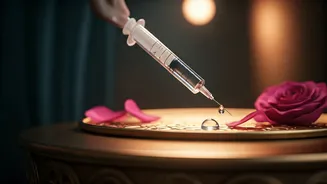
Kanchwala elaborates on the fundamental mechanism of Botox, clarifying that it operates by temporarily inhibiting the muscle contractions responsible for dynamic wrinkles, such as those appearing around the eyes (crow's feet) and between the brows (frown lines). Her focus is on the nuanced application of the treatment, stating that its purpose is not to create an artificial or immobile expression. Instead, the objective is to subtly soften these lines, thereby contributing to a more youthful and revitalized facial appearance. This explanation aims to assuage concerns about an unnatural 'frozen' look, highlighting instead the potential for a refreshed and more natural aesthetic. The understanding of muscle relaxation as the core function is key to appreciating how Botox can effectively address common aging concerns without compromising natural expressiveness.
Managing Expectations
Addressing common anxieties, Kanchwala reassures that potential side effects from Botox injections are typically minor and transient. These may include slight bruising or swelling at the point of injection, which usually resolves quickly. She further clarifies that the outcomes of Botox are not permanent; they generally last between three to six months. This temporary duration is presented as a significant advantage, allowing individuals the flexibility to re-evaluate their aesthetic preferences and treatment needs as time progresses. This means that any desired changes can be adjusted or discontinued after the effects wear off, providing a degree of control and reversibility that is often misunderstood by the public.
Preventative Power
Kanchwala points to the increasing adoption of 'preventative Botox,' particularly among younger demographics in their late twenties and early thirties. She advocates for this approach, suggesting that initiating Botox treatments at these earlier stages can be instrumental in averting the development of deep-set wrinkles in later years. The philosophy behind this trend is proactive: it's about preserving a youthful appearance and preemptively managing the visible signs of aging before they become firmly established. This forward-thinking strategy aims to maintain facial youthfulness and minimize the likelihood of more pronounced age-related lines appearing in the future, framing Botox as a tool for long-term aesthetic maintenance.
Subtle Enhancement Art
The conversation then shifts to the broader landscape of aesthetic treatments and the evolution of cosmetic procedures. Kanchwala notes a growing preference for subtle 'tweakments' over drastic alterations, a trend she attributes to both the increased sophistication of injectors and a more discerning clientele. The art of discreet enhancement has significantly advanced, meaning that with a skilled practitioner, procedures can be so artfully executed that their presence is not obvious. The overarching goal today, she emphasizes, is enhancement – making the best of one's existing features rather than fundamentally changing them. This focus on subtlety and natural-looking results is becoming the hallmark of modern aesthetic practices.
Transparency & Ethics
Discussing the practice within the entertainment industry, Kanchwala acknowledges the importance of transparency but also understands the reasons for discretion. For celebrities, appearance is intrinsically linked to their professional brand, and they might prefer their look to be perceived as entirely natural. Furthermore, openly promoting cosmetic procedures without appropriate context could inadvertently foster unrealistic expectations or unhealthy beauty trends, particularly among impressionable younger individuals who might seek treatments prematurely. As medical professionals, there's a responsibility to guide and sometimes dissuade patients from procedures that aren't yet necessary, ensuring ethical practice and patient well-being.
Myth Busting: The Reality
Kanchwala directly tackles pervasive myths, stating that the biggest misconceptions are that Botox leads to a frozen facial expression and that fillers invariably result in an overfilled, unnatural 'pillow face.' She explains that while some celebrities might opt for a more pronounced look by personal preference, this is not the norm for those seeking natural enhancement. Many celebrities who appear effortlessly beautiful may have undergone identical procedures but with a nuanced approach. The key lies in the expertise of the injector and a treatment philosophy focused on subtle improvements that enhance features without being overtly noticeable, thereby challenging the notion that aesthetic treatments inherently look artificial.
Beyond Surgery
A significant point of confusion Kanchwala addresses is the categorization of Botox, fillers, and plastic surgery. She clarifies that plastic surgery is a surgical intervention requiring an operating room, whereas Botox and fillers are non-surgical and minimally invasive. Often referred to as 'lunchtime procedures,' these treatments involve minimal recovery time, distinguishing them sharply from the more involved nature of surgical interventions. This distinction is crucial for the public to understand, as it impacts expectations regarding procedure complexity, recovery periods, and the overall invasiveness of the treatments.