




Rescheduling Trade Discussions
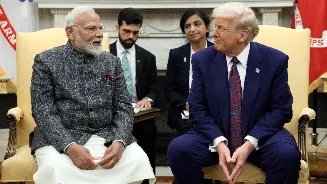
The much-anticipated three-day trade discussions between India and the United States, slated to commence in Washington D.C. on a Monday, have been postponed.
This shift in schedule comes in the wake of a significant ruling by the U.S. Supreme Court. The court determined that President Donald Trump had exceeded his constitutional authority by implementing broad tariffs under the International Emergency Economic Powers Act (IEEPA). This development has necessitated a reevaluation of the timeline for finalizing the legal text of the trade agreement that both nations had previously agreed upon in principle earlier that month. Negotiators were on the cusp of translating this framework into formal legal documentation, a process that was expected to conclude imminently, but the court's intervention has introduced an unforeseen delay, requiring a rescheduling of these crucial talks. The original intent was to provide a definitive legal structure to the agreed-upon terms, ensuring clarity and enforceability for both parties involved in this significant trade partnership.
Legal Authority Under Scrutiny
The core of this postponement lies in the U.S. Supreme Court's recent judgment concerning the President's authority to impose tariffs. The court ruled that President Trump's imposition of sweeping tariffs, enacted through the International Emergency Economic Powers Act (IEEPA), constituted an overreach of his executive powers. This decision has cast a shadow over the legal standing of such tariff implementations. India and the United States had indeed reached a framework agreement, but the official signing was still pending, with negotiators intending to solidify the deal this week. The significance of this agreement was amplified by its unconventional nature, potentially operating outside the typical boundaries of World Trade Organization (WTO) norms. The U.S. Trade Representative's office, represented by Jamieson Greer, had asserted the validity of these agreements with approximately 20 trade partners. However, organizations like the Singapore-based Heinrich Foundation have questioned the White House's legal basis for these deals, particularly as they lacked Congressional approval. This legal ambiguity, now highlighted by the Supreme Court's ruling, raises substantial questions about the long-term stability and enforceability of these trade arrangements.
Market Access Implications
The delay in concluding the trade negotiations could have direct implications for India's commitment to granting market access to American products, as had been agreed upon during the earlier discussions. Government officials had previously indicated that market access from the Indian side would only materialize once the formal legal agreement was officially signed and ratified. However, in a statement following the court's decision, President Trump asserted that no changes would affect the India-US deal. Despite this assurance, the legal complexities introduced by the Supreme Court's ruling create an environment of uncertainty. Experts like Deborah Elms, Head of Trade Policy at the Hinrich Foundation, suggest that the court's decision could lead to renewed legal challenges. Foreign firms might initiate new lawsuits challenging the reciprocal tariff rates imposed on their goods, especially if governments do not opt to reopen negotiations. This situation underscores the delicate balance between executive action and established legal frameworks in international trade agreements, potentially impacting the immediate realization of agreed-upon market access provisions.
Shifting Legal Frameworks
Following the U.S. Supreme Court's order, the Trump administration appears to be pivoting to an alternative legal avenue for imposing tariffs. The administration has indicated a shift towards utilizing Section 122 of the country’s 1974 Trade Act. This provision grants the President temporary authority to implement tariffs, which could potentially escalate the overall rate to 15 percent. Deborah Elms of the Hinrich Foundation suggests that this move might be part of a broader strategy, with the U.S. administration signaling its intent to launch additional investigations into "unfair trade practices" in the coming months. These country-level investigations can lead to tariffs affecting all goods originating from targeted markets. Furthermore, the White House has already initiated inquiries into a wider array of sectors, including semiconductors, electronics, drones, critical minerals, and pharmaceuticals. Industries such as Indian steel and aluminum had previously sought concessions within the framework of the US deals, and it is now considered highly probable that these newly investigated sectors could face increased tariffs in the near future, indicating a dynamic and evolving trade policy landscape.