




Calf Raises & Chest Opening
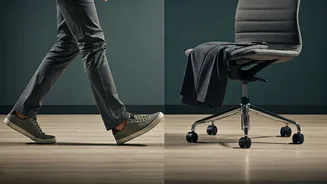
Begin by enhancing lower leg circulation with seated calf raises, a movement that utilizes the calf muscles' natural pumping action to assist blood flow
back to the heart. Complement this by incorporating gentle chest-opening exercises to counteract poor posture and improve respiratory function, promoting overall relaxation. To perform this combined move, sit comfortably and lift your heels while extending your arms outwards to the sides. As you slowly lower your heels, bring your arms back together, coordinating the motion with your breath. This exercise specifically engages the soleus muscle, contributing to improved stamina and circulatory efficiency. It’s a straightforward yet effective way to support your body’s fluid dynamics and maintain a more open, relaxed posture throughout the day, which indirectly benefits cardiovascular well-being by reducing physical tension.
The 'Good Morning' Hinge
Strengthen your posterior chain and core with the 'Good Morning' exercise, a fundamental hip hinge movement that enhances functional strength. This exercise targets the glutes, hamstrings, and spinal stabilizers, contributing to better posture and more efficient daily movements, thereby reducing unnecessary strain on your heart. To execute this, stand with your feet positioned hip-width apart and place your hands behind your head, keeping your elbows wide. Engage your abdominal muscles and initiate the movement by hinging at your hips, pushing your pelvis backward while maintaining a straight, neutral spine and a slight bend in your knees. Return to the upright position by consciously squeezing your glutes. Aim for 8 to 10 repetitions performed slowly and deliberately, ensuring controlled execution to maximize muscle engagement and minimize joint stress.
Safe Box Squats
Box squats offer a controlled approach to strengthening your lower body, helping to regulate the depth of your squat and thus reducing the potential for excessive strain on your joints and cardiovascular system. This modified squat is particularly beneficial for individuals concerned about heart health, ensuring that exercise remains at a moderate, comfortable intensity that allows for easy breathing and recovery. To perform box squats, position yourself in front of a chair or box that is roughly knee-height. Stand with your feet shoulder-width apart, and then lower your hips backward as if sitting down, until you lightly make contact with the surface. After a brief pause, stand back up without leaning forward. Aim for 8 to 10 repetitions across two sets, maintaining relaxed breathing throughout the exercise. This method ensures you reap the benefits of a squat without compromising safety or comfort.
Lying Hip Raises
The lying hip raise, also known as a glute bridge, is a compound movement designed to build strength in the gluteal muscles, lower back, and core. By enhancing the strength of these key muscle groups, you improve the overall efficiency of circulation and support better functional mobility, which is especially valuable for older adults or those seeking to improve their physical resilience. To perform this exercise, lie on your back with your knees bent and your feet flat on the floor. Take a gentle inhale and slowly lift your hips towards the ceiling, aiming to create a straight line from your shoulders to your knees. Hold this elevated position for about 10 to 20 seconds without feeling any strain, then exhale and slowly lower your body back to the starting position. This exercise is excellent for strengthening the core and improving hip mobility.
Dynamic Surya Namaskar
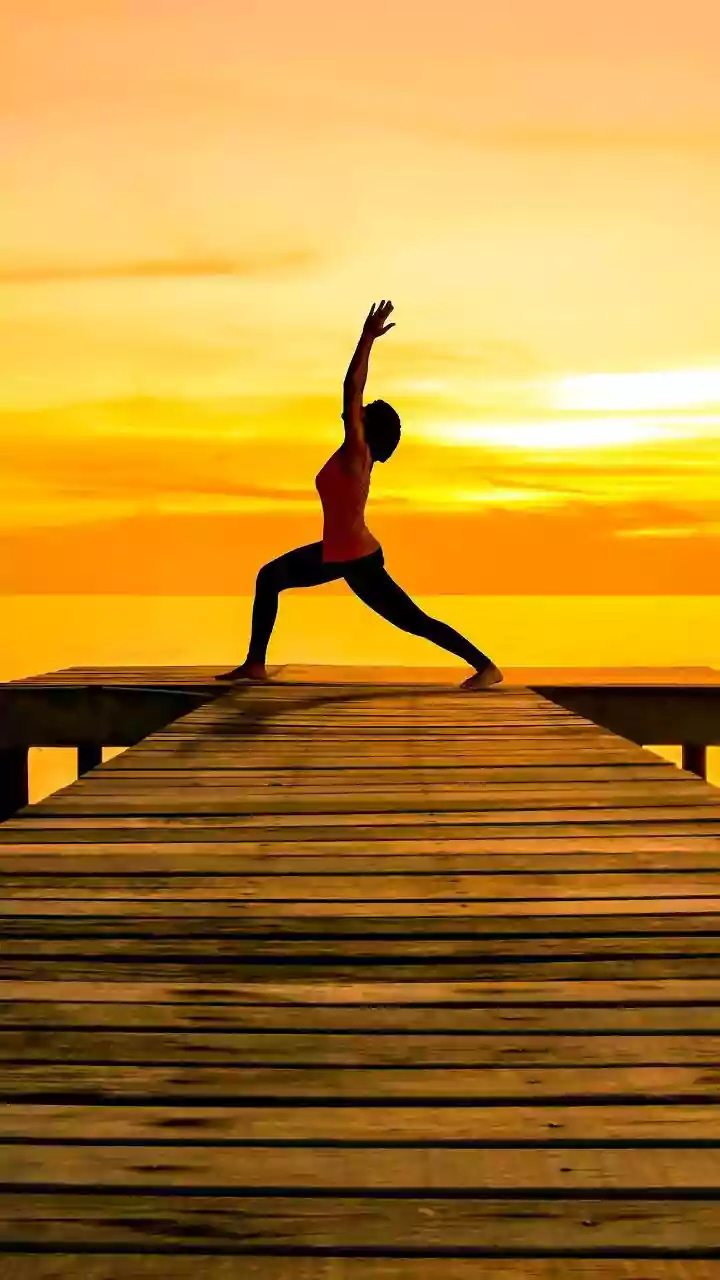
Embrace the holistic benefits of Surya Namaskar, or Sun Salutation, a flowing sequence of yoga postures that harmonizes physical movement with breath control. When practiced at a gentle and consistent pace, this dynamic routine significantly enhances flexibility, stimulates blood circulation, and boosts aerobic capacity, making it an excellent addition to a heart-conscious lifestyle. The sequence involves transitioning smoothly through poses such as Tadasana (Mountain Pose), Urdhva Hastasana (Raised Hands Pose), Uttanasana (Standing Forward Bend), Ashta Chandrasana (Low Lunge), Bhujangasana (Cobra Pose), and Adho Mukha Svanasana (Downward-Facing Dog). It's advisable to start with 4 to 6 rounds and gradually increase to 12 rounds as your comfort and fitness levels improve, ensuring that each movement is mindful and synchronized with your breath to maximize its therapeutic effects.