





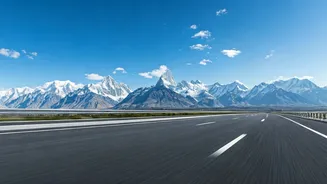

Journey Transformed
The landscape of travel between the bustling capital city of Delhi and the serene hill station of Dehradun has undergone a dramatic transformation. Previously,
a trip that could stretch up to six hours has now been condensed into a remarkable two hours and 55 minutes, thanks to the newly operational Delhi-Dehradun Expressway. This significant reduction in travel time is not just a matter of convenience; it represents a paradigm shift in how people can access the popular tourist destination. The Uttar Pradesh State Road Transport Corporation (UTC) has embraced this change by implementing substantial fare reductions across its services, including premium Volvo, AC, and ordinary buses. These adjustments, aimed at enhancing passenger convenience and prioritizing speed, mean that the journey to Dehradun is now not only faster but also considerably more economical for all travelers.
Fare Reductions Detailed
The inauguration of the Delhi-Dehradun Expressway has brought about a welcome wave of affordability, with UTC announcing significant price drops for its bus services. These fare adjustments are a direct consequence of the reduced travel distance and lower fuel consumption facilitated by the expressway. For those opting for the most comfortable journey, the Volvo service has seen its fare slashed from Rs 945 to Rs 709, offering a saving of Rs 236 per ticket. Passengers preferring air-conditioned comfort will now pay Rs 557 for the AC class, a reduction from the previous Rs 704, resulting in a saving of Rs 147. Even the ordinary bus service has become more budget-friendly, with fares dropping from Rs 420 to Rs 355, a saving of Rs 65. These reductions make travel to Dehradun substantially more accessible for a wider range of commuters and tourists.
Engineering Marvel
Beyond its impact on travel times and fares, the Delhi-Dehradun Expressway stands as a testament to modern engineering prowess. Designed to facilitate speeds of up to 100 km/h, this highway stretches across a formidable 6-12 lanes, depending on the specific segment. Its route commences from Akshardham in Delhi and winds its way through Loni, Baghpat, Baraut, Shamli, and Saharanpur before reaching Dehradun. A crucial addition to this expansive route is a 50.7 km spur that provides expedited access to Haridwar, allowing travelers to reach this significant pilgrimage site from Delhi in approximately two hours. Moreover, the project incorporates a remarkable 12 km overhead bridge, recognized as the longest wildlife corridor of its kind in Asia. This innovative structure traverses through the Rajaji National Park, ensuring safe passage for wildlife while minimizing human-wildlife conflict.