







Drone Incident Unfolds
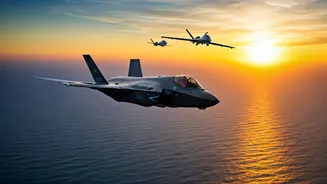
In a concerning development within the strategically vital Arabian Sea, an advanced F-35 fighter jet belonging to the United States military took decisive
action to neutralize an Iranian drone. This unmanned aerial vehicle had approached perilously close to the US Navy aircraft carrier USS Abraham Lincoln, raising immediate security alarms. Reports indicate the drone exhibited aggressive maneuvering, prompting the F-35 pilot to engage it in self-defense, a move aimed at safeguarding the carrier and its personnel. Fortunately, this confrontation concluded without any casualties among US service members or damage to American assets. The incident underscores the volatile nature of regional security dynamics and the constant vigilance required to maintain operational safety for naval forces operating in these sensitive waters.
Geopolitical Tensions Rise
This drone engagement transpired against a backdrop of significant diplomatic and military posturing. Coinciding with efforts to orchestrate nuclear negotiations between Iran and the United States, President Donald Trump issued a stern warning about potential repercussions should a deal not materialize, especially as US warships were being strategically positioned closer to Iran's coast. The deployment of the Abraham Lincoln carrier strike group is part of a broader US military build-up in the Middle East, a response partly prompted by Iran's forceful suppression of anti-government demonstrations that had recently erupted. While the US had previously refrained from direct military intervention in Iran's domestic unrest, the focus has now shifted to achieving nuclear concessions from Tehran, a move amplified by the visible presence of American naval power in proximity to Iranian waters.
Diplomacy and Deterrence
The White House, through its Press Secretary, Karoline Leavitt, confirmed CENTCOM's decision to shoot down the Iranian drone, emphasizing its unmanned nature and aggressive trajectory towards the USS Lincoln. Leavitt reiterated President Trump's commitment to prioritizing diplomacy, while also acknowledging that successful negotiations necessitate mutual effort. This statement from the White House Press Secretary, disseminated via the US Official White House Rapid Response X handle, framed the incident within the broader context of international relations. The situation further intensified with a separate report from US Central Command detailing harassment by Iran's Revolutionary Guard Corps (IRGC) of a US-flagged merchant vessel, the M/V Stena Imperative, in the Strait of Hormuz. Two IRGC boats and a Mohajer drone reportedly menaced the ship, threatening to board and seize it. These events collectively illustrate the complex interplay of fragile diplomacy, deterring provocations, and direct confrontations that characterize the current relationship between the US and Iran.