




Lake Natron's Red Hue
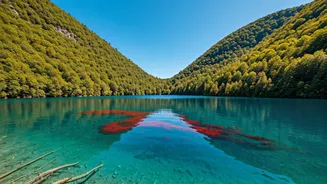
Located in Tanzania, Lake Natron captivates with its striking crimson appearance, a spectacle caused by thermophilic bacteria thriving in water temperatures
that can reach 60°C. This extreme heat, coupled with high mineral content, creates a caustic environment akin to bleach. These harsh conditions preserve any animals that succumb to its waters, turning them into stone-like statues. While deadly to most, the lake serves as a crucial breeding ground for hundreds of thousands of flamingos, a rare testament to life's adaptability in extreme environments. Direct contact with the water is dangerous, causing severe burns to the skin and eyes.
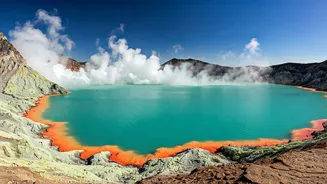
Kawah Ijen's Turquoise Menace
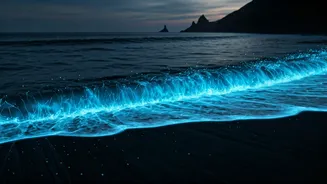
In Indonesia, Kawah Ijen Crater Lake presents a mesmerizing turquoise visage, attributed to dissolved copper and iron. At night, the lake transforms further with ethereal blue flames erupting from volcanic gases. However, this visual splendor is underpinned by water so acidic, it surpasses the corrosive power of battery acid, capable of dissolving metal and inflicting immediate burns. The hazardous sulfur mining operations around the lake highlight its perils, with workers frequently suffering from poisoning and reduced lifespans due to the toxic fumes and corrosive environment.
Laguna Verde's Emerald Danger
High in the Bolivian Andes, at over 4,300 meters, lies Laguna Verde, an emerald-green lake that draws its color from abundant copper deposits. Its stunning backdrop of mountains makes it a picturesque sight. Yet, beneath its tranquil surface lies extreme danger. The lake is laden with arsenic and other toxic heavy metals, released by underlying volcanic activity. While its beauty can be admired from a distance, immersion in its waters poses severe health risks due to its potent chemical composition.
Kelimutu's Shifting Tri-Colors
Flores Island, Indonesia, is home to the unique Kelimutu Crater Lakes, a trio of adjacent bodies of water exhibiting distinct and fluctuating colors—turquoise, green or black, and deep red or brown. These vibrant hues shift over time, a phenomenon linked to high sulfur levels that render the water extremely acidic, posing an immediate threat of skin burns. Tragically, several individuals have perished after accidental falls into these acidic waters, and the sudden release of toxic gases can also prove fatal to those nearby.
Laguna Caliente's Acidic Fury
Nestled within Costa Rica's Poás Volcano, Laguna Caliente is a dynamic and exceptionally acidic lake, whose colors shift between green, blue, yellow, and gray. Its acidity is among the highest recorded globally, exceeding that of battery acid, and it contains significant quantities of toxic metals. The lake's volatile nature is further emphasized by its propensity to generate acid rain and fog, and it occasionally experiences explosive eruptions, ejecting water and debris. Even proximity to the lake can be perilous due to its corrosive and superheated conditions.
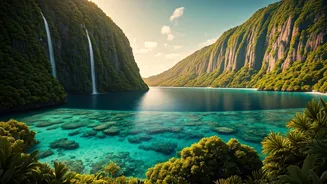
Quilotoa's Emerald Caldera
Ecuador's Quilotoa Crater Lake, an emerald-green jewel set within a collapsed volcano, offers a serene visual against dramatic, multi-colored cliffs. On calm days, its surface appears mirror-like. However, this placid appearance belies the presence of volcanic gases that make the water acidic and toxic. High concentrations of carbon dioxide can dangerously deplete oxygen levels, making swimming and boating impossible. Though banned, past attempts at water activities have resulted in severe illness, underscoring the need to admire this geological wonder solely from the crater rim.