






AI's Transformative Power
The narrative surrounding Artificial Intelligence often conjures images of widespread job displacement. However, a deeper examination reveals AI's true
potential lies not in outright replacement, but in a profound redefinition of human roles and industry paradigms. Instead of an adversary, AI emerges as an advanced tool, capable of augmenting human intellect and creativity. Its integration across various sectors, from healthcare to content creation, promises to unlock unprecedented levels of efficiency and innovation. This evolution necessitates a shift in perspective, encouraging individuals and organizations to embrace AI as a partner in progress, fostering new skill sets and opening avenues for collaboration that were previously unimaginable. The focus is shifting from fearing obsolescence to strategically leveraging AI's capabilities to enhance productivity and drive forward human endeavors.
Redefining Professional Roles
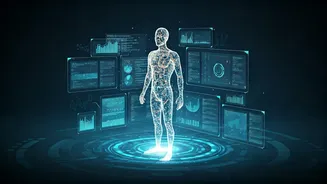
The advent of AI signals a significant transformation in the professional landscape, challenging traditional notions of work and skills. Rather than rendering human expertise obsolete, AI systems are proving to be powerful assistants that can handle repetitive tasks, analyze vast datasets, and identify patterns with remarkable speed and accuracy. This liberation from mundane duties allows professionals to dedicate more time to strategic thinking, complex problem-solving, and interpersonal interactions – areas where human ingenuity and emotional intelligence remain paramount. For instance, in fields like medicine, AI can aid in diagnosing diseases by sifting through medical imagery and patient histories, freeing up doctors to focus on patient care and complex treatment plans. Similarly, in creative industries, AI tools can assist in generating initial drafts or exploring design variations, empowering artists and writers to refine their visions and push creative boundaries further. The key lies in adapting and upskilling to work in tandem with these new technologies, fostering a symbiotic relationship that amplifies overall output and impact.
Emerging Collaboration Models
The integration of AI is not merely about automating tasks; it's about forging new collaborative models that blend human insight with machine efficiency. This partnership allows for the tackling of challenges that were once too complex or time-consuming for human teams alone. Imagine marketing campaigns where AI analyzes consumer behavior patterns to inform strategy, while human creatives develop compelling narratives and brand messaging. In scientific research, AI can accelerate the discovery process by identifying potential research avenues or analyzing experimental data, enabling scientists to focus on hypothesis formulation and interpretation. This synergy leads to more robust outcomes and faster advancements. The future of work will be characterized by individuals who can effectively communicate with, guide, and critically evaluate the output of AI systems. This involves developing skills in prompt engineering, data interpretation, and ethical AI usage, thereby ensuring that technology serves as a catalyst for human achievement rather than a replacement.