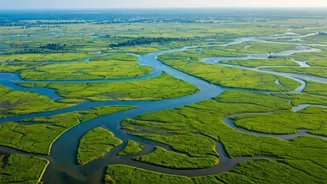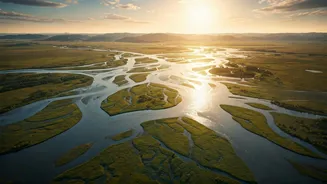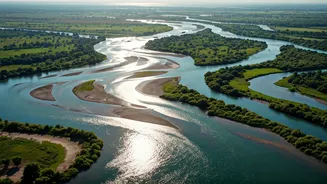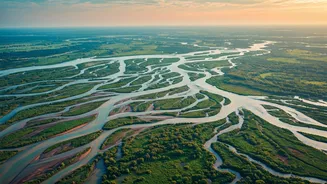





Riverine Heartland Revealed
India's geography is intricately woven with a vast network of rivers, forming the very essence of its existence, influencing its economy, and shaping its rich
cultural tapestry. These waterways traverse diverse terrains, from majestic mountains to expansive plains and ancient plateaus, acting as the lifeblood for agriculture, providing essential sustenance for communities, and supplying vital drinking water. Beyond their practical utility, these flowing streams are deeply imbued with spiritual reverence and historical importance, mirroring the soul of the nation. While many states are recognized for their river systems, a specific state stands out prominently, housing an unparalleled number of these life-giving currents. Contrary to what one might assume, this title doesn't belong to states traditionally associated with abundant water sources but rather to a northern powerhouse that quietly commands the highest density of rivers within its borders, making it a true aquatic marvel.
Uttar Pradesh's Waterways
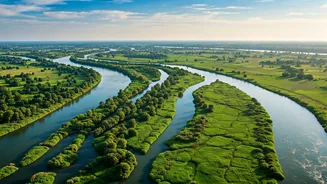
Uttar Pradesh emerges as the undisputed champion when it comes to the sheer volume of rivers flowing through an Indian state. Its geographical position in the northern part of the country, characterized by expansive fertile plains, makes it a natural confluence point for numerous watercourses. These rivers are not merely natural features; they are integral to the state's identity and functioning. Prominent among them are the mighty Ganga and Yamuna, alongside others like the Ghaghara, each playing a crucial role. These water bodies are indispensable for the state's agricultural output, forming the backbone of irrigation systems, and are also central to deeply ingrained religious traditions and daily spiritual practices for millions. The sheer abundance and significance of these rivers underscore Uttar Pradesh's unique position as a pivotal riverine state in India.
A Count Exceeding Thirty
The extent of Uttar Pradesh's river system is truly remarkable, with media reports indicating that the number of rivers gracing its landscape surpasses the 30 mark. This impressive count encompasses not only the major, well-known rivers but also a multitude of their tributaries, collectively forming an intricate and extensive network. This dense web of waterways significantly contributes to the state's ecological diversity and its capacity to support a large population. The presence of so many rivers profoundly impacts the local environment, influencing soil fertility, groundwater levels, and biodiversity. It also creates unique geographical features and opportunities for water management and utilization, highlighting the state's extraordinary hydrological richness and its importance on a national scale.
Cities by the Rivers
Several iconic cities within Uttar Pradesh are intrinsically linked to their riverine settings, particularly renowned for their elaborate ghats – the steps leading down to the water's edge. Varanasi, globally recognized, captivates with its spiritual ghats along the sacred Ganga River, a site of immense religious pilgrimage and cultural significance. Equally significant is Prayagraj, famous for the Triveni Sangam, the holy confluence of three rivers: the Ganga, Yamuna, and the mythical Saraswati. This sacred meeting point draws devotees from far and wide. Further testament to the Yamuna's importance is its role as the guardian of the magnificent Taj Mahal in Agra. The river provides a breathtaking backdrop to the monument, enhancing its ethereal beauty and cementing the city's identity as one of the world's most romantic landmarks, all thanks to its proximity to this vital waterway.
Lifelines of Culture and Economy
The rivers of Uttar Pradesh serve as indispensable lifelines for millions of its inhabitants, underpinning critical aspects of their daily existence and economic well-being. They are fundamental to the state's agricultural productivity, ensuring irrigation for vast tracts of land and thereby supporting food security. Furthermore, these waterways are a primary source of drinking water for numerous communities, a resource that is essential for public health. Beyond these vital economic functions, the rivers are deeply interwoven with the cultural and religious fabric of Uttar Pradesh. They are revered, celebrated, and form the backdrop for countless traditions, festivals, and spiritual practices, reflecting a profound connection between the people and their flowing natural heritage.