





Coastal Serenity and Openness
Nestled in the upscale Malabar Hill area of South Mumbai, Sminu Jindal's residence is a three-story, sea-facing bungalow that exemplifies the profound
influence of openness, light, and minimalist design on daily living. Beyond its striking architecture, the home holds significant emotional weight for Jindal, who cherishes Mumbai and finds solace in its rainy days. Her childhood memories of large family gatherings in this very house, transforming its open balconies into a stage for celebrations, underscore how expansive physical spaces become imbued with a sense of belonging, nostalgia, and cherished connections. This connection between the environment and personal history highlights that a home's emotional resonance often transcends its aesthetic qualities, becoming a repository for shared experiences and familial warmth.
Aesthetic of Calm and Flow
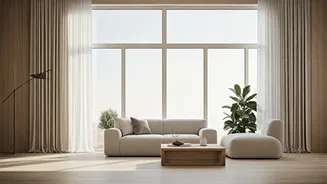
The interior design of Jindal's home meticulously echoes the tranquility suggested by its exterior. A predominantly white color scheme, subtly enhanced by select wooden and black accents on elements like doorways, shelving units, and banisters, cultivates a refined and understated visual ambiance. Furnishings are chosen for their minimalism and functionality, ensuring ample space for movement and a general sense of ease. Floor-to-ceiling windows and glass-paneled doors are strategically employed to invite a generous flow of natural light throughout the living areas. A veranda, conceptualized as an open, suspended courtyard, further amplifies the feeling of spaciousness, seamlessly integrating indoor and outdoor environments. Amidst this subdued palette, curated artworks, including paintings, sculptures, and decorative plates, add touches of personality and visual interest.
Psychological Impact of Space
The deliberate design choices in Sminu Jindal's home—openness, ample light, and minimal furnishings—have a demonstrable impact on psychological well-being. According to psychotherapist Sonal Khangarot, such environments cultivate 'psychological spaciousness,' which significantly reduces stress and enhances comfort. By minimizing visual clutter, the brain experiences a lessened cognitive load, leading to reduced stress levels and a more relaxed nervous system. Natural light plays a crucial role, not only by supporting natural circadian rhythms and improving sleep but also by contributing to emotional equilibrium. These principles align perfectly with minimalism, promoting simplicity and intentionality, which are known to boost focus and mitigate mental fatigue. The home, therefore, functions as a deliberate creation for enhanced mental clarity and emotional balance.
Spaces for Connection and Memory
The design of Jindal's home inherently supports the formation of emotional bonds and lasting memories. Khangarot explains that spaces designed for communal activities naturally foster repeated social interactions, which are fundamental to strengthening interpersonal relationships. Open-plan living areas, generous dining spaces, and communal seating arrangements encourage conversation, shared laughter, and collective engagement, thereby deepening trust and connection over time. Furthermore, these environments become fertile ground for memory-making; celebrations, rituals, and everyday moments are anchored within a shared physical context, making them more vivid and emotionally resonant. Environmental psychology suggests that places associated with positive social experiences evolve into powerful anchors for nostalgia and emotional security, solidifying a profound sense of belonging.