






Music as Mental Exercise
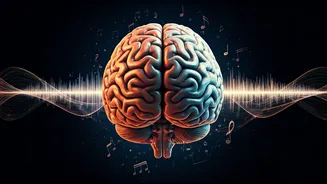
Making music is far more than an artistic pursuit; it's a rigorous cognitive workout that engages multiple brain regions simultaneously. The act requires
intricate coordination between auditory processing, visual input, fine motor control, focused attention, and imaginative thought. This continuous, multi-faceted demand effectively stretches and strengthens the brain, much like physical exercise builds muscle. Research has indicated that individuals who dedicate their lives to music often exhibit increased grey matter – the neural tissue vital for cognitive processes like thinking, movement, and memory – in specific areas of their brains when compared to those who do not play music. This structural change suggests a tangible, physical adaptation to the demands of musical practice.
Cognitive Enhancements Unveiled
Beyond structural changes, scientific studies point to a range of cognitive benefits associated with musical engagement. For instance, a 2020 study proposed that musicians tend to possess superior executive functions, which encompass critical skills like planning, organization, and problem-solving. Furthermore, a comprehensive meta-analysis conducted in 2017 concluded that musicians often demonstrate sharper memory recall. Intriguingly, recent research from the past year suggests that musical experience might even modulate pain perception. An experiment involving the induction of muscle soreness-like discomfort in participants found that those with musical backgrounds reported experiencing less pain, hinting at music's potential as a powerful analgesic or pain-dampening agent.
Early Musical Beginnings
The timing of musical education can significantly influence brain development, particularly in children. Research published in 2010 indicated that individuals who commenced musical training before the age of seven tend to possess a more developed corpus callosum – the crucial neural pathway connecting the brain's left and right hemispheres. This enhanced connectivity may facilitate more efficient communication between brain regions. Moreover, studies from 2014 suggest that learning to play a musical instrument can provide a distinct advantage for children acquiring a second language and can also boost their non-verbal reasoning capabilities, fostering a broader range of cognitive skills from an early age.
Lifelong Musical Benefits
The positive impact of music on the brain isn't confined to youth; it extends to preserving cognitive function later in life. Studies have linked continued musical engagement in older adults to a slower rate of age-related cognitive decline. One small study observed that older adults who continued to learn an instrument showed less deterioration in their verbal working memory and preserved grey matter volume. A significant meta-analysis from 2021 further strengthened this connection, finding an association between regular music practice and a reduced risk of developing dementia. While it remains a complex question whether this is due to greater brain resilience in musicians or if individuals without dementia are simply more inclined to continue their musical pursuits, the correlation is compelling.
Instrument-Specific Advantages
Interestingly, the specific instrument one plays might lead to variations in cognitive benefits. A 2024 study involving over 1,100 older adults in Britain found that pianists and brass instrument players tended to have better working memory on average. Woodwind players, on the other hand, exhibited superior executive functions. Singers demonstrated strengths in verbal reasoning. Curiously, the study noted that individuals who played multiple instruments did not necessarily gain additional neural advantages over those who focused on one, suggesting that depth of engagement might be more impactful than breadth.
Music's Emotional Resonance
Beyond cognitive enhancements, playing music also stimulates the brain's limbic system, the area responsible for processing emotions like pleasure and reward. When individuals are deeply engaged in playing an instrument, their brains release endorphins, the body's natural feel-good hormones that can also help alleviate pain. Furthermore, participating in group musical activities, such as bands, orchestras, or choirs, can significantly reduce stress and foster strong social bonds, contributing to overall well-being. Even passively listening to music has shown promise; a 2025 observational study of 10,000 cognitively healthy individuals over 70 found that regular music listeners had a 39% lower relative risk of cognitive decline, though a direct causal link is still being explored.