



A Riverine Surprise
While India is celebrated for its monumental rivers like the Ganga and Brahmaputra, a fascinating geographical anomaly exists in Gujarat's Kutch district.
This vast region, often associated with its stark desert terrain and the Rann of Kutch salt flats, possesses a surprisingly intricate network of approximately 97 rivers. This sheer volume of waterways, a figure that eludes many and even challenges trivia experts, sets Kutch apart as a truly distinctive riverine area within the country. These numerous watercourses contribute to a unique drainage system, with many eventually merging with the Arabian Sea or vanishing into the expansive Rann, showcasing nature's adaptability even in arid environments.
Seasonal Flow Dynamics
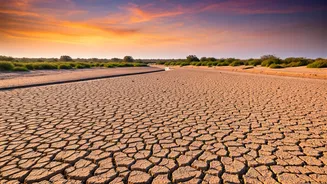
The rivers of Kutch are primarily characterized by their seasonal nature. Out of the roughly 185 rivers found across Gujarat, a significant majority, around 97, are intrinsically linked to the Kutch district. These are not perennial streams but rather ephemeral water channels that spring to life with the onset of the monsoon season. During the rainy months, they swell and carry water, carving paths through the landscape. However, as the monsoon recedes and the dry season prevails, these rivers diminish, often reducing to dry beds or trickles that disappear entirely for much of the year. This pattern is a testament to the region's climate and its capacity to sustain a dynamic water system, albeit a temporary one.
Prominent Waterways
Within Kutch's impressive count of rivers, several are recognized by name and play a significant role in the district's hydrology. Among the more notable ones are Rukmavati, Suvi, Malan, Saran, Sakar, Mithi, Ghurud, Vekhdi, Chang, Khari, Nara, Panjora, Kharod, Kotri, Kali, Kanakavti, and Rudramata. Beyond these named rivers, a multitude of smaller streams also emerge during rainfall, contributing to the seasonal flow before gradually subsiding. This extensive web of both major and minor watercourses highlights the complex interplay between the monsoon and Kutch's geography, creating a vibrant, albeit transient, aquatic environment.
Drainage and Salinity
The ultimate fate of Kutch's numerous rivers involves two primary destinations: the Arabian Sea and the Rann of Kutch. Rivers such as Banas, Saraswati, Rupen, Luni, Machhu, Ghodadhroi, Brahmani, Khari, Phalki, Nara, Suvi, Pur, and Bhurud are integral to this broader drainage network. A noteworthy aspect of these water channels is the tendency for their water to become saline, particularly as they flow through or end in the salt-laden Rann. This salinity often limits the usability of the water for domestic purposes, presenting a challenge for the local population despite the abundance of the seasonal flow. This phenomenon underscores the unique environmental conditions of the district.
Resilience in Aridity
Despite the arid climate and the desert-like reputation of Kutch, the district powerfully illustrates nature's ingenuity in creating extensive water flow systems. The presence of nearly 100 rivers, even if seasonal, defies expectations and highlights a remarkable resilience. This intricate network is not just a geographical curiosity but a vital, albeit temporary, lifeblood for the region during the monsoon. Kutch's rivers continue to captivate attention, serving as a potent reminder that even in challenging landscapes, nature finds remarkable ways to express itself, creating a unique ecological tapestry that draws considerable curiosity and admiration.