





Accelerated Travel Unveiled
The advent of the Delhi-Dehradun Expressway marks a pivotal moment in intercity travel, drastically shrinking the journey between India's capital and the serene
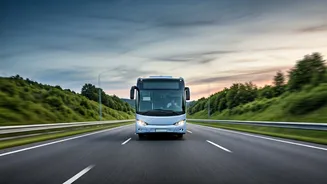
city of Dehradun. Previously, a six-hour commitment was the norm for this route, often deterring spontaneous trips or making travel a significant time investment. However, with the expressway's operationalization, this perception has been shattered. Initial test drives have confirmed that the trip can now be accomplished in an impressive two hours and fifty-five minutes. This remarkable reduction in travel duration, achieved through advanced engineering and a direct route, prioritizes passenger convenience and efficiency above all else. The emphasis on speed and reduced transit time is a testament to the project's success in meeting modern travel demands.
Fare Reductions Announced
In conjunction with the launch of the Delhi-Dehradun Expressway, transportation authorities have implemented substantial fare adjustments for bus services, offering significant savings to travelers. This strategic move aims to capitalize on the reduced travel time and lower operational costs, such as fuel consumption, associated with the new route. For those opting for premium Volvo services, the ticket price has seen a drop from Rs 945 to Rs 709, representing a saving of Rs 236. Passengers preferring AC class will now pay Rs 557, a decrease from the previous Rs 704, resulting in a saving of Rs 147. Even the ordinary bus service has become more economical, with fares reduced from Rs 420 to Rs 355, offering a saving of Rs 65. These fare reductions, averaging up to 25%, make the journey to Dehradun considerably more affordable for all categories of travelers.
Engineering Marvel Detailed
Beyond its impressive speed capabilities, the Delhi-Dehradun Expressway stands out as a significant feat of modern engineering. Designed to facilitate travel at speeds of up to 100 km/h, it integrates multiple advanced features. The highway spans a considerable length, featuring 6 to 12 lanes depending on the specific stretch, commencing its route from Akshardham in Delhi and extending through towns like Loni, Baghpat, Baraut, Shamli, and Saharanpur before reaching Dehradun. A notable aspect of this project is its connectivity, with a dedicated 50.7 km stretch offering swift access to Haridwar, enabling a journey from Delhi to Haridwar in approximately 2 hours. Furthermore, the expressway incorporates an extraordinary 12 km overhead bridge, recognized as the longest wildlife corridor in Asia, meticulously constructed to traverse through the Rajaji National Park, ensuring minimal disruption to the local ecosystem.