






Early Career Hurdles
Filmmaker Farah Khan recently shared a candid account of her initial experiences working with actor Akshaye Khanna during the 1990s, admitting that the collaborations
were far from smooth. Speaking on a podcast, Khan detailed how her early encounters with Khanna left her feeling "traumatized," to the point where she would actively avoid projects if she learned he was attached. She described Khanna during that period as introverted but also difficult to work with, prone to irritability and outbursts. Khan attributed this behaviour to Khanna's personal struggle with hair loss at the time, a situation he himself had openly discussed. This perceived constant state of discomfort apparently led to him questioning dialogue and exhibiting disruptive behaviour on set, making him a challenging collaborator for Khan, who expressed a preference for not having him in her films during those years.
A Transformative Shift
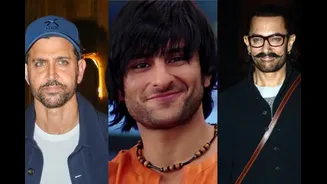
A significant change in Akshaye Khanna's demeanor and professional interactions was evident when Farah Khan later encountered him during the filming of 'Dil Chahta Hai,' which marked Farhan Akhtar's directorial debut. Khan observed a complete transformation in Khanna, noting that he seemed to have come to terms with his physical changes, particularly his hair. Prior to this, scenes involving water or rain would often see him wearing a cap, a pattern seen in films like 'Taal.' However, post-'Dil Chahta Hai,' his attitude became noticeably more relaxed and approachable. Khan even highlighted his remarkable dancing prowess in the song 'Koi Kahe Kehta Rahe,' suggesting he outshone his co-stars Aamir Khan and Saif Ali Khan, underscoring a renewed confidence and ease in his professional persona.
Rebuilding Bridges
The rapport between Farah Khan and Akshaye Khanna has evolved into a warm and respectful one, illustrating the potential for repairing professional relationships that may have begun on a strained footing. Khan recently reached out to Khanna after seeing his performance in 'Dhurandhar,' congratulating him and subsequently visiting his home in Alibag. She expressed her admiration for his work ethic, appreciating his focus on acting rather than superficial aspects of the industry. This positive interaction underscores how personal growth and a shift in perspective can lead to stronger, more authentic professional connections. The ability to move past initial difficulties and appreciate each other's craft speaks volumes about the capacity for change and reconciliation in the workplace.
Insecurity's Workplace Impact
Psychologist Rasshi Gurnani sheds light on why personal insecurities can frequently manifest as irritability, defensiveness, or outright conflict in professional settings. She explains that perceived flaws, such as hair loss or signs of aging, can trigger a 'threat to self-esteem,' leading to heightened self-consciousness and internal stress. This psychological pressure often spills over into outward behaviour, making individuals appear impatient or difficult. Gurnani further elaborates on defence mechanisms like projection and displacement, where the internal discomfort is redirected towards colleagues. Essentially, behaviour that seems rude or challenging might be a personal battle with self-image and vulnerability, rather than a direct reflection of the people around them.
The Power of Acceptance
The journey towards improved interpersonal dynamics in the workplace is significantly influenced by an individual's ability to accept aspects of themselves they cannot control, particularly physical changes. Gurnani emphasizes that when people cease to resist or feel shame about uncontrollable transformations, such as hair loss or aging, it substantially reduces internal conflict and cognitive load. This acceptance fosters greater mood stability, bolsters self-confidence, and ultimately leads to more positive and constructive interactions with others. By embracing these personal realities, individuals can create a foundation for healthier relationships, both personally and professionally, transforming potential sources of stress into catalysts for self-understanding and resilience.
Mending Professional Ties
The process of repairing strained professional relationships is often a subtle yet powerful journey of relational repair and interpersonal growth. As individuals mature both personally and professionally, they develop enhanced self-awareness and communication abilities, enabling a more empathetic understanding of past conflicts. Gurnani explains that rebuilding trust typically involves acknowledging past misunderstandings, demonstrating consistent respect, and fostering positive interactions over time. When the underlying stress or insecurity that initially caused friction is resolved, individuals can engage more authentically. Through shared experiences and mutual respect, even initially difficult professional dynamics can evolve into cordial and collaborative partnerships, highlighting the transformative power of personal evolution and deliberate relationship building.