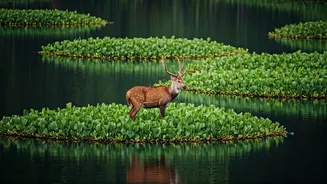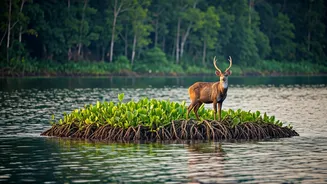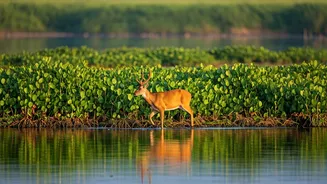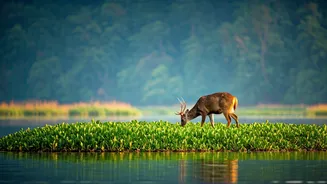




A Living, Breathing Landscape
Imagine a national park where the very ground beneath your feet gently undulates, a sensation unlike any other. This is the magic of Keibul Lamjao National
Park, an ecological marvel situated in the northeastern Indian state of Manipur. Covering an expansive 40 square kilometers, this park is not land in the traditional sense; rather, it is a dynamic ecosystem built upon 'phumdis.' These phumdis are dense, buoyant mats of vegetation, naturally formed and constantly shifting with the ebb and flow of Loktak Lake, Northeast India's largest freshwater body. The experience of visiting Keibul Lamjao is profoundly immersive, marked by the crisp air, the symphony of bird calls, and a pervasive sense of tranquility that washes over you. It's a place where nature's resilience and unique adaptations are on full display, inviting visitors to pause and absorb its extraordinary essence.
Encounter the Dancing Deer
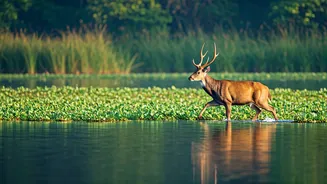
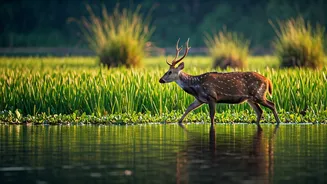
The undisputed jewel of Keibul Lamjao National Park is the Sangai, affectionately known as the "dancing deer." This critically endangered species, found nowhere else on Earth, navigates the park's floating landscape with an ethereal grace. Witnessing a Sangai move across the phumdis is a truly mesmerizing experience; its delicate steps seem to barely disturb the vegetation. These deer are intrinsically linked to this unique environment, their survival dependent on the floating islands and the vegetation they support. A sighting of the Sangai is considered a rare and precious moment, evoking a sense of awe and wonder, and underscoring the vital importance of conservation efforts for this magnificent creature and its singular habitat. The Sangai's presence is not just a wildlife spectacle but also holds deep cultural significance within Manipur.
Immersive Wildlife and Lake Life
While the Sangai deer is the park's most famous inhabitant, Keibul Lamjao teems with a rich diversity of life, making every visit a captivating experience. Birdwatchers, in particular, will find themselves enthralled by the over 100 species of birds that call this floating paradise home. The skies are alive with avian activity, from majestic raptors soaring overhead to smaller, vibrant species flitting amongst the reeds. Beyond the avian population, the park's aquatic environment supports a variety of other wildlife, contributing to the overall biodiversity. The surrounding lake life and the unique flora of the phumdis create a vibrant tapestry of nature, ensuring that even without a direct Sangai encounter, the park offers constant opportunities for observation and appreciation of its unique ecological balance. The interplay of land and water fosters a dynamic environment that is always a pleasure to explore.
Planning Your Visit to Loktak
To truly appreciate Keibul Lamjao, strategic planning is essential. The optimal time to visit is between November and March, when the skies are clear, the waters of Loktak Lake are calm, and wildlife is most active. This period offers pleasant weather for exploration. It's crucial to avoid the monsoon season, typically from June to September, as the rising water levels can make navigation unpredictable and potentially unsafe. Most travelers reach this enchanting destination via Imphal International Airport, followed by a relatively short drive to Loktak Lake. Accommodations are not available within the park itself; instead, visitors can find lodging in the nearby areas. Exploring the local cuisine, which is deeply connected to the land and lake, offers a delightful culinary extension of the natural experience, further enriching the journey.