





Barringer's Desert Jewel
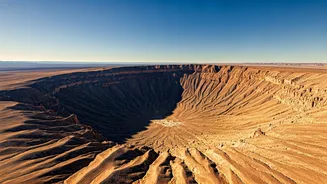
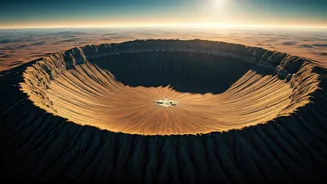
Nestled within the arid expanse of the Arizona desert lies the Barringer Crater, a readily accessible testament to a celestial impact. This colossal depression,
formed approximately 50,000 years ago, remains remarkably preserved, offering visitors an intimate encounter with its immense scale. Travelers can traverse the crater's rim, absorbing its vastness, and further enrich their understanding at the on-site visitor center. This center boasts engaging space-themed exhibits and showcases genuine fragments of meteorites, providing an unparalleled opportunity to grasp the physical reality of an impact crater up close. The pristine condition of Barringer Crater makes it an ideal destination for anyone seeking to visualize the raw power of extraterrestrial impacts.
India's Saline Wonder
In the Buldhana district of Maharashtra, India, the Lonar Crater Lake presents a geological marvel unlike any other. What sets this crater apart is its formation within basaltic rock, a rarity for impact sites. The celestial event that created it occurred roughly 50,000 years ago. Today, the lake within the crater is characterized by its distinct brackish and alkaline waters, fostering a truly unique and unusual ecosystem. The surrounding landscape is further enhanced by ancient temples and lush vegetation, creating an atmosphere that is both serene and scientifically fascinating. Lonar Crater Lake offers a captivating blend of natural beauty, spiritual tranquility, and significant geological interest, making it a singular destination.
South Africa's Ancient Giant
Vredefort Crater in South Africa holds the distinction of being the most extensive impact site discovered on our planet. Its origins trace back over 2 billion years, meaning it no longer resembles a conventional crater due to the immense passage of time and natural erosion. Despite this, the geographical area influenced by the impact remains vast. Its exceptional character has earned it recognition as a UNESCO World Heritage Site, celebrating its unique place in Earth's history. Visitors with an interest in space phenomena can explore the captivating landscape, observing rock formations that narrate the epic tale of this primordial cosmic collision and its enduring impact on the terrain.
Canada's Pristine Circle
Pingualuit Crater in Canada offers a sense of profound remoteness and untouched natural beauty. Its striking, near-perfectly circular form immediately distinguishes it as a significant geological feature. The lake contained within its depths is renowned for its exceptional clarity and remarkable depth. Although reaching this remote location requires considerable effort, the breathtaking scenery that awaits is undoubtedly worth the journey. The profound quiet and peacefulness of the site offer a powerful tangible connection to the immense force exerted by the meteor impact that shaped it, providing a contemplative experience for all who visit.
Australia's Defined Impact
The Wolfe Creek Crater in Australia stands as a prime example of a well-preserved impact site, where the distinctive shape of the collision is clearly discernible even today. This crater, estimated to have formed around 120,000 years ago, retains its well-defined structure. Visitors have the opportunity to circumnavigate its rim or venture down into the crater itself. Beyond its geological significance, the Wolfe Creek Crater holds profound importance for the local Aboriginal communities, who possess their own rich narratives about its formation. This site offers a compelling intersection of natural history and deep-rooted cultural heritage, making it a multifaceted destination.